

Who Conducts Interviews in HR for Staffing? A Practical Breakdown
Hiring interviews involve more roles than candidates realise — the HR seats, the non-HR stakeholders, and how each one shapes the final hiring decision.
Ployo Team
Ployo Editorial
TL;DR
- Recruiters and talent acquisition specialists handle most initial screening interviews.
- HR generalists evaluate soft skills and cultural fit, usually in mid-stage interviews.
- HR managers lead final-round interviews and sign off on hiring recommendations.
- HR coordinators schedule rather than interview.
- Hiring managers (outside HR) test technical and role-specific competencies.
- Department heads and team leads join mid-to-senior interviews; peers interview for team-fit signal.
- Senior HR roles are interviewed by leadership or external consultants.
- Effective staffing is shared work across HR and the operating departments.
The question candidates most often ask before an interview — "who am I actually meeting?" — has a longer answer than most expect. HR runs much of staffing, but interviewing itself is shared across recruiters, generalists, managers, hiring managers, peers, and (for senior roles) external consultants. Knowing who is in the room and why each role is there helps both candidates and recruiting teams calibrate. This guide breaks down each role's specific contribution, what they evaluate, and how the layers combine into a final hiring decision.
Who Conducts Interviews in HR for Staffing
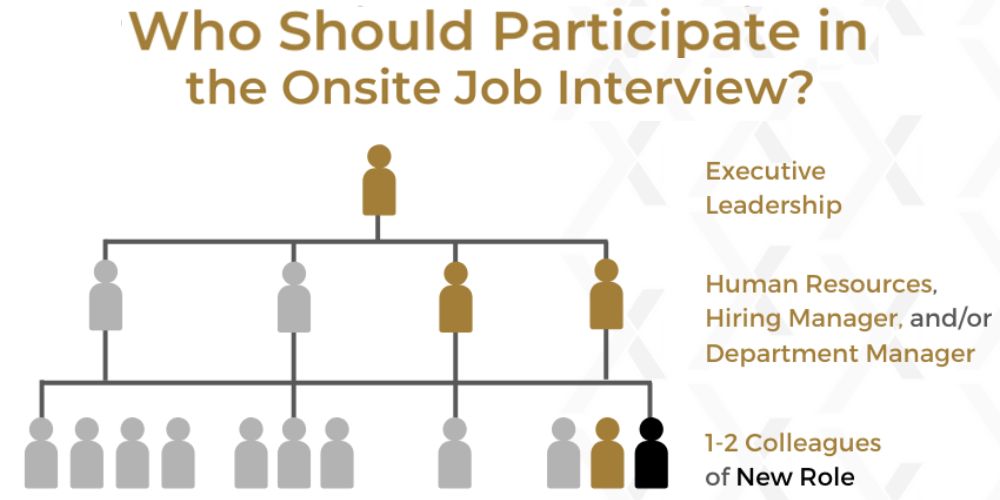
Forbes' workforce research has historically found about 1.4 HR staff per 100 employees in well-resourced companies — meaning HR teams have to be highly strategic about who interviews when. The way the work actually splits:
Recruiter / Talent Acquisition Specialist
The first HR professional a candidate meets. Recruiters source candidates, screen resumes through AI tools, and conduct initial screening interviews to confirm qualifications, interest, and basic fit. If a candidate passes this stage, they advance to deeper interviews with HR or hiring managers.
HR Generalist
The mid-stage evaluator. HR generalists handle behavioural and situational interviews to assess soft skills, communication, and cultural fit. They tend to focus on mid-level roles rather than highly technical or executive seats. They also bridge the interview-to-onboarding handoff.
HR Manager
The strategic oversight layer. HR managers don't conduct every interview — they appear at the final round and own the final hiring recommendation. They ensure consistency in the process, alignment with the company's long-term vision, and a clean handoff to onboarding. For executive-level hires, the HR manager's involvement is typically deeper.
HR Coordinator
The operational backbone. HR coordinators schedule interviews, manage candidate communication, and coordinate documentation — they almost never conduct the actual interviews themselves. Their work makes everything else run on time.
Who Else Interviews Candidates
Hiring is shared work. Several non-HR roles regularly join the interview process.
Hiring Manager (Non-HR)
The single most important interviewer in most processes. The hiring manager evaluates technical and job-specific competencies, owns the substantive evaluation, and provides the critical input for the final decision. They are the person the new hire will report to — their read on fit carries disproportionate weight.
Department Heads and Team Leads
For mid-level and senior positions, department heads and team leads often interview to assess team fit, leadership potential, and how the candidate would integrate into the broader function. Their feedback shapes both hiring decisions and onboarding plans.
Peer Interviews
A growing share of companies include peer interviews — interviews with the candidate's potential future colleagues. They evaluate interpersonal dynamics, collaboration style, and the day-to-day working compatibility that resumes and HR conversations cannot capture. Peer interviews also give the candidate a real preview of the team.
Who Interviews for HR Roles Specifically
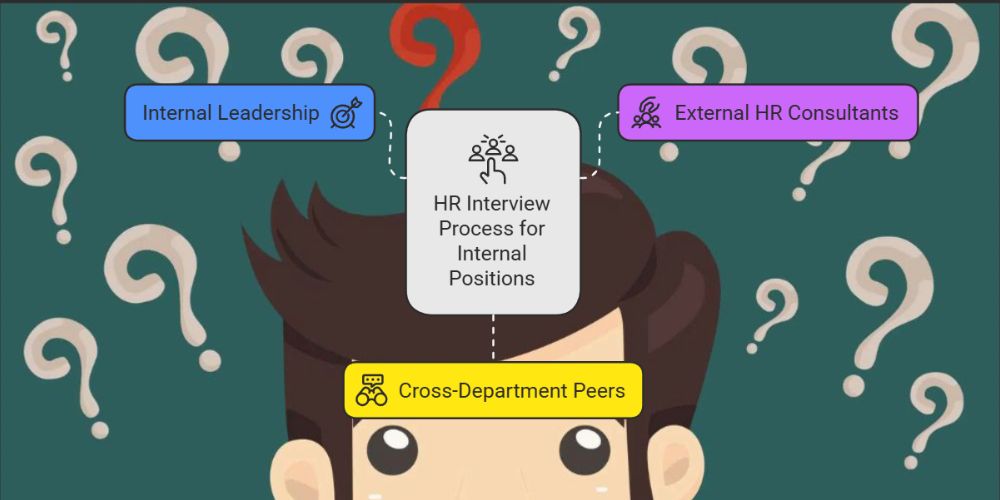
When HR itself is hiring — including replacement of senior HR staff — the interview structure shifts.
Internal Leadership
Senior HR roles are usually interviewed by the CEO, COO, or VP of HR. They evaluate strategic alignment with the company's direction, experience handling complex HR functions, and the leadership skills required to run an HR team.
External HR Consultants
Specialised HR roles or executive HR positions are sometimes interviewed by external consultants — especially during organisational restructuring or cultural transformation. The external perspective reduces bias and brings expert evaluation that internal panels may lack.
Cross-Department Peers
For HR roles touching compliance, compensation, or labour relations, peers from finance, legal, or operations may join the interview panel. The cross-functional read matters because the HR role's success depends on relationships with those teams.
Tools and Techniques HR Uses
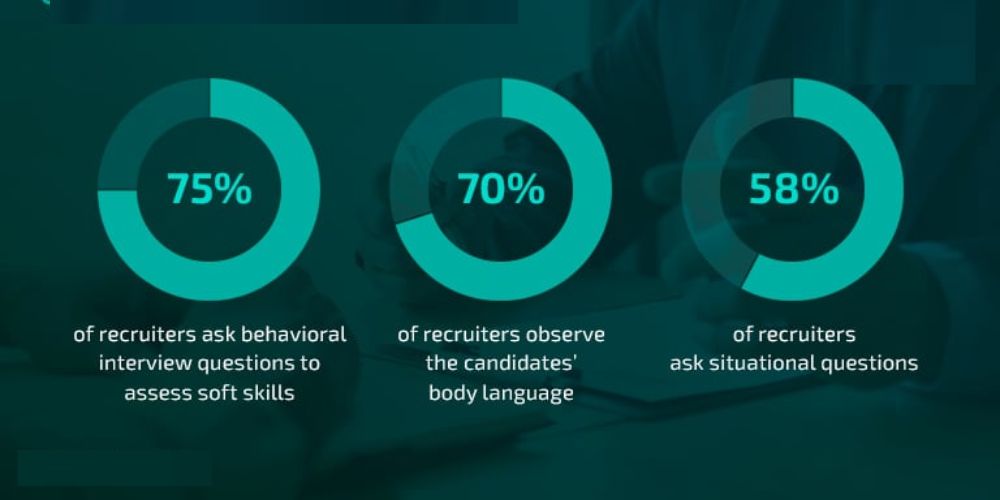
Beyond the human roles, HR uses specific interview techniques and increasingly AI-driven tools to make better hiring decisions.
Structured vs unstructured interviews
Structured interviews use the same set of questions across every candidate, scored against a consistent rubric. They are demonstrably better at predicting on-the-job performance.
Unstructured interviews allow free-flowing conversation, evaluating personality, creativity, and spontaneous problem-solving. They feel more natural but produce less reliable hiring outcomes.
Most modern HR teams use structured formats for evaluation and reserve unstructured conversation for rapport-building.
Behavioural and situational questions
The two question types serve different purposes:
- Behavioural — "Tell me about a time you handled a difficult client." Probes past actions and predicts future behaviour.
- Situational — "How would you prioritise tasks under tight resource constraints?" Evaluates reasoning and decision-making.
Both belong in a structured interview; neither alone is sufficient.
AI-driven screening and assessment
The volume of pre-interview filtering has shifted to AI. Modern tools handle resume parsing and shortlisting, and increasingly conduct first-round AI chatbot interviews that evaluate communication patterns and basic role fit. Recruiters then focus on the candidates who clearly merit human conversation.
The Bottom Line
Staffing interviews are a collaboration, not a single person's job. Recruiters, generalists, HR managers, coordinators, hiring managers, department heads, peers, and (for senior HR roles) external consultants each contribute a specific layer. The hiring decisions that hold up across years come from teams that respect the distinct value of each role rather than treating interviewing as one undifferentiated activity. According to GoodTime's interviewer-training research, roughly 99% of hiring managers report needing more structured interviewer training — investing in that training measurably lifts hiring outcomes for the companies that do.
FAQs
Who is most likely to conduct my first interview?
A recruiter or talent acquisition specialist. The first round usually verifies basic fit — qualifications, salary expectations, availability, motivation — before booking more time-intensive interviews.
Does HR always make the final hiring decision?
No. HR usually recommends; the hiring manager almost always makes the final call. The two work together, but the hiring manager owns the outcome because they will be working with the new hire daily.
Why are peer interviews increasingly common?
They reveal team-fit dynamics that resumes and HR conversations cannot. Peer interviews also give the candidate a real preview of the team — which lifts offer acceptance for genuinely good matches.
How do AI tools change who interviews candidates?
AI handles the mechanical filtering — resume scanning, basic screening, sometimes initial chat interviews — so human interviewers spend their time on conversations that need judgement. The roles do not disappear; they shift toward the higher-value parts of the job.
What is the most underrated interview role?
The HR coordinator. They never conduct interviews but make the whole process run on time. A strong coordinator is the difference between a recruiting team that closes offers in two weeks and one that loses candidates to scheduling delays.
Keep reading


