

Nurse Practitioner Interview Questions: Complete Prep Guide
Nurse practitioner interview prep — common questions with sample answers, scenario-based questions, clinical topics, and how to prepare confidently.
Ployo Team
Ployo Editorial
TL;DR
- NP employment projected to grow ~40% between 2024 and 2034 (BLS).
- Interviews test clinical competence + empathy + judgment + collaboration.
- Expect behavioural, scenario-based, and clinical questions.
- STAR method works for behavioural answers.
- 54% of candidates have walked away from jobs due to poor interview communication.
Landing a nurse practitioner job feels like walking through a maze when you don't know what questions are coming. This guide walks through what employers actually look for, common questions with sample answers, scenario-based probing, clinical topics, and a prep plan that builds real confidence.
What Employers Look For

NP demand is climbing fast — per BLS data, the field will grow ~40% between 2024 and 2034. Employers want NPs who can deliver safe care reliably.
Core qualities
- Solid clinical skills + up-to-date patient care knowledge
- Clear patient communication and empathy
- Calm decision-making under pressure
- Strong teamwork and collaboration
- Professionalism, integrity, reliability
Many institutions also run a pre-screening process — resume screening, reference checks, phone interviews — before the main interview. Pass that, and the interview becomes your chance to show you're more than the resume.
Common Questions With Sample Answers
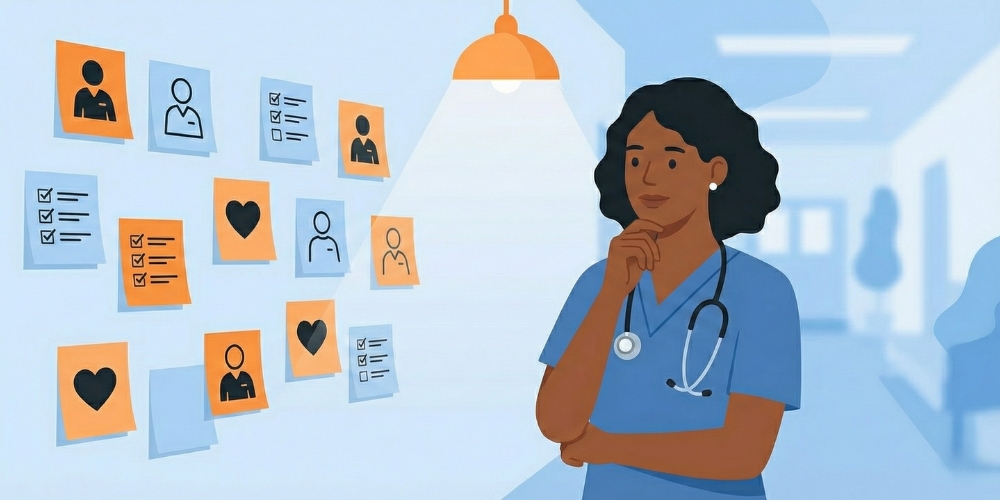
Four high-frequency questions and strong answer patterns.
"Why did you become a Nurse Practitioner?"
"I wanted to build on nursing experience and take a more active role in diagnosis and management. NP work combines clinical depth with empathy."
"Which patient population do you feel most comfortable with?"
"Adults in primary care — I enjoy helping with chronic illness management and lifestyle guidance. I'm also open to learning if this role includes pediatrics or geriatrics."
"How do you stay current with medical guidelines?"
"Weekly time with journals or webinars, peer-review groups, and updates from professional organisations. Keeps care aligned with current evidence."
"Strengths and weaknesses as a clinician?"
Strength: "I build rapport quickly, helping patients open up about their health." Weakness: "I sometimes over-prepare notes before visits — I'm working on efficiency while staying thorough."
Behavioural and Scenario-Based Questions
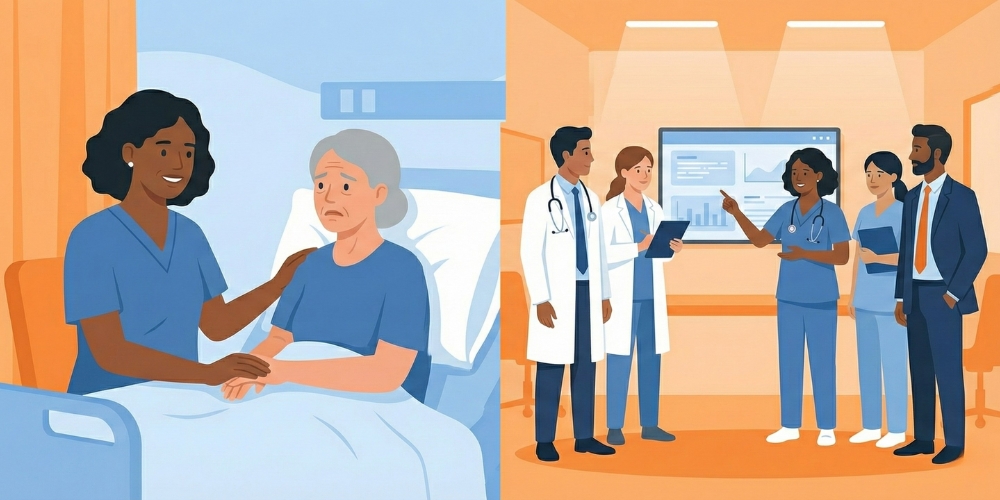
Interviewers use real-life situations to test pressure response.
"Describe handling a difficult patient or family member"
"A patient was anxious after abnormal lab results. I listened to their concerns, explained the results in clear language, and guided them through next steps. Anxiety reduced; we built a follow-up plan together."
"Conflict with a colleague's recommendation"
"I'd listen fully to their reasoning, share my thinking with evidence, and propose collaboration on a patient-focused plan. If still misaligned, I'd loop in a senior clinician to keep the patient safe."
"Spotting a medication error before prescribing"
"I'd stop, review the patient's history, lab work, and current medications. If confirmed, I'd correct on the spot and consult the physician or pharmacist to ensure ongoing safety."
"Working short-staffed with high patient volume"
"Triage by acuity. Most urgent first. For the rest, I'd ensure clear next steps and coordinate with the team to keep care safe and steady."
Clinical and Technical Questions
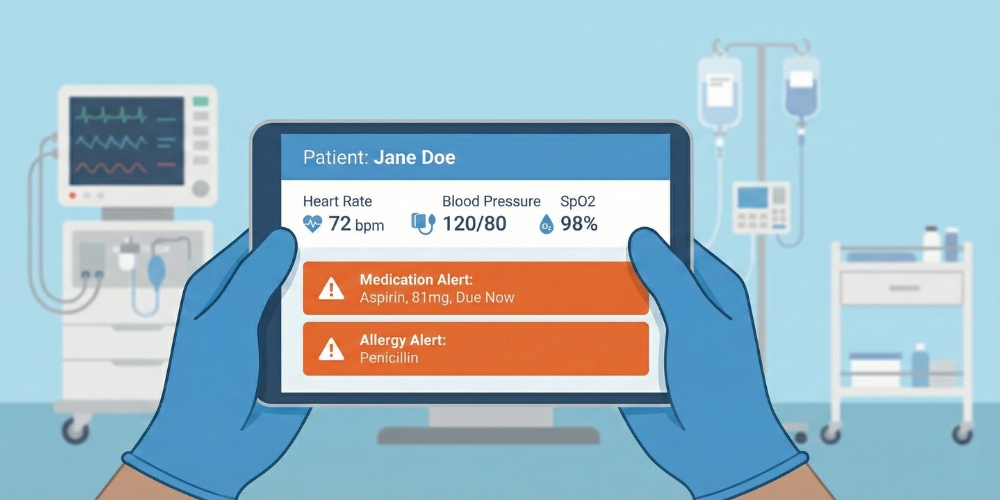
Four high-likelihood topics.
"How do you decide which diagnostic test to order with unclear symptoms?"
Show you combine vital signs, history, assessment, and red-flag risk profiling before ordering.
"Process before prescribing?"
Allergy checks, interaction screening, dose verification, patient education.
"Handling triage during busy shifts?"
Explain urgency classification and evidence-based triage standards.
"EHR systems and documentation?"
Accurate charting, order verification, real-time updates that reduce errors.
How to Prepare
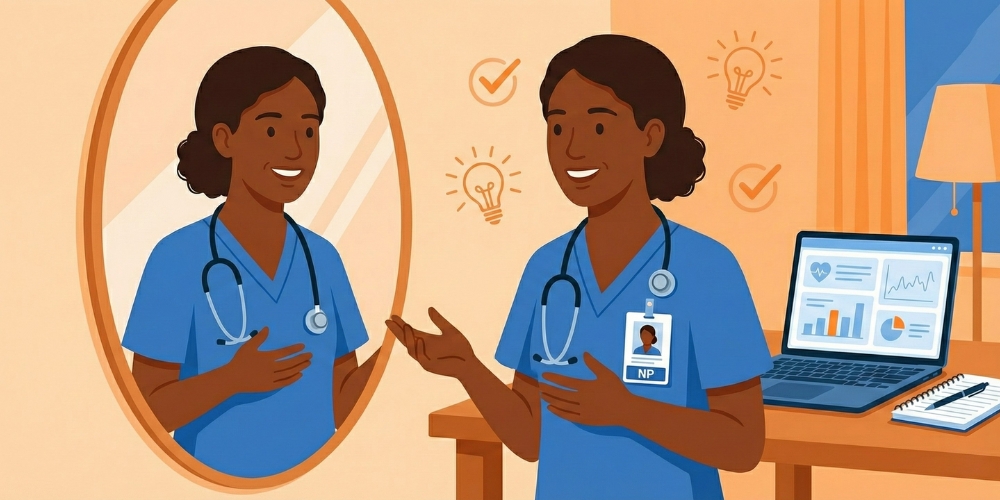
Six-step prep plan.
- Practice answers to common questions out loud
- Refresh guidelines for common chronic conditions + emergency red flags
- Study the organisation's patient population + mission
- Prepare examples from past clinical responsibilities
- Bring thoughtful questions to ask
- Practise posture, eye contact, conversational clarity
Per StandOut CV's interview statistics, 54% of candidates have walked away from jobs because of poor interview communication. Preparation prevents that — on both sides.
If you're entering a program, you may also ask about screening interview questions you've already passed and what mentorship or specialty support is available.
Mistakes to Avoid
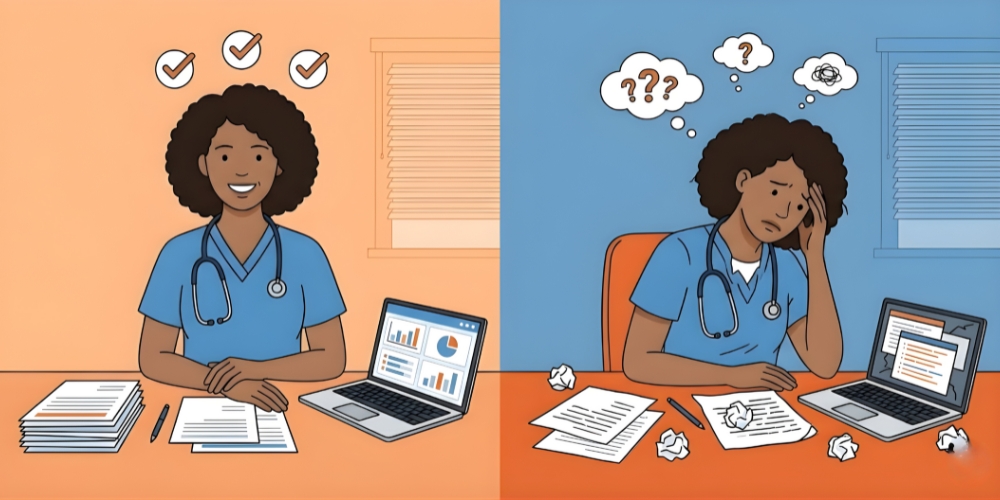
Six common slips.
- Speaking only about yourself instead of patient outcomes
- Giving vague answers without examples
- Criticising previous workplaces
- Not asking questions back — signals lack of interest in patient care culture
- Ignoring specialty-specific expectations
- Skipping prep on workflow, autonomy, collaboration topics
The Bottom Line
NP interviews test calm, care, and clear thinking. Employers want clinicians they can trust with patient safety, teamwork, and adaptability. Prepare your stories, rehearse answers, refresh clinical knowledge, and bring curiosity. The right preparation transforms nerves into confidence — and helps you start the role on solid ground.
FAQs
How do I get ready for an NP interview?
Review answers ahead of time, refresh clinical topics, learn about the workplace, prepare 3 STAR stories, and bring questions showing genuine interest.
What soft skills do employers prioritise?
Empathy, clear communication, teamwork, honesty, calm under pressure. These build patient safety and colleague trust.
How long should clinical answers be?
60–90 seconds. Long enough to show structure; short enough to keep flow.
Should I ask about the workplace culture?
Yes — ideally early in the conversation. Demonstrates investment in fit, not just landing the role.
What's the highest-leverage prep move?
Build three behavioural STAR stories — one on handling a difficult patient, one on colleague collaboration, one on a clinical judgment call. They cover most behavioural prompts you'll face.
Keep reading


