

On-Demand vs Live Interviews: When to Use Each
On-demand and live interviews each have strengths — when to use each, the trade-offs, and how AI makes both formats fairer and faster.
Ployo Team
Ployo Editorial

TL;DR
- 70% of talent leaders use virtual interviews in their hiring (HireVue 2023).
- On-demand interviews: candidates record answers to preset questions anytime.
- Live interviews: real-time conversation, two-way interaction.
- On-demand excels at high-volume early screening; live excels at depth and culture fit.
- AI supports both — bias reduction, consistent scoring, practice rounds, collaboration.
The on-demand vs live interview debate misses the point — strong hiring teams use both, deliberately matched to the stage of the funnel. This guide walks through what each format is, when each works best, and how AI makes both more effective.
What an On-Demand Interview Is
Candidates record answers to preset questions on their own device. Recruiters review the clips asynchronously. Per HireVue's 2023 Global Trends report, 70% of talent leaders use virtual interviews as part of hiring.
How it works
- Candidate receives a link.
- Records answers on phone or laptop at their convenience.
- Recruiters review and rate clips asynchronously.
Same questions for every applicant produces fair comparison. Some platforms add practice rounds to reduce candidate stress and pair well with AI-driven interview analytics for clarity, structure, and keyword surfacing.
Best fit: high-volume early-funnel roles — customer support, retail, healthcare, graduate hiring.
What a Live Interview Is

Both sides join at the same time — online via camera or in person. Lets employers read communication style, body language, and personality dynamics; lets candidates ask real follow-ups.
Best fit: deeper conversations testing collaboration, problem-solving, and culture alignment. Scheduling is harder, especially with multiple interviewers or cross-time-zone candidates.
Side-by-Side Comparison
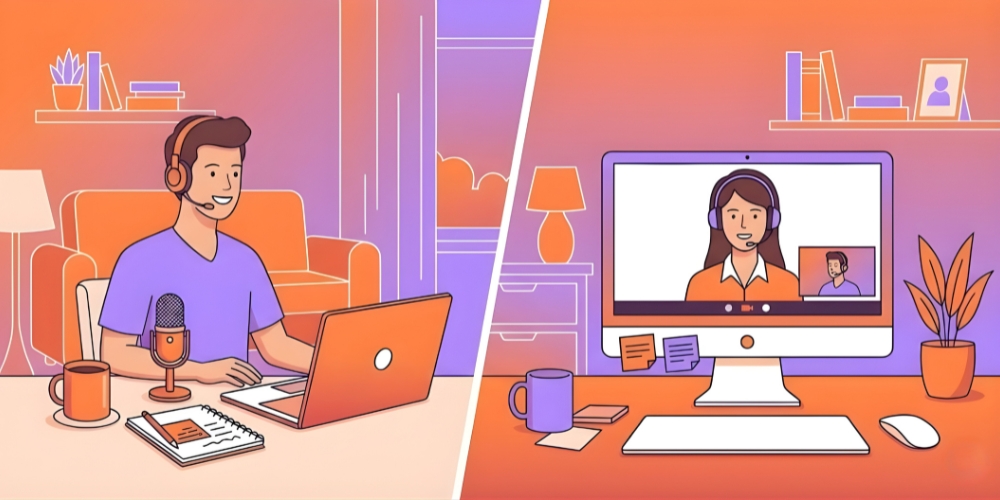
| Feature | On-demand | Live |
|---|---|---|
| Timing | Candidate records anytime | Everyone joins simultaneously |
| Speed | High-volume review with less effort | Slower, more planning |
| Human interaction | Lower in first stage | Stronger connection |
| Fairness | Identical questions per candidate | Depends on interviewer style |
| Candidate comfort | Records calmly in own space | Can feel rushed or stressful |
| Screening quality | Strong early review | Best for deeper role checks |
| Cost | Lower at scale | More time per candidate |
| Data insights | Rating tools + AI support | Mainly human notes |
On-demand checks skills fast; live tests personality and teamwork. Using both removes guesswork.
Pros and Cons in Practice

On-demand strengths
- Fast screening at scale
- No scheduling friction
- Same questions = fair comparison
- Works across time zones
- Recordings enable team review and scoring
On-demand limits
- Harder to build personal connection
- Some candidates worry about recording quality
- Less suitable for deeply discussion-driven roles
Live strengths
- Two-way interaction builds trust
- Real-time follow-up reveals nuance
- Strong for personality and team fit
- Useful for final hiring decisions
Live limits
- Scheduling slows the process
- Interviewer bias harder to control
- Higher energy and time cost per candidate
The strongest hiring teams blend both — on-demand for speed, live for clarity.
How AI Improves Both Formats
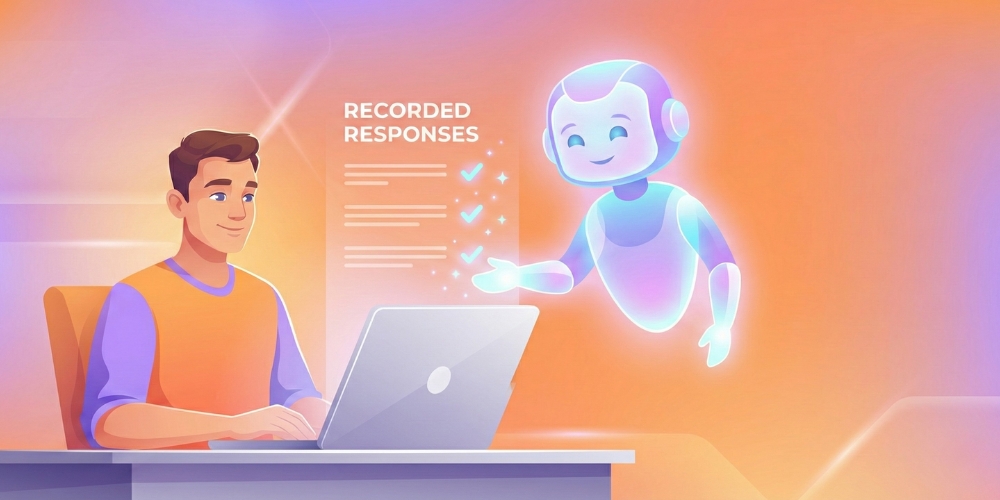
Five concrete contributions.
Faster review
AI analyses speech clarity, structure, and keywords so hiring teams focus on meaningful patterns rather than note-taking.
Bias reduction
Standardised scoring smooths out interviewer-to-interviewer variance and reduces accidental bias.
Better fit prediction
Highlights communication strength, teamwork narratives, and job-relevant keywords.
Stronger candidate experience
Practice rounds and virtual interview tips help candidates feel less stressed.
Easy team collaboration
Recordings let multiple reviewers comment and rate clips on their own schedule.
AI supports decisions; humans make them. The combination produces fairer outcomes than either alone.
When to Use Each
Use on-demand when
- High applicant volume
- Quick screening needed (support, retail, internships)
- Cross-time-zone hiring
- Want structured, comparable evaluations
Use live when
- Culture, teamwork, leadership skills matter
- Deeper follow-up questions needed
- Senior roles with multiple decision-makers
- Personal connection matters for the decision
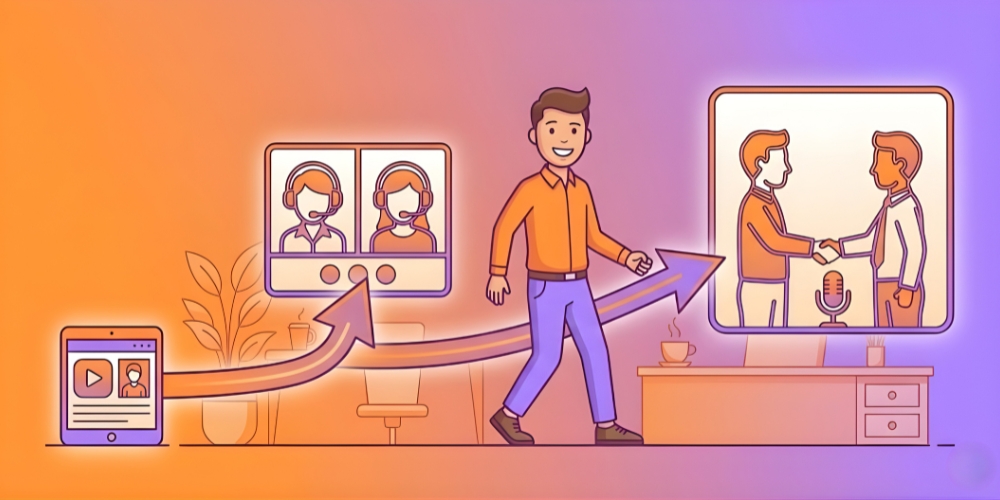
The optimal hiring flow
- On-demand for high-volume early screening.
- Live for shortlisted candidates.
- Final panel interview or skills-based task for the offer decision.
This sequence stays fair, removes scheduling drag, and keeps real human evaluation where it matters most.
The Bottom Line
The smartest hiring teams don't choose between on-demand and live — they combine them deliberately, matched to where in the funnel speed vs depth matters most. AI makes both formats fairer and faster without replacing human judgment. The result is a hiring process that respects candidate time, scales efficiently, and still produces nuanced final decisions.
FAQs
What's the main difference between on-demand and live?
On-demand uses preset questions recorded asynchronously; live happens in real-time with two-way interaction. Different strengths, different ideal stages.
Are on-demand interviews effective for all roles?
Best for early rounds and high-volume hiring. Senior or complex roles still benefit from live conversations alongside on-demand screening.
How does AI improve interview quality?
AI highlights communication strengths, structures responses, and supports consistent scoring. Humans still make final decisions, but the process becomes smoother and fairer.
Should I always use both?
For most volume hiring: yes. For very small hiring scale (1–2 hires per year): the overhead of on-demand tooling may exceed its value; live-only can be sufficient.
What's the highest-leverage starting move?
Adopt on-demand interviewing for one high-volume role for 60 days. Measure time-to-hire and candidate-experience scores before and after. The ROI usually becomes obvious quickly.
Keep reading


