

Saudization Explained: Every Employer Compliance Guide
Saudization explained — how it works, industry targets, penalties, support programs, and how employers stay compliant while benefiting from local hiring.
Ployo Team
Ployo Editorial

TL;DR
- Saudization (Nitaqat) requires private companies to hire Saudi nationals.
- 269+ professions are fully or partially reserved for Saudis.
- Categories: Platinum, Green, Yellow, Red — based on compliance.
- Non-compliance blocks visas, fines, contract access.
- 400,000+ Saudis employed via Hadaf in 2023 (Arab News).
Hiring in Saudi Arabia isn't just about finding qualified talent — employers must reflect national workforce goals through Saudization. For private sector businesses, knowing the rules isn't optional. This guide explains what Saudization is, how it works, the targets by industry, and how to stay compliant while benefiting from local hiring.
What Saudization Is

Officially the Nitaqat Program. National initiative by MHRSD to replace portions of foreign workforce with qualified Saudi nationals across industries. Core economic reform aligned with Vision 2030.
Per Sundus Global, the government has defined 269+ professions in the private sector that are fully or partially reserved for Saudis — including customer service, IT, engineering, HR.
How Saudization Works
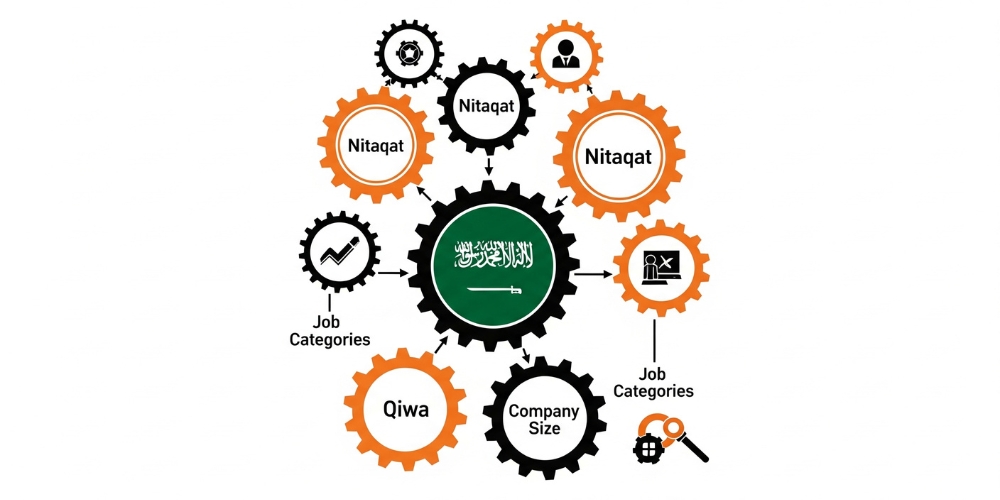
Companies are assigned to categories — Platinum, Green, Yellow, Red — based on hiring performance vs similar-sized industry firms. Each sector has a minimum Saudization percentage.
Rewards for compliance
- Easier access to government services
- Fast-track visa processing
- Enhanced credibility via Saudization certificate
- Linked to accurate GOSI registration compliance
Penalties for non-compliance
- Service suspensions
- Visa permit blocks
- Fines
Why It Matters for Employers

Three perspectives.
Legal and business risk
Quota failure restricts Qiwa access, delays approvals, blocks visas.
Cultural alignment
Saudized teams reduce onboarding times and improve brand alignment with national values.
Long-term sustainability
Investment in local talent supports both compliance and Vision 2030 alignment.
Saudization Targets by Industry
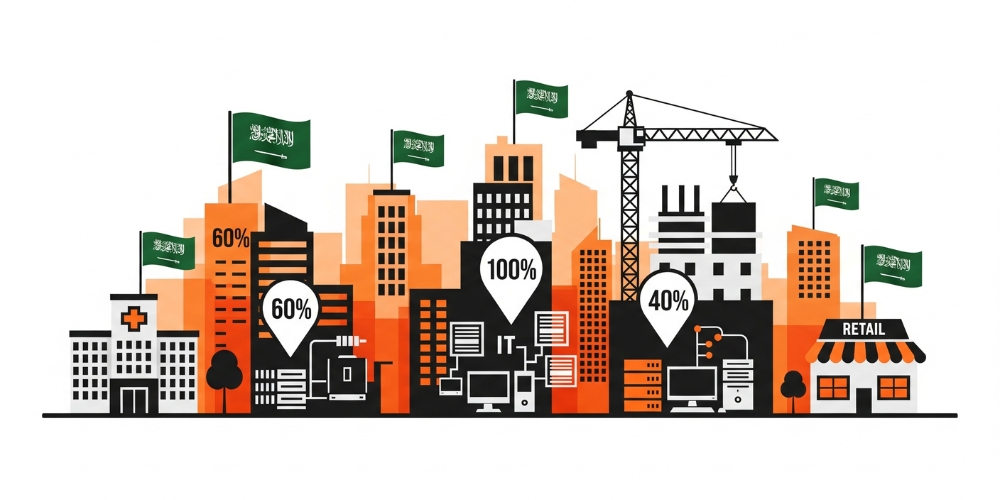
Saudization percentages vary by industry, business size, and role.
| Sector | Target |
|---|---|
| Retail | Up to 70% (sub-sectors with customer-facing roles) |
| Construction + engineering | Civil engineers, surveyors, site inspectors growing |
| Healthcare | Pharmacy, radiology, lab tech, health informatics localised |
| Hospitality | 40% (reception + administrative) |
| IT + communications | 100% for software developers, cybersecurity (2024 directive) |
The MHRSD regularly releases updated job lists for sectors like education, insurance, and energy.
Consequences of Missing Targets
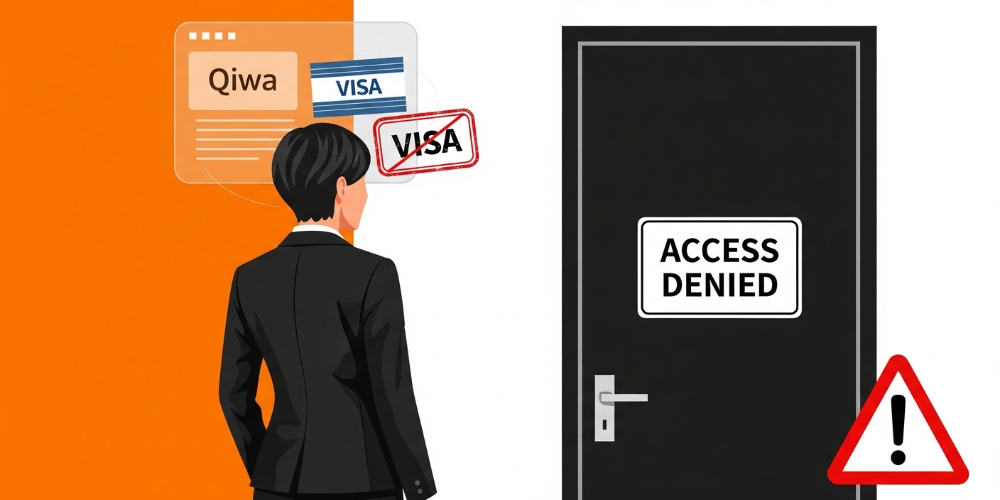
Yellow or Red status triggers significant operational risks.
- Suspended access to Qiwa, Mudad, HRSD platforms
- Inability to renew or issue work permits
- Government contract approval delays
- Fines and possible closure for repeated non-compliance
Expired Saudization certificates also affect credibility with local clients and partners, especially as HR automation in KSA makes monitoring more sophisticated.
How Employers Comply
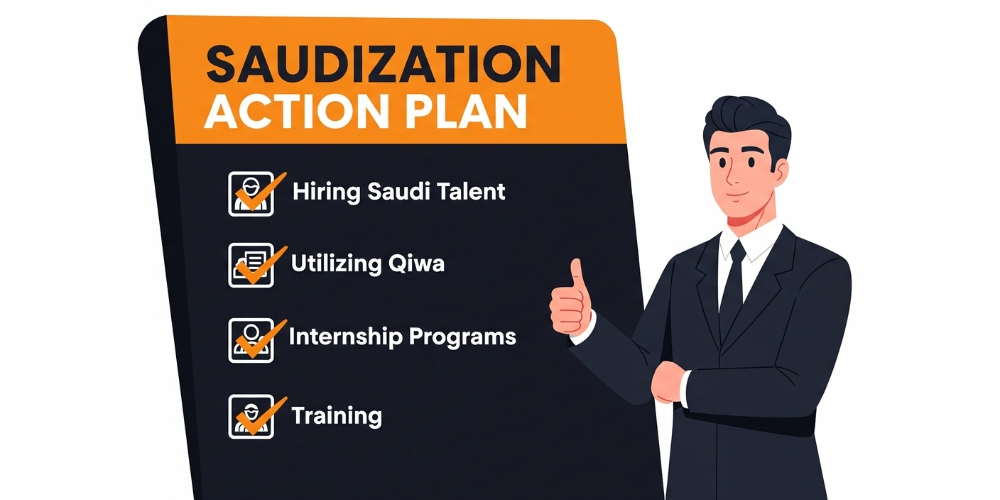
Six steps.
1. Understand your sector's requirements
Login to Qiwa to check requirements for industry and company size.
2. Audit your workforce
Identify gaps. Focus on roles falling under Saudization professions.
3. Hire strategically
Prioritise Saudi nationals for new and replacement hires in reserved professions.
4. Train and upskill local talent
Onboarding and development programs enabling Saudis to grow into mid- and senior-level positions.
5. Maintain a valid certificate
Reflects compliance; unlocks additional government services.
6. Monitor progress
Qiwa and Mudad track hiring ratios and forecast classification impacts.
Government Support Programs

Four programs that meaningfully support compliance.
TAQAT
National platform connecting employers with qualified Saudi job seekers.
Hadaf (Human Resources Development Fund)
Salary subsidies, on-the-job training support, hiring incentives.
Tamheer Program
Financial support for fresh graduates undergoing internships in private sector.
Qiwa Platform
Central hub for calculating Saudization percentage, viewing classification, issuing certificates.
Per Arab News reporting, Hadaf supported 400,000+ Saudi hires in 2023 — and numbers continue growing alongside parallel programs like the Nafis program for Emiratis.
The Bottom Line
Saudization is about shaping a workforce built on local talent and aligned with the Kingdom's long-term goals. More roles enter reserved profession lists each year. Companies that understand the rules, adjust hiring strategy, and tap available support programs can meet requirements, maintain certificates, and build teams supporting both business growth and national progress simultaneously.
FAQs
Who sets Saudization targets?
MHRSD sets and updates them. Customised by sector, company size, role. Published on Qiwa.
What happens if I miss my quota?
Yellow or Red classification → blocked visa renewals, suspended platforms, disqualification from government contracts. Expired certificate damages credibility.
How can I improve our Saudization level?
Hire in key reserved professions. Use Tamheer and Hadaf. Prioritise technical engineering Saudization. Track via Qiwa. Invest in internships and training partnerships.
Does Saudization affect all company sizes?
Yes. All private-sector firms must follow rules — though specific quotas scale by size and industry.
What's the highest-leverage starting move?
Login to Qiwa and verify your current percentage and classification today. Most compliance gaps are fixable with 90-day intentional hiring plans once visible.
Keep reading


