

How Teamwork Values Reduce Employee Turnover
Strong teamwork values drive retention — trust, fairness, alignment. How to build them, what they cost when missing, and the lasting payoff.
Ployo Team
Ployo Editorial

TL;DR
- 51% of US workers are actively seeking or watching for new jobs (Gallup).
- Replacing an employee can cost 50–200% of annual salary (Gallup).
- 42% of turnover is preventable when culture issues get addressed early.
- Core teamwork values: trust, respect, fairness, encouragement, innovation.
- Daily habits + recognition + modelling drive retention more than perks alone.
People keep switching jobs, and the bill is enormous. Turnover is one of the largest hidden costs in modern business — and strong teamwork values are one of the most effective fixes. This guide explains what teamwork values actually mean, how they reduce churn, and how to build them into everyday work.
What "Teamwork Values" Means

The beliefs and habits a group lives by. The unwritten rules teams follow together.
Common categories
- Core values like respect, support, fairness
- Team alignment where everyone cares about the same ideals
- Innovation as a shared belief in trying new ideas
- "Value team member" mindset — actively helping and encouraging others
In practice, these show up as agile team norms (daily check-ins, pairing, fast feedback), team values exercises (each person sharing one daily-supportive action), and team values stories told during employee onboarding to teach new hires the culture fast.
The Link Between Values and Turnover

When employees feel connected to shared values, they stay longer.
Per Gallup data, up to 42% of turnover is preventable when organisations address workload and culture issues early. Per Gallup's retention indicator, 51% of US workers are currently seeking or watching for new jobs.
Cost reality
Replacement cost runs 50–200% of annual salary. For a $60K hire, that's $30K–$120K. Building values rooted in respect and inclusion is one of the highest-ROI investments leaders can make.
Key Values That Reduce Turnover

Seven values that consistently move the needle.
Trust and honesty
Foundation of psychological safety. People stay where they feel safe.
Belief that each person matters
Being seen and valued is a major retention driver.
Fairness and encouragement
Builds loyalty; reduces resentment-driven exit.
Innovation as core value
Teams open to new ideas feel excited rather than stagnant.
Values alignment
Goals + behaviours matching expectations lowers friction.
Active reflection
Team values exercises build connection fast.
"Value team member" mindset
Every person contributing and uplifting others. Morale spreads.
How Employers Build These Values
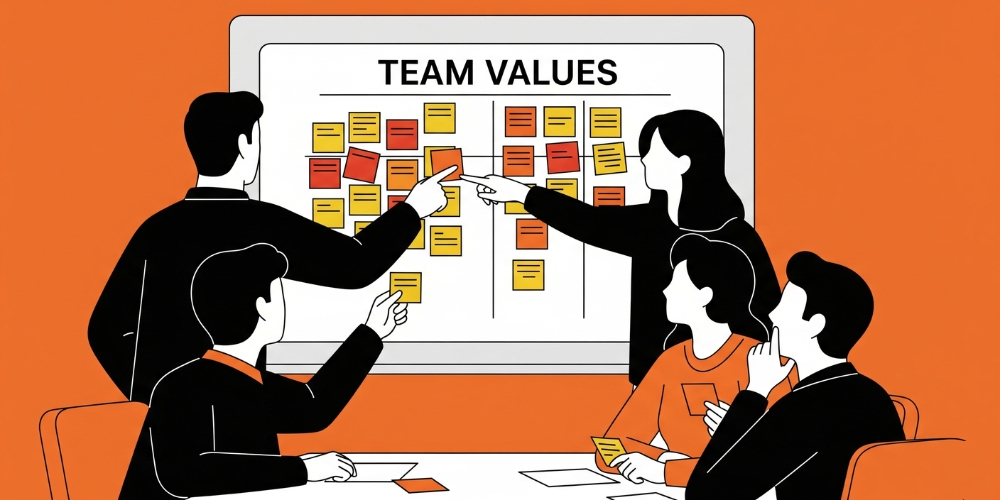
Seven practices that compound.
Leaders model first
When leadership demonstrates collaboration and respect, teams mirror it.
Use team values exercises early
During automated onboarding, each new hire shares a value they care about. Builds connection from day one.
Tie values to daily habits
Quick check-ins, shout-outs when someone lives the values. Trust compounds.
Encourage agile team norms
Flexible routines around adaptation, helping, and feedback. Keeps values in action.
Recognise role models
Public recognition for value-aligned team members. Builds morale and signals what matters.
Use metrics smartly
Track retention and engagement. Patterns reveal what's working.
Build belief through story
Real examples of how teamwork values overcame obstacles. Stories outlast slogans.
Benefits Beyond Retention

Five compounding benefits.
Adaptability
Agile team norms enable fast pivoting in changing markets.
Innovation
Teams treating innovation as core value share ideas without fear.
Cross-functional collaboration
Alignment reduces silos and improves outcomes.
Faster onboarding
New hires absorb culture faster when values are tangible.
Stronger remote ethics
The role of teamwork ethics in remote jobs becomes clearer when fairness frameworks already exist.
The Bottom Line
Turnover is expensive, stressful, and disruptive. Strong teamwork values are one of the simplest, most cost-effective ways to stop it before it starts. When teams focus on trust, fairness, and shared purpose, people stay — and the broader payoff includes innovation, morale, and adaptability. Investing here pays back across years, not weeks.
FAQs
Which teamwork values matter most for retention?
Trust, respect, fairness, openness. The foundation of loyalty and belonging.
Can teamwork fix high turnover in toxic workplaces?
Partially. Leadership accountability must come first; values can't take root in environments that punish honesty.
How can HR measure teamwork impact on retention?
Track turnover rates, engagement scores, participation in values exercises. Multi-quarter trends reveal what's actually working.
What's the highest-leverage starting move?
Run one team values exercise this month. Each person shares one value and how they demonstrate it. Small intervention; surprisingly strong signal.
Do these practices apply to remote teams?
Yes — even more so. Remote teams rely on explicit values since informal cultural transmission is harder. Documented norms become essential.
Keep reading


Compensation Planning Explained: A Strategic HR Guide for 2026
