

UAE Jobs for US Citizens: What American Expats Actually Earn and Experience
US citizens working in the UAE — sectors hiring, real tax-free pay, visa and sponsorship basics, and the lifestyle, safety, and culture you should expect.
Ployo Team
Ployo Editorial
TL;DR
- UAE salaries are tax-free locally, but US citizens must still file with the IRS — the Foreign Earned Income Exclusion shields up to $130,000 in 2025.
- Top sectors hiring Americans: healthcare, technology and AI, finance and fintech, and education.
- The work week shifted to Monday-Friday in 2022, aligning with global markets.
- Employer sponsorship is the standard route to long-term work residency; the 10-year Golden Visa is the aspirational target.
- The UAE consistently ranks as one of the world's safest countries — a major draw for American expat families.
The UAE has become one of the strongest destinations for American professionals looking to accelerate income, work in a global city, and live in a tax-friendly environment. The questions most Americans ask before moving are practical and important: what sectors hire foreigners, how does the tax situation actually work, what does daily life look like, and is it safe? This guide answers each of those clearly, with current data, so a US citizen considering the move can make an informed decision rather than relying on second-hand impressions.
Industries Actively Hiring US Citizens

The UAE economy has diversified well beyond oil and gas. The sectors where US training and credentials are most valued:
Healthcare
Hospitals such as Cleveland Clinic Abu Dhabi actively recruit US-licensed doctors, nurses, and specialists. CareerLinkHR's 2024 healthcare salary data shows Western-trained physicians earning between 25,000 AED and over 110,000 AED monthly — roughly $4,900 to $27,200 USD, depending on specialty and seniority.
Technology and AI
The UAE has set explicit national strategy around AI through programs like the "Dubai Universal Blueprint for Artificial Intelligence." Demand is high for data scientists, machine learning engineers, cybersecurity specialists, and infrastructure engineers — particularly those with Silicon Valley or major US tech employer experience.
Finance and Fintech
Dubai International Financial Centre (DIFC) and Abu Dhabi Global Market (ADGM) house most of the region's financial firms. Compliance, wealth management, private equity, and fintech roles are consistently open to Americans with strong banking or fintech backgrounds.
Education
International schools across the UAE — many following American or IB curricula — actively hire US-credentialed teachers and administrators. Family relocation support is often strong in this sector.
Visa and Sponsorship Basics

The legal pathway is straightforward for skilled professionals.
Most Americans enter the UAE on a 30-day visa-on-arrival while their employer begins the residency process. Obtaining a work visa in the UAE is the employer's legal responsibility — they sponsor, fund, and manage the paperwork.
For long-term residency, the targets are:
- Standard employer-sponsored residence visa (2-3 years, renewable)
- 10-year Golden Visa for specialists, investors, and exceptional talent
- UAE citizenship — historically very difficult, but 2021 amendments to the Nationality Law now allow nominated investors, doctors, and specialists to apply under specific criteria
The Golden Visa is the realistic long-term target for most Americans planning to stay more than a few years.
Salary and Tax Reality
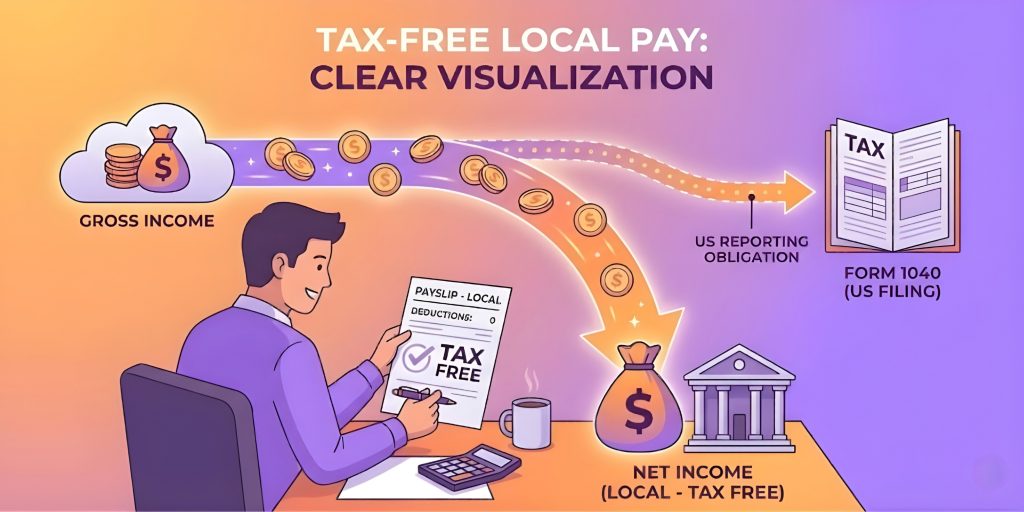
The headline: UAE salaries are tax-free at the local level. Gross pay is take-home pay. Time Doctor's salary research puts the average Dubai salary at roughly $4,274 USD per month — though Western-trained professionals in mid-to-senior roles typically earn substantially more.
For US citizens specifically, the tax picture is slightly more nuanced. The US taxes its citizens on worldwide income regardless of where they live. The practical mitigation is the Foreign Earned Income Exclusion (FEIE), which shields up to roughly $130,000 of foreign-earned income for the 2025 tax year if you meet the physical presence test (330 days outside the US within a 12-month period) or the bona fide residence test.
The combined effect: Americans pay no UAE income tax locally, and most of their UAE salary falls under the FEIE shield from US federal tax. Income above the FEIE threshold is still subject to US tax, but the exclusion makes a UAE salary significantly more take-home-effective than a comparable US salary — especially compared to high-tax US states.
Benefits Packages That Go Beyond Base Pay
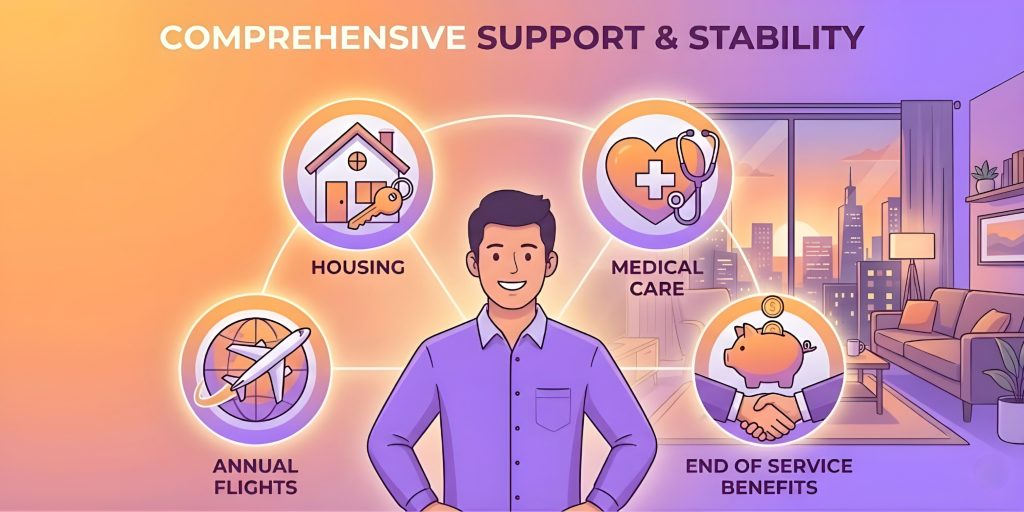
UAE compensation packages typically include components American hiring contracts often skip.
- Housing allowance. Commonly 30-40% of total compensation to offset Dubai or Abu Dhabi housing costs.
- Annual airfare. Most contracts include one round-trip ticket to the US per year, often for the employee and their immediate family.
- Medical insurance. Required under UAE employment law — the employer must provide coverage.
- End-of-service gratuity. Unlike US 401(k) plans, the UAE uses a lump-sum gratuity paid at the end of employment, calculated on years of service.
The total package, evaluated honestly, is often meaningfully more attractive than the headline salary suggests.
Cost of Living Reality
The Dubai median monthly salary sits around 13,800 AED ($3,757) according to Time Doctor's research, but Western expats in management or specialist roles typically earn 2-3x that figure. Housing is the largest expense — premium areas can run high — but overall cost of living in Dubai is roughly 22% lower than major US cities.
For families considering the move, public-sector opportunities like UAE government jobs often include richer housing and education allowances.
Work Culture Expectations

UAE workplaces blend international corporate standards with local cultural norms.
- Work week: Since 2022, the UAE has operated on Monday-Friday — aligned with international markets. During Ramadan, the workday is shortened by two hours for all employees.
- Business style: Highly relational. Meetings often start with coffee and small talk before getting to the agenda. Building trust takes precedence over fast transactions.
- Dress and conduct: International in most corporate settings, but professional dress and respectful conduct in public — especially around religious occasions — are expected.
- Networking: Expat life in Dubai is built on networking. Joining industry associations, alumni groups, and expat communities accelerates both professional and personal integration.
The culture is comfortable for most Americans, but worth understanding before the first big meeting.
Safety and Quality of Life
A common concern for Americans considering the move: is Dubai actually safe? The data is unambiguous. The 2025 Numbeo Safety Index ranked the UAE as the safest country in the world out of 168 nations, with a safety score of 85.2.
In practical terms, this means:
- Walking home at night is normal across major cities
- Driverless metro systems run reliably
- Family-friendly environments are the rule, not the exception
- Near-zero violent crime rates compared to US metropolitan areas
The combination of high security, modern infrastructure, and quality healthcare and education makes the UAE one of the more straightforward international moves an American family can make.
The Bottom Line
For an American professional, working in the UAE offers a rare combination: high salary, tax-friendly structure, world-class lifestyle, family-grade safety, and accelerated savings potential. The visa and sponsorship process is well-established, the major sectors actively hire Americans, and the cultural fit is comfortable. The move is not for everyone — distance from family in the US is real, summers are hot, and cost of living in premium Dubai areas is not low — but for professionals in healthcare, tech, finance, or education looking to accelerate their financial goals, it is one of the strongest international moves available.
FAQs
Can US citizens work in the UAE?
Yes. Americans are highly welcomed in skilled sectors. The typical path is entering on a visa-on-arrival, securing a job offer, and transitioning to an employer-sponsored residency permit.
Are UAE salaries genuinely tax-free?
Locally, yes — the UAE imposes no personal income tax. US citizens still must report worldwide income to the IRS, but the Foreign Earned Income Exclusion typically shields a significant portion of UAE earnings.
Is the UAE safe for American expats?
Consistently ranked as one of the safest countries in the world. The 2025 Numbeo index ranked it #1 globally. Family-grade safety is one of the most cited reasons Americans relocate there.
What is the typical contract length for an American expat in the UAE?
Most professional contracts run 2-3 years initially, with renewal common. Senior roles and Golden Visa holders often have indefinite arrangements.
How does the cost of living compare to major US cities?
Overall, roughly 22% lower than major US metros — though premium Dubai areas can be comparable to expensive US cities. The tax-free salary structure compounds the advantage further.
Keep reading

Working in Japan as an American: The Recruiter's Reality Check

Salary vs Hourly Pay: Which Compensation Model Wins in 2026?
