

Talent Assessment in Finance: Hiring With Precision
Finance hiring leaves no margin for error — how structured talent assessment reduces mis-hires, compliance risk, and improves fit in financial services.
Ployo Team
Ployo Editorial
TL;DR
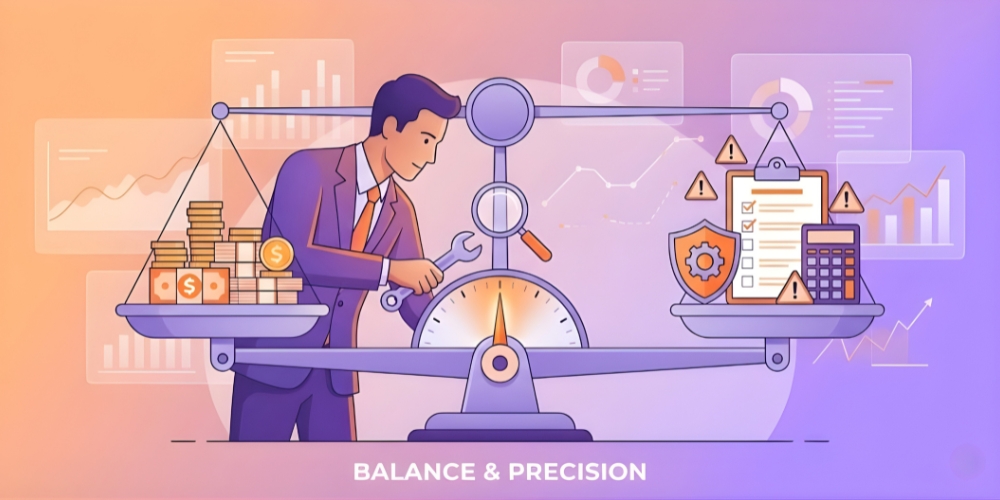
- Bad finance hires cost ~30% of first-year salary in productivity + recruitment.
- 87% of finance companies now use skills-based hiring (TestGorilla).
- Roles operate under regulator + client scrutiny — small errors compound fast.
- Structured assessments catch analytical, ethical, and judgment gaps before hire.
- Role-specific assessment beats one-size-fits-all every time.
In finance, a single mis-hire can damage trust, compliance, and the bottom line in ways that other industries never see. This guide breaks down why finance hiring demands more precision, what talent assessment actually is, what to test, and how to reduce risk without slowing down too much.
Why Finance Hiring Demands Higher Precision
Finance roles aren't just about numbers. They demand judgment, risk management, ethical decision-making, regulatory awareness, and client trust.
Per Testlify research, a poor finance hire can cost ~30% of first-year salary in lost productivity and recruiting expenses. Combine that with regulator and client scrutiny, and a single error in accounting, reporting, or compliance can cascade fast.
What Talent Assessment Is
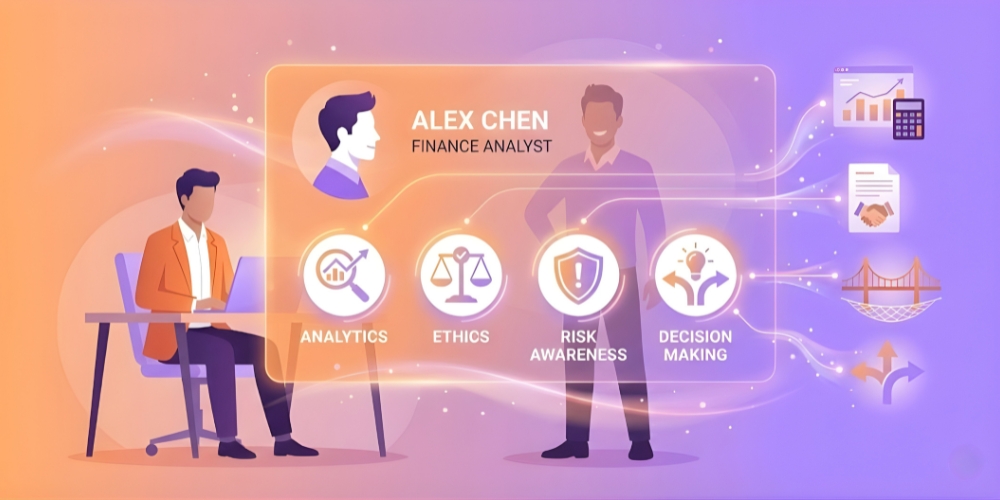
Structured evaluation of skills, traits, and potential before joining the team. Ranges from financial reasoning tests to personality inventories to real-task simulations.
Core purpose
Predict how candidates will perform once hired. Quantifies competencies — analytical reasoning, ethical judgment, decision-making — that resumes and interviews can't reliably surface.
Why It's Critical in Finance
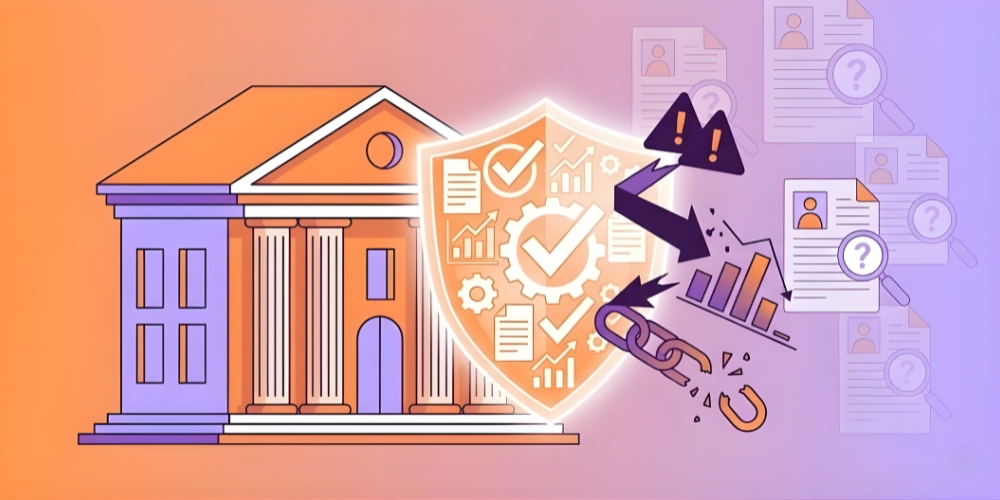
Five concrete reasons.
Better decisions, less bias
Structured tools measure everyone against the same standard, reducing space for personal bias to creep in.
Alignment with evolving roles
Finance roles now involve data systems, digital tools, regulatory automation. Resumes can't surface whether someone handles these shifts; assessments can.
Reduced costly mis-hires
Mismatched hires create compliance penalties, customer loss, reputational damage. Assessment catches gaps before they become costs.
Skills-first hiring at scale
Per TestGorilla's Fintech Factor report, 87% of finance companies now use skills-based hiring — above cross-industry averages, signalling how critical it is for the sector.
Better fit and retention
Skills match + working-style match → smoother teams + fewer mistakes.
Key Skills to Assess

Four core dimensions.
Analytical thinking
Read data, spot patterns, make decisions affecting cash flow, investments, compliance. Test approach, not just speed.
Risk awareness
Trade-offs, controls, long-term impact. Real-world judgment, not just textbook knowledge.
Ethical judgment
Private information, major decisions. Scenarios with conflicting expectations reveal how candidates handle pressure between rules.
Clear communication
Breaking down complex finance for non-finance stakeholders. Tests in real scenarios reveal whether understanding translates to action.
Common Hiring Mistakes

Four recurring traps.
Over-reliance on resumes
Strong background ≠ strong performance. Past titles often don't predict future outcomes.
Rushed role definition
Hiring driven by urgency instead of real business need. Gaps surface months later as missed expectations.
Inconsistent evaluation
Every interviewer with their own approach produces decisions that drift. Capable candidates slip past while weaker ones advance.
Ignoring candidate experience
Long or unclear processes push strong finance candidates away. The candidate experience in talent assessment directly affects offer acceptance.
How Assessments Reduce Hiring Risk
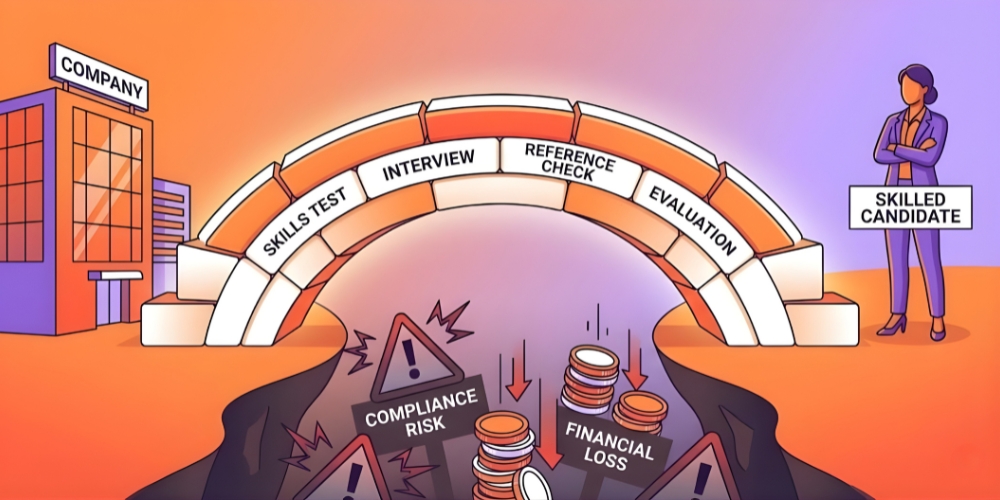
Three risk-reduction mechanisms.
Predictable performance
Structured assessments forecast how candidates will perform before hiring — replacing hope with signal.
Standardised evaluation
Talent assessment with recruiter software keeps criteria consistent across teams, improving fairness and reducing bias.
Compliance protection
Testing regulatory understanding, data handling, ethical decision-making catches gaps before they become regulatory issues.
Role-Specific Assessment
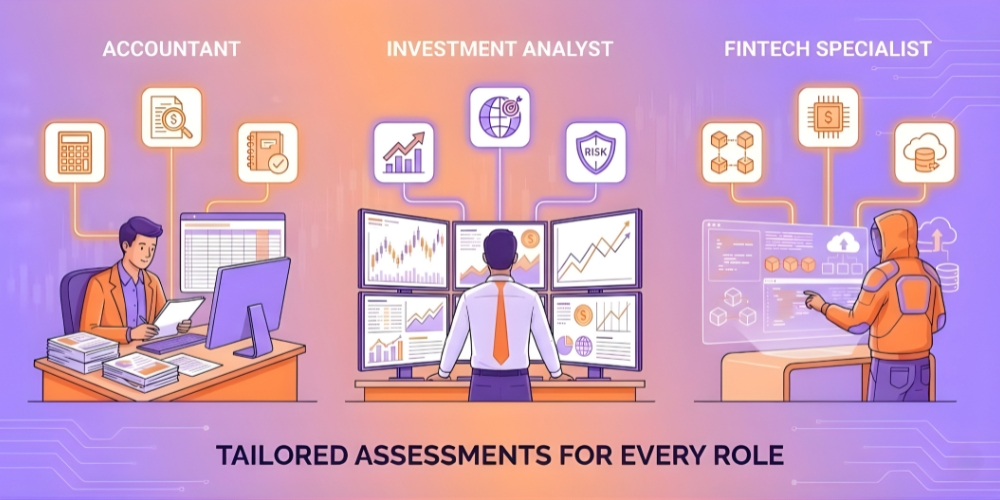
Different roles, different priorities.
Accounting
Precision + compliance knowledge. Scenario testing for audits and reporting deadlines.
Investment + banking
Decision speed + risk judgment. Simulated market scenarios reveal pressure response.
Fintech + analytics
Digital tool comfort + adaptability. AI talent assessment tools reveal problem-solving and learning velocity in fast-changing settings.
Future-pipeline roles
Talent bank assessments track high-potential candidates over time, enabling quick hires when needs emerge.
The Bottom Line
Finance hiring allows no real margin for mistakes — bad choices ripple through compliance, trust, and stability. Structured assessment replaces guesswork with confidence, ensuring teams hire people who are capable, ethical, and ready to contribute from day one. The marginal cost of better evaluation is minimal compared to the cost of a single mis-hire in this sector.
FAQs
What skills matter most in finance hiring?
Analysis, risk awareness, ethical judgment, clear communication. These four support accuracy, trust, and sustained performance.
Can AI be used safely in finance recruitment?
Yes, with human oversight. AI accelerates and standardises; humans handle final decisions and edge cases. Never end the process with the system alone.
How do assessments reduce compliance risk?
By surfacing regulatory and ethical gaps before hire. Catches problems while they're still preventable, not after a penalty arrives.
What's the biggest mistake in finance hiring today?
Skipping structured evaluation in favour of "I have a good feeling about this candidate." Gut feel in finance is structurally expensive.
What's the highest-leverage starting move?
Add one ethics-scenario assessment to your top three finance roles. Even single-layer structured assessment dramatically improves signal — and exposes patterns that justify broader rollout.
Keep reading

Pink Collar Jobs Explained: Definition, Examples, Salaries

Employee Lifecycle Stages: A Practical Guide for HR Leaders
