

Missing Nitaqat Targets: Penalties, Risks, and How to Stay Compliant
Missing Nitaqat targets freezes work visas, blocks renewals, and halts hiring — here's the real risk, the penalty structure, and how to stay green.
Ployo Team
Ployo Editorial

TL;DR
- Nitaqat ranks companies on Saudi-national headcount; Red and Yellow halt hiring.
- Companies with 100+ employees typically need ~30% Saudization.
- Consequences: visa block, iqama renewal block, no sponsorship transfers.
- 200,000+ firms closed in 2013–14; 36,951 stayed Red/Yellow affecting 500K+ expat workers.
- Tools: Qiwa Nitaqat calculator, MHRSD status portal, HRDF/Tamheer programs.
Falling short on Nitaqat targets isn't a paperwork problem — it freezes work visas, blocks iqama renewals, and locks you out of government contracts. This guide breaks down how the system works, what each status zone means, real penalties, and the playbook for staying compliant.
What the Nitaqat System Is

A Saudization policy from the Ministry of Human Resources and Social Development (introduced 2011) designed to boost employment of Saudi nationals in the private sector.
The status bands
Companies are categorised by their Saudization ratio:
- Platinum: top performers, fastest service
- Green (High / Medium / Low): compliant, full access
- Yellow: slipping; limited service access
- Red: non-compliant; major restrictions
Per Centuro Global, companies with 100+ employees generally need around 30% Saudization — though exact thresholds vary by industry and license type.
Why Targets Matter for Employers

Dropping status blocks four critical operations.
- Renewing iqamas for foreign workers
- Issuing new work visas
- Transferring sponsorships
- Accessing government contracts and bidding
Plus reputational damage with regulators and clients. The Qiwa Nitaqat calculator simulates how hiring or termination decisions affect your status before you commit.
What Happens When You Miss Targets

Four operational impacts.
Blocked services
No new work visas; no iqama renewals. Critical workforce gets stuck.
Restricted mobility
Cannot transfer employees between branches or sponsoring entities.
Fines and sanctions
Monetary penalties from SAR 2,000+ scaling with company size and frequency. Public procurement system access can be suspended.
Increased scrutiny
Hiring decisions get audited; pressure to improve status quickly mounts.
Red-status companies are barred from renewing any foreign worker permits until compliance is restored. Yellow may renew only select roles for limited periods. Per Arab News, from May 2024 consulting firms must fill at least 40% of key roles (finance, business, cybersecurity, project management) with Saudi nationals.
Real-World Impact
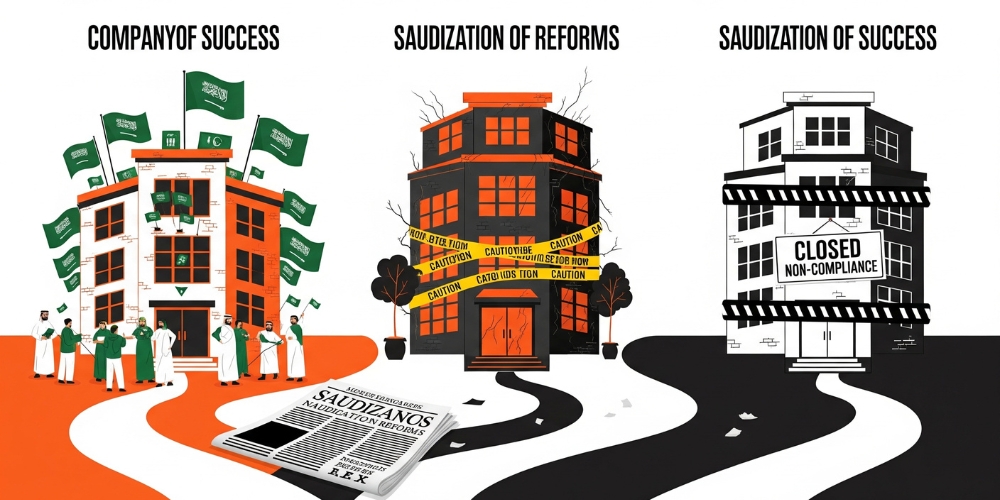
Three documented impacts.
Mass closures
Per Arab News reporting, over 200,000 firms closed in 2013–14 for non-compliance. About 36,951 remained in Red/Yellow status, affecting 500K+ expatriate workers.
Retail sector restructuring
Per Lexology, retail Saudization requirements of up to 70% forced restructuring. Several outlets faced fines or denied branch licenses.
Platinum-rated companies still vulnerable
Per AHYSP legal advisory, even top-tier firms faced penalties for WPS reporting violations. Status alone doesn't insulate against compliance gaps.
How to Stay Compliant
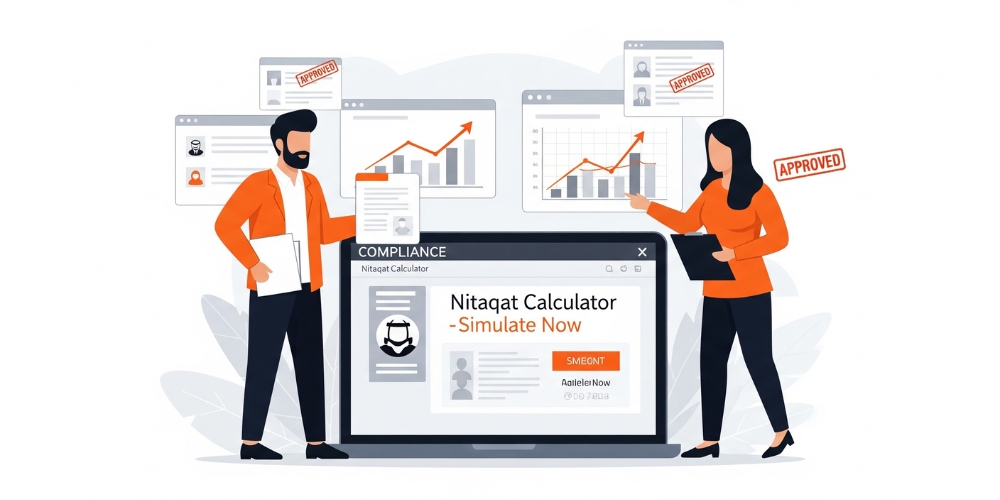
Six practices that consistently keep companies green. Pairs well with broader recruitment planning.
1. Regular status checks
Monthly review via MHRSD and Qiwa portals. Catch trajectory issues before they become critical.
2. Use the Nitaqat calculator
Simulate hiring changes and forecast Saudization impact before committing to terminations or new offers.
3. Segment workforce planning by size
Enterprise quotas vary across micro (under 5), small, medium, and large (50+ employees). Plan against your bracket's exact threshold.
4. Tap government incentive programs
HRDF, Tamheer, Hafiz subsidise training and onboarding costs for Saudi hires.
5. Integrate HR systems with compliance
Payroll, WPS, workforce reporting all aligned with MHRSD requirements. Manual reconciliation invites violations.
6. Move fast on dips
Yellow status triggers limited permit renewals. Immediate Saudi hires or internal redeployment restore green standing.
The Bottom Line
Missing Nitaqat targets isn't a red-tape issue — it freezes operations, restricts visa flow, blocks government work, and can shut down businesses entirely. With regular status checks, the Nitaqat calculator, and proactive workforce planning, the system becomes manageable. Skip those practices and it becomes a structural risk to the business.
FAQs
What's the penalty for missing Nitaqat?
Varies by violation. Starts from SAR 2,000, scaling with company size and frequency. Services like visa issuance, iqama renewal, and licensing may also be suspended.
Can you recover from Red or Yellow status?
Yes. Yellow companies can hire enough Saudis to return to Green and restore services. Red requires full compliance restoration before visa renewals or government interactions resume.
How often is status reviewed?
Real-time updates based on iqama and payroll activity. Formal evaluations posted quarterly on MHRSD; monthly internal status checks are strongly recommended.
Does company size affect targets?
Yes. Micro, small, medium, and large enterprises have different Saudization thresholds. 50+ employee firms often need at least 30%, with sector-specific quotas climbing higher.
What's the highest-leverage starting move?
Run the Nitaqat calculator against your current and planned headcount. The forecast often reveals trajectory issues months before they trigger penalties.
Keep reading


