

Why Resume Critiques Don't Help Recruiters Hire Faster
Polished resumes don't fix hiring speed — the real bottlenecks are screening, decision-making, and pipeline tools, not formatting tweaks.
Ployo Team
Ployo Editorial

TL;DR
- Average time-to-hire ~44 days globally — formatting tweaks don't move it.
- Recruiters need proof of ability, not prettier CVs.
- 52% faster hiring with AI screening tools (HireVue 2025).
- 89% of HR teams using AI for recruiting say it saves time (SHRM).
- The real bottleneck is screening + decision speed, not resume polish.
Resume critique services promise polished CVs, but recruiters don't hire faster because of better fonts. This guide explains where time actually goes in the hiring funnel, why critique services miss the real bottlenecks, and what genuinely accelerates time-to-fill.
What a Resume Critique Usually Focuses On
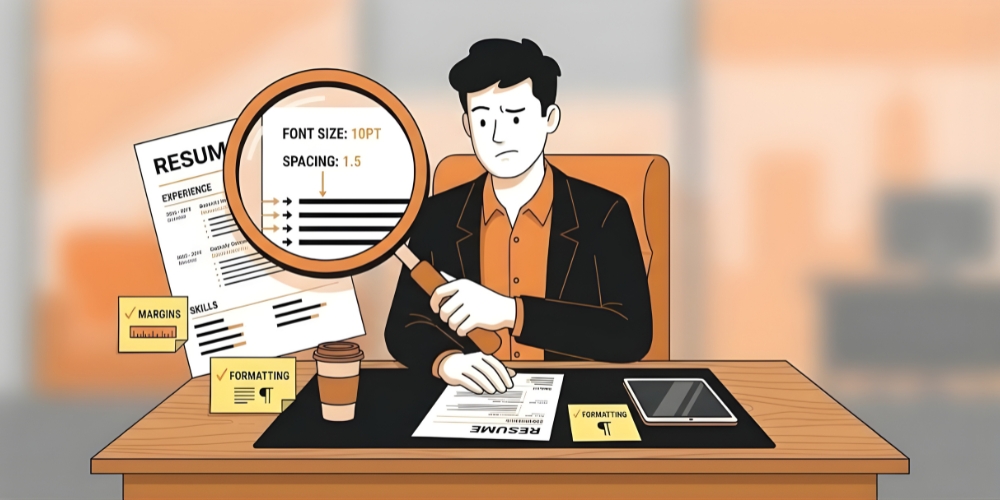
Five areas critiques tend to cover.
Layout and formatting
Margins, fonts, section order, white space, "modern look".
Wording and tone
Replacing "responsible for" with action verbs; cutting resume buzzwords like "team player".
Job titles and dates
Surface red flags like unexplained career gaps.
Consistency checks
Bullet alignment, header styling, date formatting.
Basic keywords
Ensuring role-specific terms are present for ATS pass-through.
All useful — none of it actually accelerates hiring.
Why Critiques Don't Speed Up Hiring

Five structural reasons.
Time-to-hire is rising — formatting isn't why
Per Genius data, global average time-to-hire has climbed to ~44 days. Layout polish doesn't touch the structural causes.
Volume drives delays
Recruiters now process hundreds of applications per role. The bottleneck sits in screening, interviewing, and decision-making — not document quality.
Polished ≠ matched fit
A good resume vs bad resume comparison can show better layout, but if skills and role fit aren't aligned, the resume won't convert.
Critiques focus on the wrong layer
Critique services optimise documents; recruiters screen for role alignment, proven outcomes, and skills match. Clean document, still no interview.
Tooling solves what critique can't
When recruiters need relief, AI-driven screening tools cut manual work — human critique alone arrives too late and too small.
What Recruiters Actually Need

Four signals that consistently matter.
Demonstrable capability
What the candidate has actually done and achieved — not how it's worded.
Easy role-vs-candidate alignment
Side-by-side comparison without manual cross-referencing.
Clarity that enables decisions
Enough structured signal to confidently advance someone.
Defensible reasoning
Solid information that makes every decision feel fair, justified, and audit-ready.
This is why hiring teams increasingly prefer structured profile data over scattered CV formats. Polished documents help; structured evaluation signals matter more.
How AI Changes Resume Screening

Three concrete shifts.
Pattern matching at scale
Modern systems analyse experience, match against role requirements, surface candidate strengths in seconds. Not checking fonts — looking for evidence of capability.
Measurable speed gains
Per HireVue's 2025 Global Guide, HR professionals using AI report hiring 52% faster, primarily by cutting manual screening and scheduling.
Broad efficiency gains across teams
Per SHRM's 2025 Talent Trends, 89% of HR teams using AI for recruiting say tools help them work more efficiently and save time.
This is why interest in AI-driven screening, structured profiles, and verification continues to climb. These tools don't critique — they compare, verify, and enable faster decisions.
The Bottom Line
A well-written resume helps candidates avoid obvious errors — but it doesn't fix the recruiter's bottleneck. Hiring accelerates when teams have structured information, proof of ability, and tools that eliminate repetitive manual work. Document polish is useful for candidates; for recruiters, the leverage sits elsewhere entirely.
FAQs
Why don't recruiters care about resume formatting?
Because formatting doesn't reveal skills, fit, or performance potential. Recruiters care whether the candidate matches the role — not whether the heading is bolded.
Where is the real hiring bottleneck?
Screening volume, interview coordination, and decision-making. Resume polish doesn't touch any of these.
How much does AI screening actually save?
Per HireVue, ~52% faster time-to-hire on average. SHRM's data shows 89% of teams using AI report meaningful efficiency gains.
Do resume critiques improve job chances at all?
Some — they catch obvious errors and clarify experience. But they don't guarantee interviews. Relevance and results matter more than perfect wording.
What's the highest-leverage investment for hiring teams?
Structured screening tools that compare candidates to role requirements quickly and defensibly. Beats every critique service for time-to-fill impact.


