

Recruitment Marketing: How to Win Talent in the Digital Age
Recruitment marketing attracts talent before they apply — branding, channels, content, CRM, metrics, and tactics that consistently produce hires.
Ployo Team
Ployo Editorial

TL;DR
- 88% of job seekers consider employer brand before applying (DSMN8).
- 65% of candidates have bailed on a hiring process over culture concerns (Gartner).
- Recruitment marketing ≠ employer branding — short-term applications vs long-term reputation.
- Key components: messaging, content, career site, social, CRM, data.
- Job ads with salaries listed get 75% more clicks (Appcast).
Job seekers behave like consumers — they research, compare, and stalk your socials before applying. Recruitment marketing puts your company in front of them on purpose. This guide explains what it is, how it differs from employer branding, the components that matter, and the practices that consistently produce stronger pipelines.
What Recruitment Marketing Is
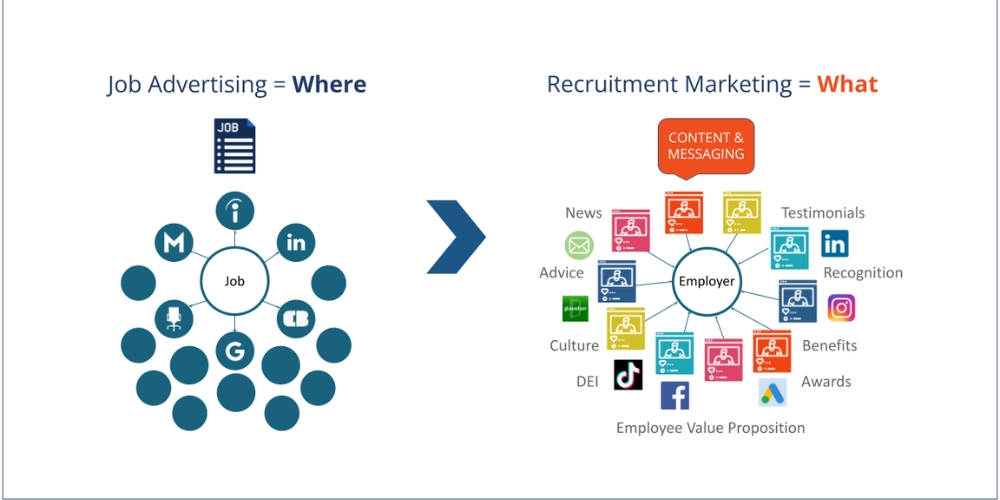
The strategy behind attracting, engaging, and nurturing job seekers before they apply. Top-of-funnel work that gets the right people interested — even when they're not job hunting.
Per DSMN8, 88% of job seekers consider employer brand before applying. Without a magnetic message and smart promotion, even your best job ad is just another tab candidates close.
Employer Branding vs Recruitment Marketing
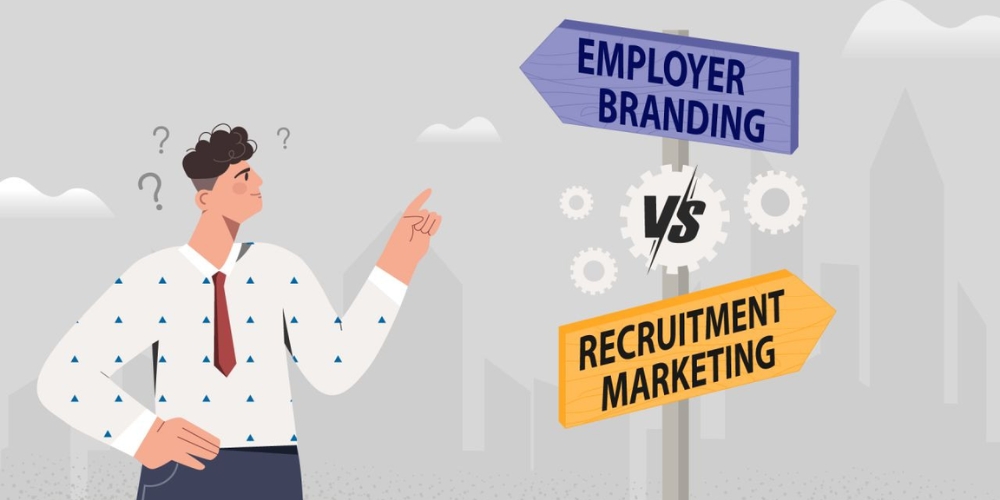
Often confused — different purposes.
| Dimension | Employer Branding | Recruitment Marketing |
|---|---|---|
| Focus | Long-term reputation | Short-term applications |
| Goal | Make people want to work for you someday | Get people to apply today |
| Owned by | Leadership, HR, PR | Talent acquisition + marketing |
| Channels | Careers site, employee stories, social proof | Job ads, email, social, events |
| Metrics | Engagement, sentiment, brand recognition | Clicks, conversions, CPA, time-to-fill |
Smart companies align both. Branding sets the stage; marketing drives action.
Why It Matters

Three forces driving its importance.
Candidates behave like consumers
They research employee reviews, watch content, compare you against competitors before you ever know they exist.
Culture decides the deal
Per Gartner, 65% of candidates have walked away mid-process because culture signals felt off.
Brand management drives applications
Per Glassdoor, 75% of job seekers are more likely to apply when a company actively manages its employer brand.
Vital Components
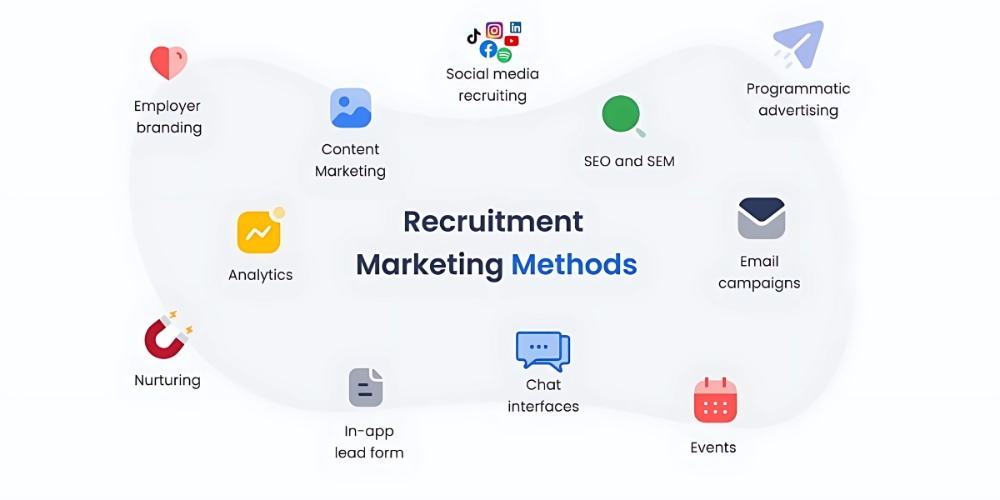
Six pieces that consistently move the needle.
1. Employer brand messaging
Clear value proposition. Why work for you? What makes culture, mission, or growth stand out?
2. Targeted content strategy
Different candidates want different things. Personalised content — videos, blogs, testimonials — that speaks to the ideal hire at each funnel stage.
3. Career website optimisation
Not a digital corkboard. Fast loading, mobile-friendly, easy navigation. If it feels like 2010, so will your talent pool.
4. Social and digital campaigns
LinkedIn, Instagram, even TikTok where appropriate. Puts your brand in front of talent before the job post goes live.
5. Candidate nurturing and CRM
Not everyone is ready to convert immediately. Email sequences, remarketing, career newsletters keep your brand top-of-mind.
6. Data and analytics
Track time-to-fill, source of hire, conversion rates. Data shows what's landing and what's crashing.
How to Create a Plan
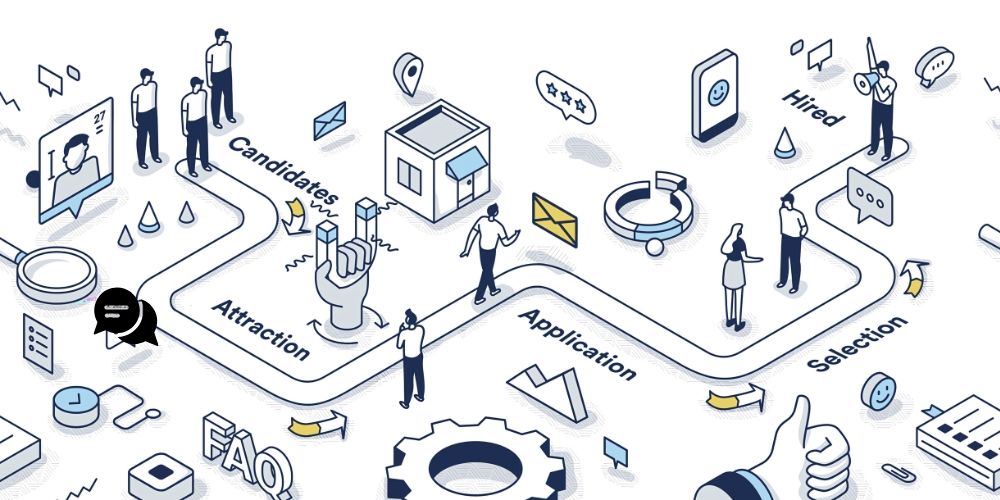
Seven steps.
1. Audit current state
What channels are you using? What's pulling results, what's noise? Where do candidates drop off?
2. Define ideal candidate
Personas with more than job titles. Goals, fears, what content grabs them.
3. Craft messaging
Core employer brand message adapted to formats. Real stories, no buzzwords.
4. Choose channels
3–5 channels that actually reach your people. Go deep, not wide.
5. Build content calendar
Plan around hiring sprints, big wins, team moments. Photos, behind-the-scenes, employee takeovers.
6. Activate and promote
Paid ads, influencers, referrals, programmatic job ads. Show up where it counts.
7. Measure and iterate
Track cost-per-hire, quality-of-hire, conversions. Drop what's not working.
For scale, AI-powered candidate matching automates the heavy lifting so your marketing works smarter, not harder.
Tips That Compound

Eight practices, combined with strong interviewing, make a real difference.
1. Think like a marketer, act like a recruiter
You're promoting a product — culture, values, mission. Borrow tactics from content marketing and brand storytelling.
2. Use employee-generated content
Per Edelman's Trust Barometer, employees are trusted more than CEOs on culture. Testimonials, day-in-the-life videos, team takeovers.
3. Invest in automation
CRMs, chatbots, AI to keep things moving. Automate the boring stuff so no great candidate slips through.
4. Personalise the candidate journey
Segment by interest or role type. Some need awareness content; others are ready to apply.
5. Track real metrics
Conversion rates, source quality, time-to-fill, cost-per-hire. Not likes and impressions.
6. Be where candidates are
Instagram, Reddit, Discord — wherever your target spends time. Create native content that fits in.
7. A/B test everything
Per Appcast's Recruitment Marketing Benchmark, job ads with salaries listed get 75% more clicks than those without.
8. Collaborate with marketing teams
Your brand team can help you win talent the same way they win customers. Share resources, tools, audience targeting strategies.
The Bottom Line
Being a great place to work means nothing if no one knows it. Recruitment marketing is the deliberate work of telling that story, controlling the message, and showing up where candidates already are. The teams that invest here build pipelines competitors can't see; the ones that don't keep wondering why their best ads still produce middling applications.
FAQs
How is recruitment marketing different from employer branding?
Branding is long-term reputation; marketing is short-term applications. Branding makes you appealing someday; marketing converts that appeal into applications today.
What's the highest-leverage starting move?
Optimise your careers page for mobile and speed. Most candidates browse on phones; a slow or clunky page kills applications before they start.
How much should I spend on recruitment marketing?
Depends on hiring volume and role mix. Most teams start with 5–10% of total talent acquisition budget and scale based on cost-per-hire performance.
Should AI be part of the plan?
Yes — for personalisation, segmentation, candidate matching, and analytics. Not for human-relationship-building moments.
What metric matters most?
Quality-of-hire combined with cost-per-hire. Vanity metrics (likes, impressions) feel productive but don't predict hiring outcomes.
Keep reading


Reverse Recruiters: What They Do and When They Actually Help
