

"Tell Us About Yourself": Build a 90-Second Pitch That Lands
The "tell us about yourself" answer sets the entire interview tone — how to build a 90-second pitch that's specific, memorable, and tuned to the role.
Ployo Team
Ployo Editorial

TL;DR
- 90 seconds is the sweet spot — long enough for substance, short enough to keep attention.
- Use story plus quantified outcomes to make claims credible and memorable.
- Tailor your pitch to the specific role and company mission.
- Practise out loud, but anchor to ideas not scripts.
- Posture, tone, and pace shape how the words actually land.
The opening "tell us about yourself" answer sets the tone for everything that follows. Most candidates either recite resume bullet points or improvise vaguely — both fail. The candidates who land strong answers tell a specific story, anchor it with numbers, connect it to the role, and deliver it with intent. This guide walks through how to build the 90-second pitch that actually works.
Why 90 Seconds Matters
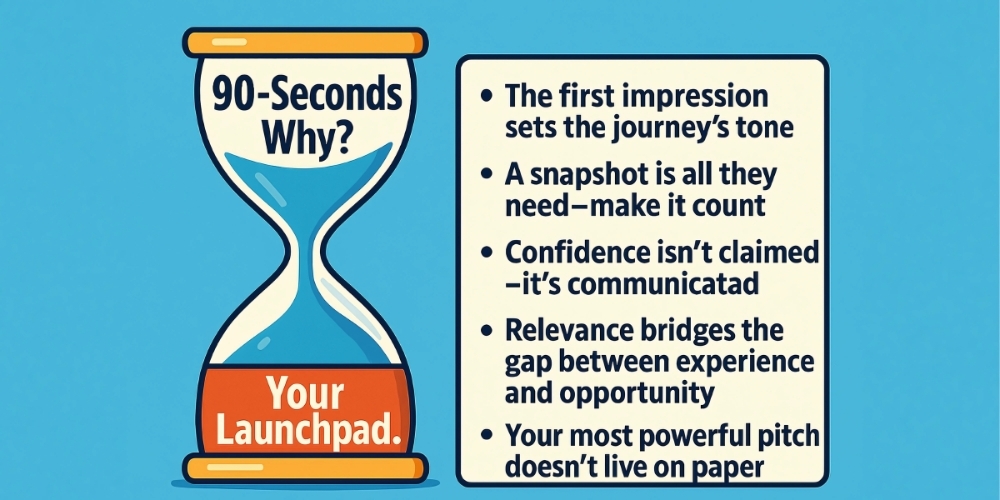
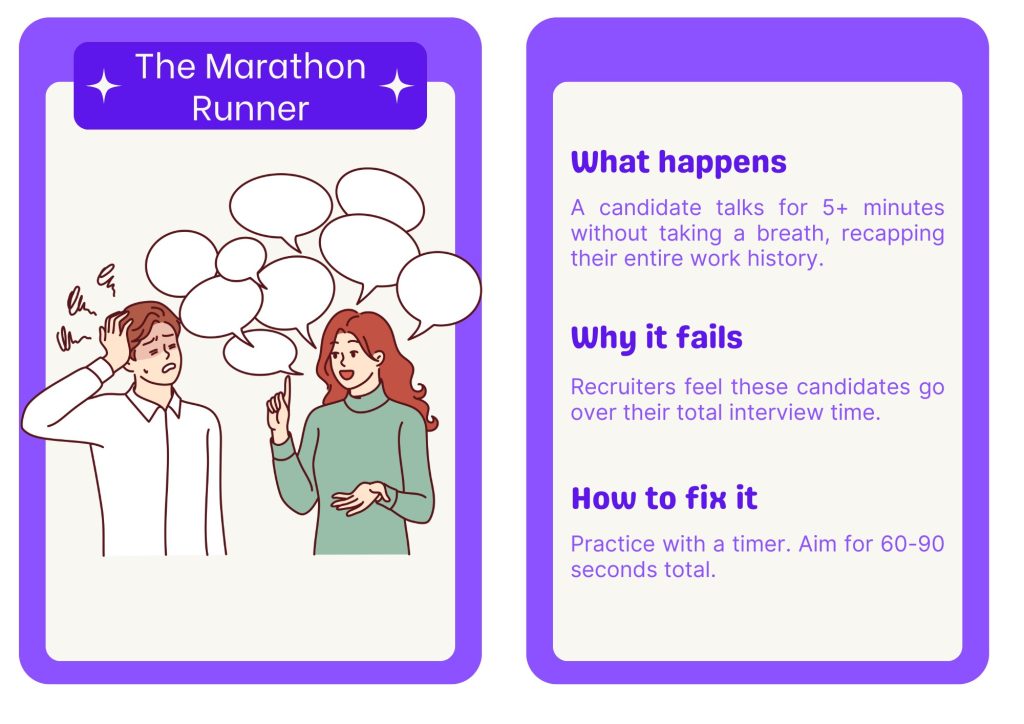
Short enough to respect attention; long enough to deliver substance. Most candidates undershoot (20–30 seconds, no substance) or overshoot (3+ minutes, lost interviewer).
Per recruiting research, ~79% of recruiters say a compelling introduction is a major success indicator. The opening 90 seconds disproportionately shape how the rest of the interview gets evaluated.
What Recruiters Actually Listen For
Three signals.
Story over claim
"I'm detail-oriented" tells nothing. "During our last product launch, I built a tracking system that caught three critical issues before they reached clients" demonstrates the trait.
Numbers with meaning
Quantified outcomes anchor claims. "Increased conversion 30%" beats "improved performance significantly."
Role-specific tailoring
Generic pitches signal generic candidates. Tailored pitches signal that you understand the role and have prepared for this specific opportunity.
The Story-Substance-Self Framework
Three components that consistently produce strong answers.
1. Tell the story behind the success
Facts inform; stories endure. A 20-second narrative around one signature achievement makes you memorable, relatable, credible, and engaging in ways a list of credentials cannot.
"During our Q3 product launch, I was juggling more moving parts than ever before. I built a tracking system that didn't just monitor progress but anticipated blockers. It caught three critical issues before they reached clients — and became the team's standard for future launches."
2. Let numbers anchor the claims
"Improved efficiency" is filler. "Cut load time 45% across the critical user flow" is signal. Pair every claim with a specific outcome.
3. Surface what makes you unique
Why you for this role at this company? Connect your specific story to the company's mission concretely. Generic introductions sound like everyone else's; specific ones don't.
Delivery: The Other Half of Landing
Words alone don't carry the message. Three delivery elements that consistently matter.
Practise — but don't memorise
Record yourself; listen for hesitations, rushed phrases, monotone. Practise with someone who'll give honest feedback. Anchor to key ideas; let the words find natural form.
Respect the clock
Time yourself. 90 seconds is the upper bound, not the floor. Tighter beats longer.
Posture, tone, pace
- Posture: open stance, steady eye contact, natural gestures
- Tone: clear and engaged; not loud, not monotone
- Pace: conversational rhythm; allow space for words to land
90-Second Templates by Career Stage
Adapt the structure to where you are.
Fresh graduates
Challenge: Limited professional experience. Strategy: Lead with academic achievements, internships, relevant projects.
"I recently graduated in Computer Science. During my internship at XYZ Corp, I led work that improved their database retrieval times by 20%. My capstone team's mobile app won the university's innovation award. I'm excited to bring that same problem-solving energy into a full-time engineering role at your company."
Mid-level professionals
Challenge: Demonstrating progression and readiness for more responsibility. Strategy: Emphasise growth and leadership signals.
"Over the past five years, I've moved from sales associate to regional sales manager, leading a team that exceeded targets by 15% annually. I built a training program that improved both team performance and client satisfaction. I'm now looking to apply that experience in a broader strategic role — which is what drew me to this opportunity."
Senior professionals
Challenge: Avoiding overload. Strategy: Focus on strategic leadership and mission alignment.
"I've spent 20 years in healthcare, most recently as COO at ABC Hospital where I led initiatives that cut patient wait times 30% and improved operational efficiency materially. I'm interested in applying that experience to mission-driven work — which is exactly what attracted me to your organisation."
Career changers
Challenge: Connecting past experience to a new industry. Strategy: Surface transferable skills explicitly.
"After a decade in journalism, I've honed communication, research, and audience engagement skills that translate directly to PR. I'm transitioning into the field because I want to craft narratives for organisations whose missions I believe in — which is why your company's work caught my attention."
Data on What Works

Common components in introductions that led to offers:
- A specific story tying skill to outcome
- Quantified achievement
- Explicit connection to the role
- Personal motivation beyond the paycheck
- Forward-looking next-step framing
Answers missing any two of these consistently underperform.
The Bottom Line
The "tell us about yourself" answer is the highest-leverage 90 seconds of any interview. Done well, it sets the entire rest of the conversation up for success. Done badly, it puts you in a defensive position you spend the next 30 minutes climbing out of. Build a specific story, anchor it with numbers, tailor it to the role, and practise the delivery out loud. The investment is small. The compound effect across every interview round you do is enormous.
FAQs
How long should the answer be?
60–90 seconds. Long enough for substance and a specific example; short enough to invite follow-up.
Should I memorise the answer word-for-word?
No. Memorise the structure and key ideas; deliver naturally. Memorised scripts read as robotic and inflexible.
What if I have a long career to summarise?
Pick 2–3 highlights tied to the role you're interviewing for. Don't walk through your full resume — emphasise what matters most for this conversation.
What's the most common mistake?
Reciting credentials without context. "I have a CS degree and 5 years of experience at X" tells nothing. "At X, I led a project that cut deployment time 40%" tells everything.
What's the highest-leverage tweak?
Replace a generic claim with a quantified outcome from a specific past project. Specifics consistently outperform generalities, and the substitution is usually a 30-second edit.
Keep reading


