

AI-Powered Inclusive Job Descriptions: Process and Best Practices
Use AI to write job descriptions that welcome everyone — bias detection, prompt structure, human review steps, and the mistakes to avoid.
Ployo Team
Ployo Editorial
TL;DR
- Inclusive language attracts ~42% more applications (ZipRecruiter).
- Women tend to apply only when meeting 100% of requirements; men at ~60% (HBR).
- AI detects gendered or culturally-coded language and suggests alternatives.
- 5-step process: define role, pick tool, prompt clearly, review carefully, gather feedback.
- AI accelerates; human judgment finalises. Both matter.
Job descriptions form candidates' first real impression of your company. If the language quietly signals "this isn't for you" to certain groups, strong applicants self-eliminate before clicking apply. AI helps catch the patterns humans miss — but only when paired with human review and DEI judgment. This guide walks through how.
Why Inclusive JDs Matter
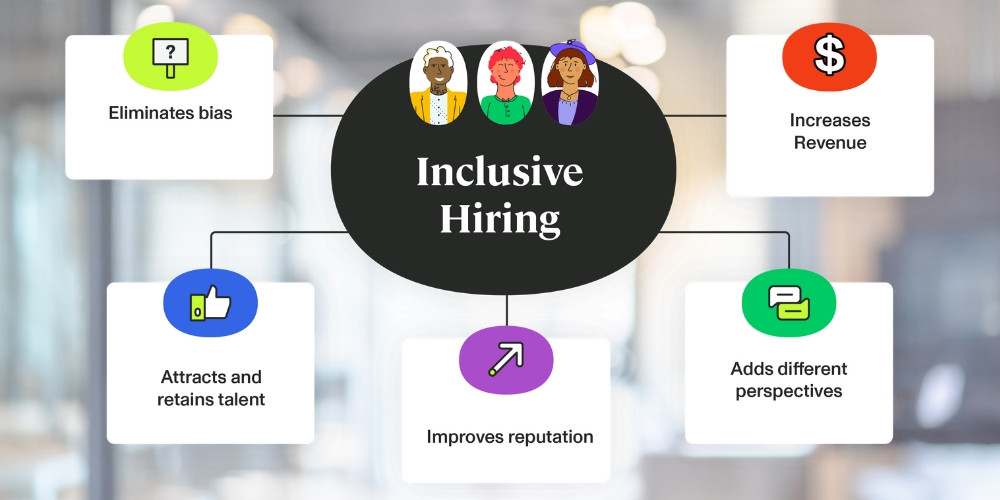
Three reasons inclusive language matters concretely.
Application volume increases
Per ZipRecruiter research, inclusive language in JDs attracts ~42% more applications. That's a direct funnel impact, not just an ethical preference.
Brand alignment
A JD signals what your company values. Candidates increasingly prioritise companies whose stated values match their lived experience. Diversity and inclusion JD strategies demonstrate that explicitly.
Removing structural barriers
Inclusive language plus honest qualification framing creates fairer access. Combined with transparent expectations, these JDs let qualified candidates from any background apply with confidence.
How AI Helps
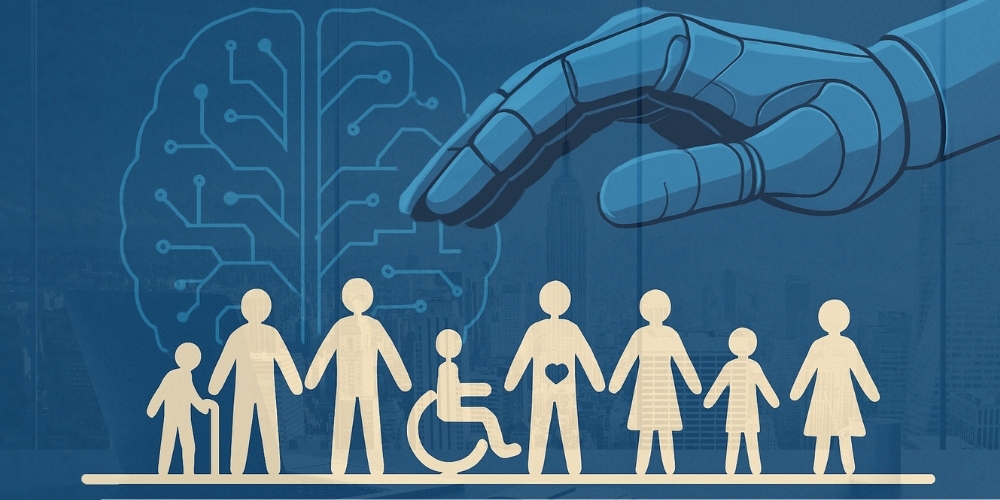
Three concrete contributions.
Bias detection
Modern AI flags gender-coded words, culturally-coded language, ageist phrasing, and ableist terms. Suggests neutral alternatives — "aggressive" → "results-driven," "ninja" → "expert," "young and dynamic" → "growth-oriented."
Readability and tone
AI evaluates whether the language is accessible across literacy and language proficiency. Catches jargon that filters out qualified candidates unnecessarily.
Consistency at scale
AI integrated with ATS systems applies inclusive standards across every JD. Reduces drift between roles and recruiters.
But AI catches patterns; humans bring cultural judgment, brand voice, and final decisions. The combination is what produces strong JDs.
A Five-Step Process

1. Define the role clearly
Day-to-day responsibilities, must-have skills, success criteria. Specific roles produce specific output; vague roles produce vague JDs.
2. Pick the right AI tool
Tools purpose-built for inclusive JDs flag bias and suggest alternatives. General-purpose chatbots work too with clear DEI-focused prompts.
3. Write a detailed prompt
"Draft a job description for a full-stack software engineer with 3–5 years' experience. Use gender-neutral language. Separate must-haves from nice-to-haves clearly. Include explicit DEI commitment language. Avoid jargon and culture-coded phrasing."
4. Review and edit
Read out loud. Catch awkward phrasing, off-brand tone, and subtle bias the AI missed. Adjust to your company voice.
5. Gather feedback before publishing
Run the draft past 2–3 teammates with different perspectives. Their feedback catches blind spots and produces stronger final copy.
Best Practices

Five practices that consistently produce stronger inclusive JDs.
Gender-neutral language throughout
"Salesperson" not "salesman." "They" not "he/she." Small changes compound across an entire JD.
Explicit DEI commitment
A specific commitment statement — not generic "we value diversity" — signals serious investment. "We're building a team that reflects the communities we serve" lands better.
Essential vs nice-to-have separation
List only required qualifications as required. Nice-to-haves go in their own section. Per HBR, women apply only when meeting 100% of requirements; men at 60%. Clear separation reduces this self-elimination pattern.
Plain language
Skip the jargon. Make the role accessible to candidates from any background or industry transition.
Regular updates
Roles change; standards evolve. Annual JD audits keep language current and signal ongoing investment.
Common Mistakes

Four traps to avoid.
Gender-coded language
"Aggressive," "dominant," "ninja," "rockstar" — all skew masculine in perception. Inclusive alternatives reach broader audiences.
Overstuffed requirements
Long must-have lists filter out qualified candidates, especially those prone to self-elimination. Leave room for growth; train where appropriate.
Ignoring accessibility
If the JD is hard to follow or doesn't mention accommodations, candidates with disabilities or non-native English speakers may self-eliminate. Simple language plus explicit accommodation statements help.
Missing DEI commitment
Omitting a clear commitment statement makes candidates wonder about workplace culture. Make the commitment visible.
The Bottom Line
AI-assisted JD writing is one of the highest-leverage moves available for improving hiring diversity. The mechanics are simple — pick a tool, prompt clearly, review carefully, ship — and the application-volume improvements are real and measurable. Pair AI bias detection with human cultural judgment and ongoing review, and the JDs become genuinely welcoming rather than performatively so. Start with your most-active roles; the audit alone often reveals patterns worth fixing immediately.
FAQs
Can AI write inclusive JDs fully autonomously?
No. AI catches most pattern-level bias; humans add cultural judgment, brand voice, and final decisions. Treat AI as draft generator + bias detector, not autonomous publisher.
What's the most overlooked source of bias in JDs?
Long lists of "must-have" qualifications that should really be nice-to-haves. The pattern systematically self-eliminates qualified candidates more than overt biased language does.
How often should JDs be audited?
Annually at minimum. For active high-volume roles, every 6 months. Language standards and company strategy both evolve.
Are DEI commitment statements actually effective?
Yes, when specific. Generic statements ("we value diversity") are noise. Specific commitments ("we provide accommodations through the hiring process and on the job") signal real investment.
What's the single highest-leverage AI use for inclusive JDs?
Bias scanning of your existing JD library. Running every current JD through an AI bias detector typically surfaces meaningful improvements that have been quietly hurting your funnel for months or years.
Keep reading


How AI Tools Reduce Candidate Stress in Hiring (and Improve Outcomes)
