

How to Write an ADA-Compliant Job Description (And Hire More Inclusively)
An ADA-compliant job description protects your team legally and widens the talent pool — what to include, the language to use, and the mistakes to skip.
Ployo Team
Ployo Editorial

TL;DR
- The ADA prohibits disability-based discrimination in hiring and requires reasonable accommodations.
- A clear job description defines essential job functions, which is what accommodation decisions are grounded in.
- List only genuinely necessary skills, and describe physical or mental requirements in neutral, measurable language.
- Use inclusive, bias-free wording and add a reasonable accommodation statement to every posting.
- Update job descriptions regularly to keep them accurate and inclusive.
The ADA-compliant job description is one of the highest-leverage documents in inclusive hiring. Done well, it protects the company legally, widens the qualified applicant pool, and signals respect to candidates from underrepresented groups. Done poorly, it quietly excludes qualified people and leaves the company exposed to discrimination claims. The good news: writing one correctly is not difficult. Inclusive language, clear essential functions, an accommodation statement, and a regular review cadence cover almost the whole bar.
Why the ADA Applies to Job Descriptions
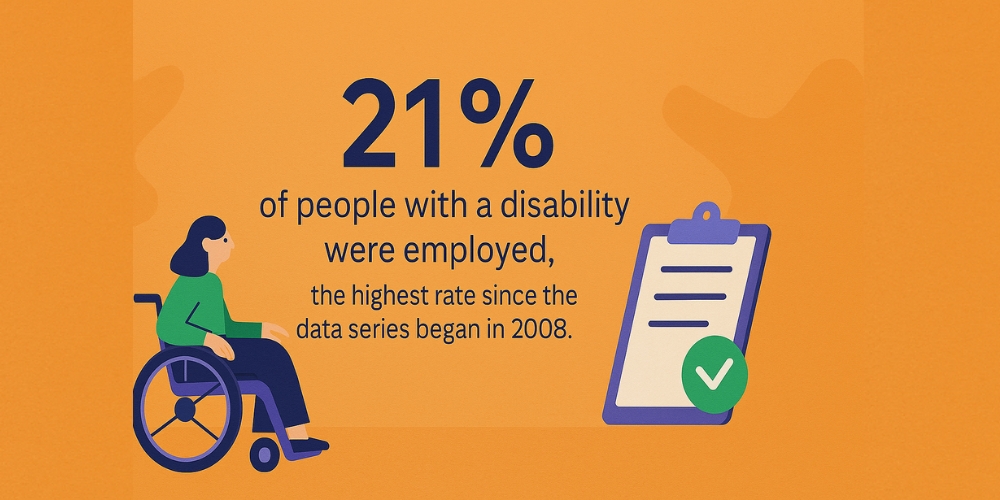
The Americans with Disabilities Act, signed into law in 1990, prohibits discrimination against individuals with disabilities across employment, public services, and public accommodations. In hiring specifically, it requires employers to provide equal opportunity through every stage — application, interview, hiring, advancement, terms and conditions of employment.
The job description is the document that anchors most ADA decisions. A clear, well-written one identifies the essential functions of the role — the duties an employee must be able to perform, with or without reasonable accommodation. The EEOC has repeatedly found that a properly written job description is the strongest piece of evidence in disputes about accommodations or alleged discrimination.
For broader context on the document's structure, our guide on the difference between job description and job specification covers the foundational framing.
Six Components Every ADA Job Description Should Include

1. Job title and summary
Concise, accurate, and reflective of the actual role.
2. Essential job functions
The fundamental duties the employee must be able to perform, with or without reasonable accommodation. This section is the centre of gravity in ADA compliance — accommodation decisions are made against these functions.
3. Required skills and qualifications
Only what is genuinely necessary to succeed. Every "requirement" that is not actually required narrows the applicant pool without any benefit.
4. Physical and mental requirements
Stated clearly, in measurable terms, only where genuinely necessary for the role.
5. Work environment
Working conditions — noise levels, location, travel requirements, accessibility features.
6. Reasonable accommodation statement
A direct, visible statement that the company will provide reasonable accommodations to qualified candidates with disabilities. Every posting, every time.
For specialised compliance roles, an ADA coordinator job description should also detail responsibilities for managing accommodation requests, ensuring policy adherence, and serving as the liaison between employees and management on accessibility matters.
How to Write Physical and Mental Requirements Without Excluding Anyone
This is the section most companies get wrong. The fix is concrete:
- Replace vague language with specific, measurable detail. "Must be able to lift heavy boxes" becomes "must be able to lift up to 25 pounds occasionally."
- Only include physical or mental requirements that are genuinely essential to the role's functions. Legacy boilerplate ("must stand for extended periods") is one of the most common sources of accidental exclusion.
- Use neutral, observational language. "Must be able to travel between office locations" beats "must be able to walk" — same essential function, different inclusiveness.
Specificity helps candidates self-assess honestly and request accommodations where appropriate. Vague requirements push qualified candidates to self-select out for no good reason.
Inclusive Language That Widens the Talent Pool

The language layer is where many ADA postings quietly fail. The data is striking: Insight Global's hiring research found that gender-neutral postings attract roughly 42% more applications than gendered ones. Similar dynamics apply to disability-aware language.
Three specific moves:
Skip gender-coded vocabulary
"Aggressive", "dominant", "rockstar" — replace with "motivated", "collaborative", "experienced". The applicant pool widens noticeably.
Avoid age-coded language
"Recent graduate" and "digital native" are signals to job seekers that older candidates are not wanted, regardless of intent. Focus on skills and experience.
Choose disability-aware wording
"Must be able to walk" → "must be able to travel between office locations." Same essential function, different signal sent. Small changes in phrasing make a real difference in who feels welcome to apply.
The Reasonable Accommodation Statement
A short, visible accommodation statement on every job posting is both a legal protection and a brand asset. Sample language that works:
"We are committed to creating an inclusive workplace. If you require a reasonable accommodation during the application or interview process, please contact [contact] and we will work with you to support your needs."
This single sentence signals to candidates that the company is serious about accessibility. Most companies skip it; the ones that include it are remembered.
Tips for Recruiters and HR Professionals
Collaborate across departments
The strongest ADA-compliant descriptions are drafted with input from the team currently doing the work. Hiring managers know the role's day-to-day; HR knows the legal requirements; current team members know which "requirements" are actually essential and which are legacy.
Highlight inclusive benefits
Remote and hybrid work options, flexible hours, accessibility accommodations on site — call these out explicitly. They matter disproportionately to candidates with disabilities and caregiving responsibilities.
Refresh descriptions on a schedule
Roles drift; legal standards evolve. Plan a quarterly or biannual review across all active postings to keep them accurate and inclusive.
Get feedback before publishing
A second pair of eyes — ideally from someone outside the immediate team — catches biased or unclear language the original writer no longer sees. Cheap, fast, and high-impact.
The Bottom Line
An ADA-compliant job description is not a checkbox exercise. It is the document that decides who applies, who advances, and what defence the company has if a hiring decision is challenged. Use inclusive language, define essential functions clearly, write physical and mental requirements in neutral measurable terms, add an accommodation statement, and refresh the description regularly. The teams that do this consistently widen their talent pool, hire more inclusively, and quietly avoid most of the legal exposure that catches less-careful employers off-guard.
FAQs
What is the most important section of an ADA job description?
The essential job functions section. Accommodation decisions, hiring decisions, and any potential legal disputes all anchor against this part. Get it specific, factual, and current.
Do I need a reasonable accommodation statement on every posting?
Yes. Every posting, every time. A consistent statement protects against claims of inconsistent treatment and signals genuine inclusion to candidates.
Should physical requirements always be listed?
Only when they are genuinely essential to the role. Legacy boilerplate physical requirements that are not actually necessary should be removed — they exclude qualified candidates without serving any business purpose.
How often should ADA job descriptions be updated?
Quarterly or biannually for review; immediately when the role's responsibilities meaningfully change. Stale descriptions are one of the most common sources of accidental non-compliance.
Does inclusive language genuinely affect application rates?
Yes — measurably. Gender-neutral postings attract roughly 42% more applications than gendered ones, and similar effects apply to disability-aware and age-neutral phrasing. The fix is editorial; the upside is real.
Keep reading

Writing Job Descriptions for Startups: Templates and Common Mistakes

