

Finding Jobs in Jeddah: Industries, Visas, and Application Strategy
Jeddah's job market is expanding under Vision 2030 — top hiring industries, visa process, where to apply, and how expats stand out in 2026.
Ployo Team
Ployo Editorial

TL;DR
- Jeddah hiring is expanding under Vision 2030 — construction, logistics, tech, finance, and tourism lead demand.
- 15.67 million expats live in Saudi Arabia (Q2 2024); Jeddah is among the most expat-friendly cities.
- Work visa + iqama process runs through a Saudi sponsor; new skill-based visas are gradually replacing kafala.
- Tax-free income, English-friendly workplaces, and Red Sea lifestyle remain the core expat draws.
- Bayt, Naukrigulf, LinkedIn, and agencies like TASC/Hudson are the practical entry points.
Jeddah is one of Saudi Arabia's fastest-growing job markets — a Red Sea trade hub turned cultural and tourist gateway with construction, logistics, finance, and tech all hiring aggressively under Vision 2030. The opportunity is real, but the path requires navigating the visa process, targeting the right industries, and presenting yourself well to Saudi employers. This guide walks through where the jobs are and how to land them.
Why Jeddah Is Worth Targeting
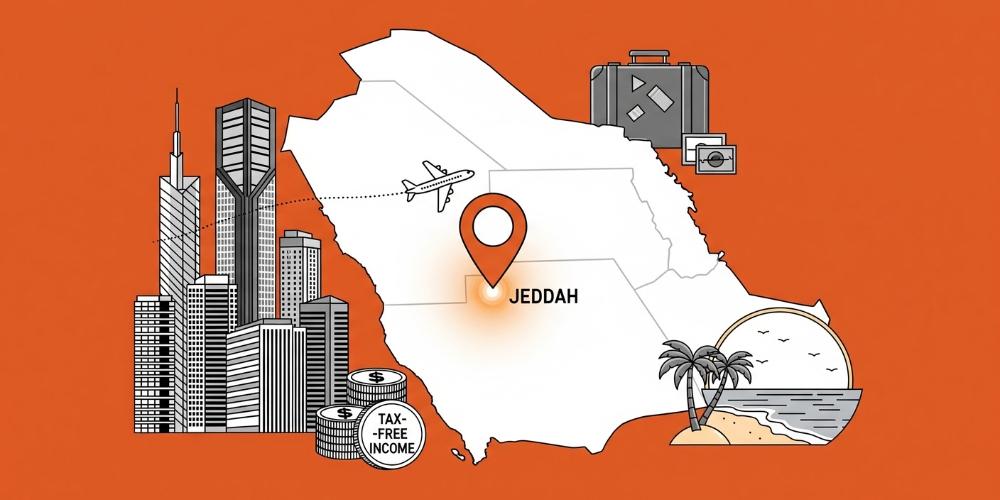
Three structural reasons Jeddah ranks high for international candidates.
Vision 2030 momentum
Jeddah is undergoing rapid modernisation across tourism, logistics, construction, and finance under the broader Vision 2030 strategy. Hiring volumes are growing in line with that investment.
Expat-friendly ecosystem
Saudi Arabia's expat population reached 15.67 million in Q2 2024. Jeddah's multicultural workforce, English-language workplaces (especially in multinationals, hotels, and tech), and tax-free income make it an established expat destination.
Lifestyle benefits
Tax-free salaries, modern infrastructure, Red Sea coastal living, proximity to Makkah and Madinah, and a multicultural city environment combine into a strong overall package.
Top Hiring Industries

Seven sectors with active expat demand.
Construction and infrastructure
Mega-projects including Jeddah Central and Jeddah Economic City — each ~$20B in scope — are driving thousands of openings in engineering, project management, and support services.
Manufacturing and industrial
83 new industrial licenses and 58 factories worth SAR 1.9 billion came online in 2025 alone, pulling demand for both skilled and semi-skilled roles.
Transport and logistics
Jeddah's role as a trade hub continues to expand. Freight, warehousing, and last-mile delivery roles are hiring steadily.
Tourism and hospitality
Luxury hotel expansion and major events (e.g., SAJEX) are driving demand in hotel operations, retail, and events.
Finance and professional services
Banks, audit firms (KPMG, PwC, Deloitte), and investment houses are hiring actively, driven by new regulatory and compliance work.
Technology and digital services
Software development, data analysis, digital marketing, and business development are all hiring quickly as Vision 2030 emphasises tech-led economic growth.
Education and healthcare
Private schools and hospitals are recruiting teachers, nurses, and specialist clinicians — healthcare especially, due to population growth.
In-Demand Roles

Roles that consistently appear in job openings and recruiter outreach.
| Role | Typical demand | Salary signal |
|---|---|---|
| Project Manager / Civil Engineer | Infrastructure mega-projects | Strong (SAR 15k–35k) |
| Digital Marketing Specialist | Growing rapidly | SAR 9.5k–35k |
| Software Developer (full-stack) | Fintech, smart-city platforms | Strong |
| Auditor / Accountant | IFRS-aligned hiring | Strong, especially Big 4 |
| Nurse / Healthcare Specialist | Population growth driving demand | Steady |
| HR Manager / BD Manager | Scaling local and multinational firms | Mid–senior |
| Driver / Last-mile Logistics | Always available, expat-friendly | Steady |
| Freelance (writing, design, dev) | HRDF Jadarat platform supports growth | Variable |
Where to Find Openings
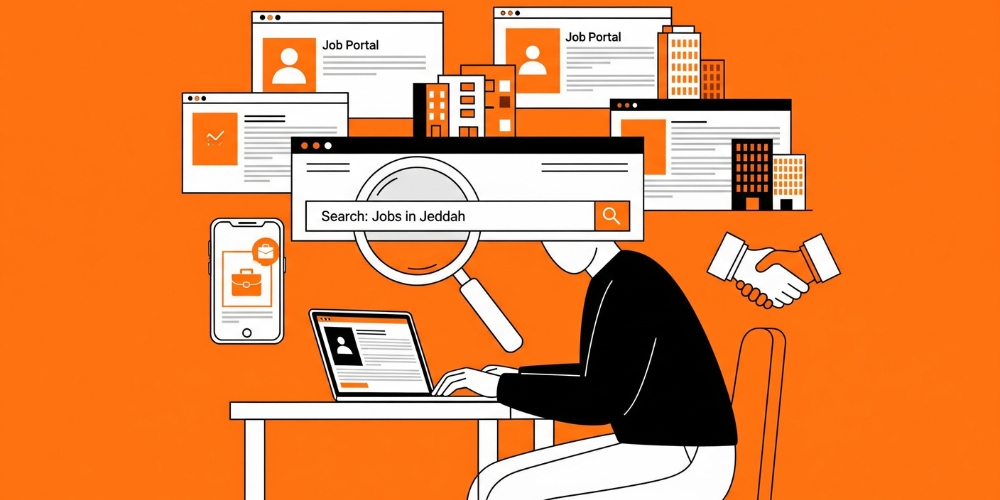
Five practical channels.
Online job boards
Bayt, Naukrigulf, and Monster Gulf cover the broadest range of openings — including roles tagged for women and roles with visa sponsorship. Glassdoor and company career pages (Aramco, ALSTOM, local logistics firms) round out direct-employer outreach.
LinkedIn and networking
Filter by location = Jeddah, role-specific keywords (digital marketing specialist, software engineer, HR manager). Attend HRDF career fairs, online webinars, or industry meetups to connect directly with employers.
Recruitment agencies
TASC Outsourcing, Hudson, and Michael Page place across hospitality, healthcare, education, and finance.
Government programs
HRDF's Jadarat platform supports Saudis primarily but also runs freelance support programs that match individuals to part-time and remote work.
Hotels, events, and retail
Shangri-La, Ritz-Carlton, and major event organisers hire continuously for hospitality, customer service, and event operations roles. Upscale retail at Jeddah's major malls hires steadily through tourist seasons.
Work Visa and Iqama Process
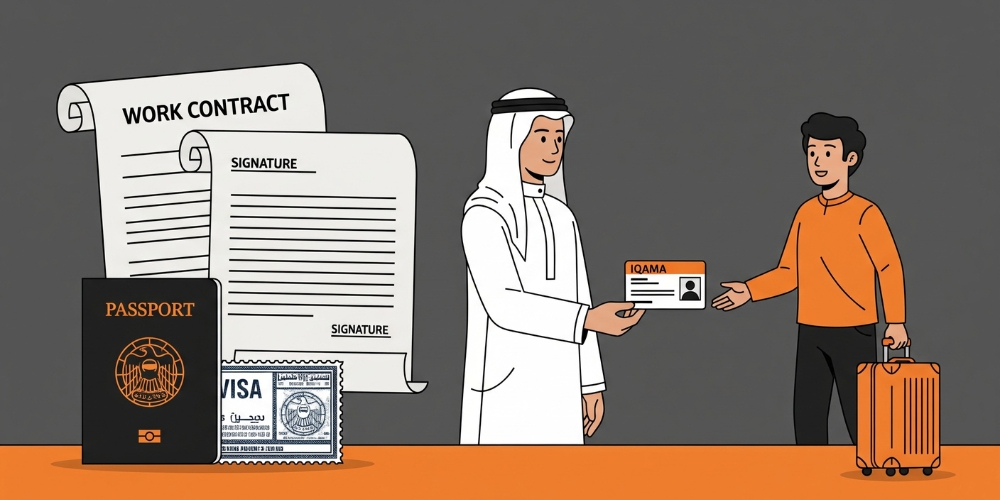
A valid work visa and iqama are required — there's no informal path.
Three-step process
- Sponsorship and approval. A Saudi employer sponsors your visa with Ministry of Human Resources approval. The employer must hold valid commercial registration and a medium-green Nitaqat rating or better.
- Employment visa. Valid up to 90 days; you must enter Saudi Arabia within that window.
- Iqama (residence permit). Issued within 90 days of arrival, valid 1–2 years, renewable as long as you stay with the same sponsor.
Required documents
- Passport with 6+ months validity
- Notarised and authenticated degree certificate
- Signed MOFA-certified employment contract
- Medical screening + police clearance
- Passport-size photo to specification
Visa reforms
Saudi Arabia is gradually moving to skill-based visas that replace the traditional kafala (sponsorship) model. Skilled expats get more mobility under the new system — full implementation is ongoing but the direction is clear.
How to Stand Out
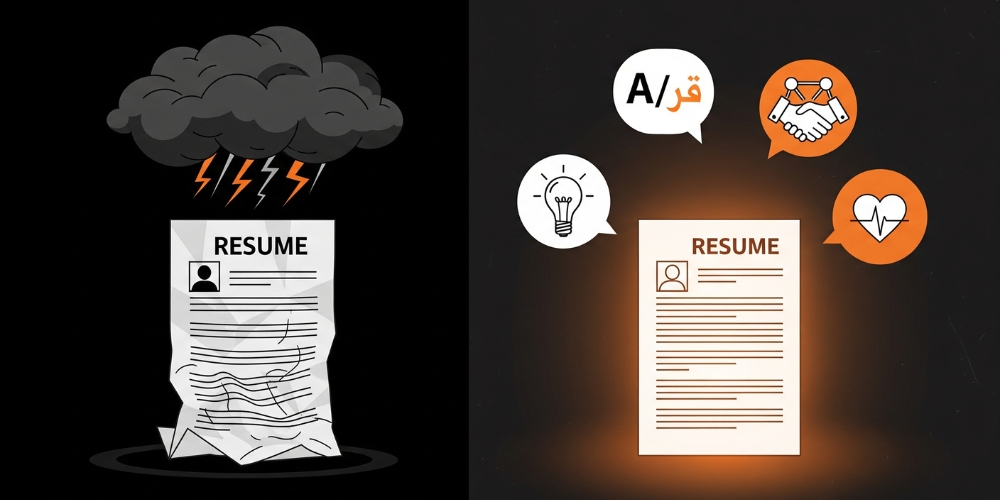
Five moves that consistently produce stronger application outcomes.
Tailor your CV by role
Lead with logistics for driver roles; lead with certifications for finance and tech. Use keywords directly from the job listing — "QA compliance," "IFRS," "digital marketing," "full-stack."
Demonstrate cultural awareness
Basic Arabic greetings, awareness of the Sunday–Thursday workweek, modest professional dress, and Ramadan office etiquette all signal you'll integrate well.
Highlight high-demand skills
Tech-heavy roles (digital marketing, software, data) are the strongest entry points. Freelancers should reference HRDF Jadarat support and a clean portfolio.
Build your local network
Set LinkedIn location to Jeddah, follow regional companies, join industry groups, attend recruiter webinars. Saudi hiring is heavily relationship-driven.
Prepare for substantive interviews
Examples with quantified outcomes ("scaled e-commerce campaign +30% revenue," "reduced delivery time below 24 hours") consistently land better than general claims.
The Bottom Line
Jeddah's job market in 2026 is genuinely open to qualified expats — provided you target high-demand sectors, secure proper sponsorship, and present yourself as a long-term contributor rather than a short-term passenger. Refresh your CV with Jeddah-specific keywords, register on Bayt and Naukrigulf, build your LinkedIn presence, and reach out to specialised recruiters. The Vision 2030 hiring wave is real; positioning matters.
FAQs
Is it easy to get a job in Jeddah as an expat?
Easier in IT, healthcare, education, and logistics where specialist demand outweighs Saudization preferences. Harder for generalist roles. Targeting high-demand sectors and presenting strong credentials makes the path significantly more manageable.
Do I need Arabic to work in Jeddah?
Not always — many multinationals and tech firms operate in English. Basic Arabic helps with cultural integration and is increasingly valuable for customer-facing roles, but it's rarely a hard requirement for specialist roles.
Can foreigners apply for government jobs?
Most government roles are reserved for Saudi nationals. The private sector accounts for almost all expat roles. Some licensed organisations and international entities hire foreigners, but standard civil service positions require citizenship.
What's the average salary in Jeddah?
The average annual salary sits around SAR 119,488 (~SAR 9,950/month) per SalaryExpert. Expat averages run higher (SAR 10,000–15,000/month for comfortable living, SAR 20,000+ for luxury). Healthcare, finance, IT, and engineering pay above the average.
What's the highest-leverage move?
Build a Jeddah-targeted LinkedIn profile, register on Bayt and Naukrigulf with sector-specific keywords, and engage two or three specialist recruiters. The combination of inbound visibility and outbound recruiter relationships compresses search time significantly.
Keep reading

Compensation Planning Explained: A Strategic HR Guide for 2026

Working in Japan as an American: The Recruiter's Reality Check
