

Creative First Jobs for 16-Year-Olds: Beyond Fast Food and Retail
First jobs at 16 can be more interesting than burgers and bagging — creative options, what the laws say, and how to land them in the AI-era job market.
Ployo Team
Ployo Editorial
TL;DR
- First jobs at 16 can boost early-career income 14-16% by your mid-20s.
- Federal FLSA caps and state-specific rules govern what 16-year-olds can do.
- Creative options: freelance design, content creation, digital tutoring, event work.
- Remote work for teens requires extra vigilance against scams and data risk.
- AI is reshaping entry-level work — human skills (judgement, creativity, empathy) matter more.
Most career advice for 16-year-olds assumes you'll work in fast food, retail, or as a babysitter. Those are fine — but they're not the only options anymore. Modern teens have access to freelance platforms, creative gigs, content work, and digital opportunities that didn't exist a decade ago. This guide walks through creative first-job options, what the laws actually say about working at 16, and how to navigate the AI-era job market without getting trapped in roles being automated away.
Why a First Job at 16 Matters
Working during high school produces real long-term benefits. Research published in PMC shows teens who hold steady jobs during high school are more likely to aim higher academically, save for college, and develop time-management skills that compound across adult life.
YouthFirst data shows even one year of teen employment correlates with 14-16% higher income in the worker's twenties. The early work experience compounds.
But balance matters. Parents.com research synthesis shows teens working moderately (around 20 hours/week or fewer) often do better academically than peers working too much or too irregularly. The right amount of work is far from zero — and far from full-time.
What the Law Actually Says
The rules for working at 16 in the US mix federal protections and state-specific requirements.
Federal baseline (FLSA)
- Minimum age: 14 for most non-agricultural work
- Hazardous work ban: 16-17 year olds can work most jobs but are barred from hazardous work — explosives, mining, heavy machinery, meat slicers, etc.
- Youth minimum wage: Federal law allows employers to pay $4.25/hour for the first 90 consecutive calendar days
- Hours: No federal cap for 16+ in non-hazardous jobs
State variations
- Hour caps: Many states cap weekly hours during school year (often 40-48)
- Night work: Many states limit evening shifts (often 11 PM to 6 AM restrictions for minors)
- Work permits: Some states require formal permits before starting work
- State minimum wage: Often exceeds federal — check your specific state
Always check your state's Department of Labor website before starting work. Indiana, for example, recently relaxed many restrictions; other states have tightened them.
Creative First-Time Jobs to Consider
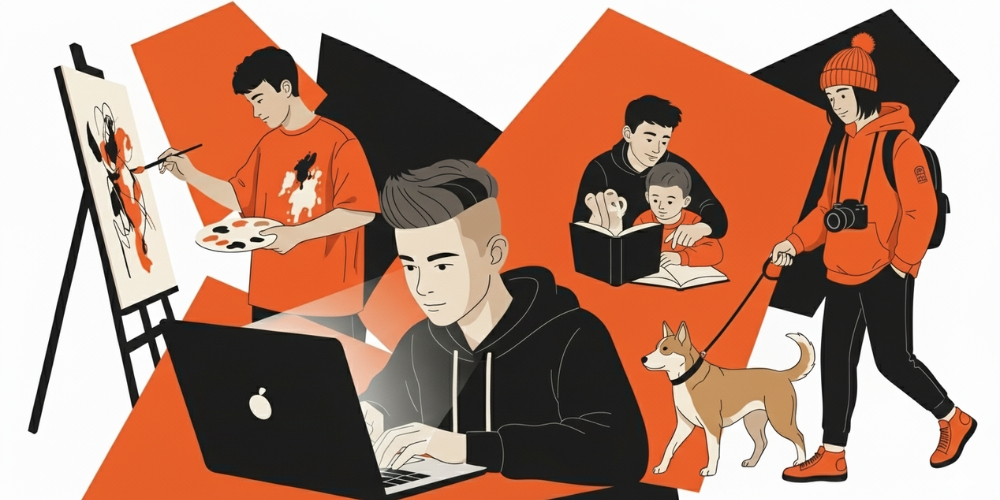
Seven options most career advice articles don't cover.
1. Freelance designer or illustrator
If you draw, illustrate digitally, or have design skills, Fiverr and Upwork let you take small design projects — logo concepts, social media graphics, custom illustrations. Pay scales with skill level.
2. Selling crafts or digital art online
Etsy, Marketplace, your own social media. The Times reported on teen entrepreneurs earning meaningful sums from craft and digital art sales in a single season.
3. Content creator for local businesses
Small shops and school clubs need help with social media — Instagram stories, TikTok posts, short promo videos. Creative freedom plus modern skill-building.
4. Event assistant for arts or community projects
Local theatres, galleries, and community fairs often need setup help, ticket sales, or social media support. Networking with creative adults; exposure to industries.
5. Photo booth or social media assistant at events
Birthday parties, school dances, weddings often need someone to capture content. Builds photography and social media skills while earning.
6. Pet content creator / pet sitter
Goes beyond walking dogs. Creating short videos of pets for owners who want shareable content. Combines animal time with video skill development.
7. Digital tutor using creative tools
Tutoring with screen recording, virtual whiteboards, illustrated explanations. Younger students respond well; you build teaching skills.
Why these stand out
- They match your passion rather than fitting you to generic work
- They build modern skills (editing, social media, customer interaction)
- They're flexible around school
- They often pay more than basic minimum-wage gigs
What Teens Should Know Before Starting
Five practical considerations before accepting any first job.
1. Work permits and legal rules
How old you have to be to get a job varies by jurisdiction. In the US, 16 is generally fine for most non-hazardous work, though some states still require permits.
2. Hours and school balance
US Department of Labor recommends teens keep work to 20 hours/week or less during school year. Working more than 25-30 hours/week consistently correlates with academic performance decline.
3. Pay expectations
Federal minimum is $7.25/hour but many states are higher. Skill-based gigs (tutoring, design, freelance) often pay $15-$30/hour.
4. Safety and rights
Construction, heavy machinery, and certain kitchen work are off-limits for under-18s. OSHA's young workers guidance outlines specific protections.
5. Soft skills employers actually care about
Reliability, punctuality, clear communication, respectful behaviour. Employers consistently rank reliability higher than experience for first-time hires.
Tips for Landing a First Job
Six moves that consistently work.
1. Start with your network
Family, friends, neighbours, local businesses. The easiest first job is often someone you already know who needs help.
2. Use online tools carefully
Indeed and Snagajob for traditional jobs; Care.com and Rover for babysitting and pet care. Always involve a parent for gigs involving strangers.
3. Build a simple resume from school experiences
School club leadership, volunteer work, sports team responsibilities. Employers care about attitude and potential more than past job titles for first hires.
4. Prep for interviews
Practice basic questions: "Why do you want this job?" "What's a strength you bring?" Dress neatly. Make eye contact. Confidence matters more than polish.
5. Stay open to creative paths
AI hiring trends are changing what employers want. Creative and tech-adjacent skills produce stronger first-job options than purely traditional roles.
6. Follow up politely
If you apply and don't hear back, a brief follow-up email or in-person visit shows initiative. Persistence with politeness consistently helps.
Remote Work Safety for Teens
Remote work for teens carries specific risks worth understanding.
Spotting scams
- "Pay to play" trap: Legitimate employers never ask you to pay for training or starter kits
- Unrealistic earnings: "$3,000/week with no experience" is bait
- Instant hire via text: Real companies interview, often by video
- Verification: Search company name + "scam" or "review" before accepting any offer
Data privacy basics
- Use a separate email for work, not your personal Gmail
- Never share home address, SSN, or bank details on public job boards
- Use strong passwords (16+ characters) with multi-factor authentication
- Use a VPN on public Wi-Fi
Digital etiquette
- Skip casual abbreviations and emojis until you know team tone
- Respond to emails within hours during work time
- Treat video calls like in-person meetings (professional dress, professional background)
- Mute when not speaking on calls
Time management
- Set hard start and end times
- Designate a specific workspace (not your bed)
- Use techniques like Pomodoro (25-min focused work blocks)
- Recognise burnout early; don't push through it
How AI Affects Teen Job Prospects
The job market in 2026 is shifting fast. Understanding the shift helps you target opportunities that compound.
Where entry-level work is shrinking
- Tier-1 customer service (increasingly AI-handled)
- Basic data entry
- Simple scheduling and admin tasks
- Routine content production without judgement
Where it's growing
- AI prompt interaction and refinement
- Data annotation and quality review
- Content creation that uses AI as accelerator
- Roles requiring real human judgement and empathy
Skills AI can't easily replicate
- Social and emotional intelligence
- Complex problem-solving with stakeholder context
- Leadership and motivation of others
- Ethical judgement in messy situations
- Creative synthesis of ideas across domains
Look for first jobs that build these skills, not just ones that pay this week. The compounding career benefit is significant.
The Bottom Line
First-time jobs at 16 produce real long-term benefits beyond the paycheck — income compounding, skill development, confidence building, and resume foundation. The traditional options (fast food, retail, babysitting) still work fine, but creative alternatives (freelance, content creation, tutoring, event work) often match teen interests better and build more transferable skills for the AI-era job market. Know the laws, balance work with school, watch for scams in remote work, and lean toward jobs that build human skills AI can't replicate. The first job matters less than what you learn from it — and the learning compounds across the next decade.
FAQs
Which jobs pay the most for 16-year-olds?
Tutoring, lifeguarding (with certification), freelance design, social media content creation for small businesses. These often pay $15-30/hour because they require skills or training that set you apart from minimum-wage gigs.
Do I need a work permit at 16?
It depends on your state. Some US states require work permits for 16-year-olds; many don't. Check your local school office or state Department of Labor.
How many hours can I work legally at 16?
Federal law allows unlimited hours in non-hazardous jobs at 16. Many states cap weekly hours during the school year. Best practice: keep work under 20 hours/week during school to protect academic performance.
Are online jobs safe for teenagers?
They can be when approached carefully. Use trusted platforms, involve a parent, verify employers before sharing personal information, and watch for the scam patterns described above.
What's the best first job for college applications later?
Anything that demonstrates responsibility, learning, and impact. Tutoring, freelance creative work, or local volunteer leadership often outperform routine retail work on applications because they show specific skills and outcomes.
Keep reading

Compensation Planning Explained: A Strategic HR Guide for 2026

Working in Japan as an American: The Recruiter's Reality Check
