

Answering Leadership Interview Questions: Examples and Strategy
Leadership questions test substance, not titles — what interviewers actually probe and how to demonstrate leadership in your answers with structure.
Ployo Team
Ployo Editorial

TL;DR
- Managers explain 70% of variance in team engagement (Gallup) — companies care.
- 68.6% of employers rank leadership as a top-5 skill they seek.
- Leadership questions test influence, judgement, and outcomes — not just titles.
- STAR (Situation, Task, Action, Result) framework works consistently well.
- Specific examples with measurable results beat generic claims every time.
Leadership questions show up in interviews regardless of whether you're applying for a manager role. Companies care because Gallup research shows managers explain about 70% of variance in team engagement. Even individual contributor roles require influence, judgement, and the ability to bring others along. This guide walks through what leadership questions actually test, how to structure strong answers, and how to demonstrate leadership when you don't have a manager title yet.
Why Employers Ask Leadership Questions

Three reasons leadership questions appear across role levels.
Leadership impacts results
Even individual contributors influence teammates, projects, and outcomes. Companies hire for the influence pattern as much as the technical skill.
Self-awareness about decision-making
Questions about leadership style probe how you think about decisions, conflict, and motivation. Self-aware candidates demonstrate maturity that's hard to fake.
Cultural fit signals
How you describe leadership reveals values. A "command-and-control" answer fits some companies; a "consensus-building" answer fits others. Misaligned answers signal misfit.
Even early-career candidates demonstrate leadership
How to demonstrate leadership in high school or college — through club leadership, project coordination, mentoring peers, organising events — all provide credible material for leadership stories. You don't need a manager title to demonstrate leadership patterns.
Common Leadership Interview Questions

Seven questions that appear consistently across leadership interviews.
1. What kind of leader are you?
Tests self-awareness about style and whether it matches the team's needs.
2. Tell me about a time you led a team or project
Probes specific demonstrated leadership behaviour, not abstract claims.
3. Describe a time you resolved conflict within a team
Tests conflict-handling, communication, and mediation skills.
4. Tell me about leading without authority
Particularly relevant for individual contributors and matrix organisations.
5. How have you demonstrated leadership in remote work?
Reflects post-pandemic working reality where async leadership matters.
6. What's your biggest leadership challenge and how did you handle it?
Tests resilience and self-awareness about growth areas.
7. How do you measure team success?
Tests focus on outcomes and accountability for results.
Use STAR to Structure Strong Answers
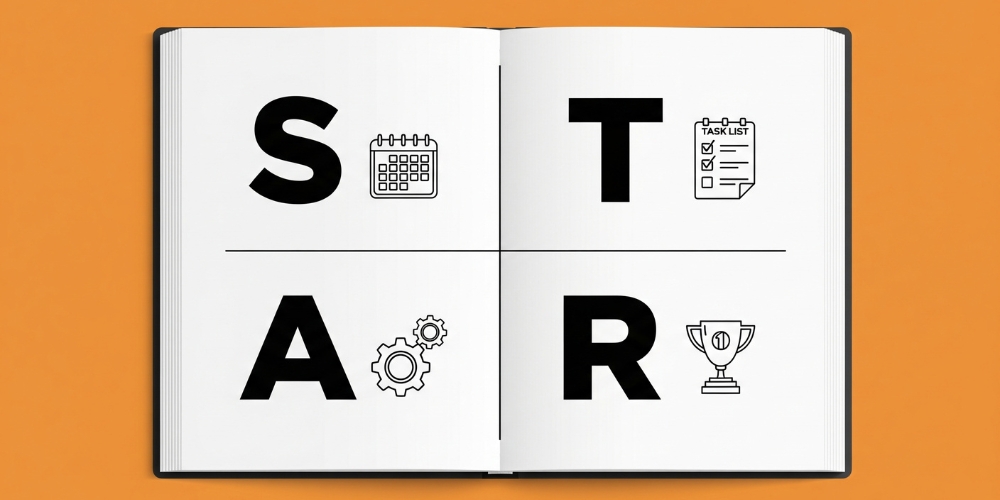
The STAR framework keeps leadership answers structured and outcome-focused.
Situation: brief context
"During my final year of college, my project team's leader had to step down two weeks before our capstone deadline."
Task: your responsibility
"I needed to coordinate the remaining team members, redistribute work, and ensure we met the deadline without quality loss."
Action: specific steps
"I held a 30-minute team meeting to reassess remaining work. Reassigned tasks based on each person's strengths. Set up daily 15-minute standups to catch issues early. Personally took on the integration work that nobody else had time for."
Result: measurable outcome
"We submitted the project on time. Earned an A grade. The professor specifically called out our team coordination as exemplary. Two team members later asked me to lead our follow-up project."
Newman University research shows 68.6% of employers rank leadership as a top-5 skill they seek. STAR-structured demonstrations are how candidates communicate the skill credibly.
Key Leadership Qualities to Demonstrate

Five qualities consistently rank high in employer leadership-evaluation criteria.
1. Communication
HBR research shows 91% of employees believe their leaders lack adequate communication skills. Strong communication — especially clarity, listening, and tone-adjustment — is the foundation everything else builds on.
2. Decision-making
Confidence under uncertainty, willingness to make calls with incomplete information, and accountability for outcomes when decisions go wrong.
3. Empathy
Especially critical in hybrid and remote environments. Reading what people are actually feeling and responding appropriately.
4. Accountability
Owning outcomes — both good and bad — without deflecting blame or claiming credit that belongs to others.
5. Vision
The ability to set direction and motivate others to commit to it.
Strong answers demonstrate these qualities through specific examples rather than abstract claims.
How to Prepare for Leadership Questions
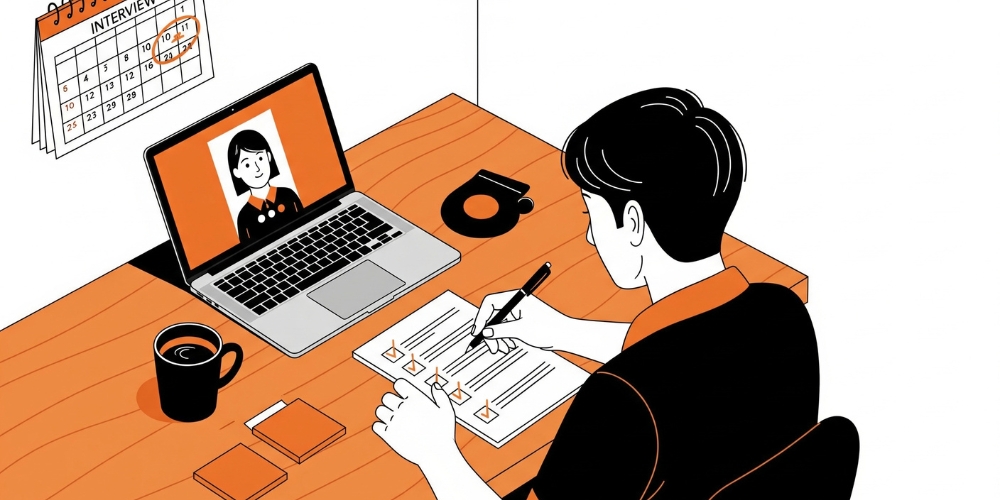
Six preparation moves that consistently produce strong answers.
1. Read the job description carefully
Identify the leadership signals the role specifically needs. "Coordinates cross-functional projects" calls for project leadership stories; "Mentors junior team members" calls for coaching stories.
2. Build 3-5 leadership stories
One showing problem-solving, one showing team motivation, one showing conflict resolution. STAR-structured. Practised but not memorised.
3. Research the company's leadership culture
Reading their values page, recent leadership content, and Glassdoor reviews informs which examples will resonate.
4. Practise out loud
Specifically out loud. Reading STAR answers silently doesn't prepare you for delivery under interview pressure.
5. Prepare data
Quantified outcomes — "improved team velocity 30%," "reduced bug count by half," "led 12-person team to deliver on time" — produce stronger signal than generic descriptions.
6. Prepare questions about leadership
Ask "How does the company develop leaders?" or "How do you measure leadership effectiveness here?" — signals you take the topic seriously.
Common Mistakes to Avoid

Five answer patterns that consistently weaken otherwise capable candidates.
Generic claims without examples
"I'm a strong leader who motivates teams" tells nothing. Specific past examples land.
Over-long stories
Rambling weakens impact. Tight STAR structure beats sprawling narratives.
Avoiding failures entirely
Claiming you've never failed signals lack of self-awareness. Brief failure stories with clear learning land well.
Forgetting remote context
Distributed leadership matters in 2026. Stories should include or acknowledge remote/hybrid dynamics where relevant.
Wrong example for claimed style
Saying you're collaborative then telling a story about pure solo execution undermines the claim. Match examples to the leadership style you're describing.
What If You Don't Have Formal Leadership Experience?
Three legitimate sources for leadership stories without manager titles.
Project leadership
Cross-functional projects where you coordinated work, owned timelines, or rallied team members around shared goals.
Mentorship
Helping junior colleagues, onboarding new hires, sharing expertise. Mentorship is leadership.
Volunteer or community work
Sports teams, school clubs, community organisations, religious groups all produce leadership experiences that translate to professional contexts.
Frame the story as leadership; the title is secondary.
The Bottom Line
Leadership questions reward specificity, structure, and self-awareness. The candidates who answer well have prepared 3-5 STAR stories that demonstrate different facets of leadership — coordination, conflict resolution, motivation, problem-solving — backed by measurable outcomes. The candidates who recite generic platitudes signal exactly the lack of substance the question was designed to catch. Leadership isn't a title; it's a pattern of behaviour. Demonstrate the pattern through specific examples, and the title question takes care of itself.
FAQs
How do I show leadership if I've never been a manager?
Through project coordination, mentorship, volunteer work, club leadership, or any context where you influenced others toward an outcome. Leadership is influence, not title.
What's the best way to describe my leadership style?
Tie style to results. "I lead collaboratively because shared ownership produces better outcomes in [specific context]" beats "I'm a collaborative leader" without explanation.
Can leadership be demonstrated in remote work?
Yes — and increasingly important to demonstrate. Show clear async communication, explicit accountability, and active engagement across distance. Examples should include modern remote-work tools and patterns.
Should I discuss failures when answering leadership questions?
Briefly, yes. Self-awareness about growth is a leadership trait. Describe what happened, what you learned, and how you've applied the learning since.
What's the single highest-leverage leadership question to prepare for?
"Tell me about a time you led a team or project." It comes up in almost every leadership-relevant interview and gives you the broadest canvas to demonstrate substance.
Keep reading


