

How to Answer Diversity Interview Questions With Real Examples
Diversity interview questions reveal values, not vocabulary — the question types to expect, how to structure answers, and the examples that land.
Ployo Team
Ployo Editorial

TL;DR
- Diversity questions reveal values, lived experience, and the candidate's working model — not vocabulary.
- Expect five types: personal-values, behavioural, hypothetical, culture-fit, and role-specific.
- Use STAR to structure behavioural answers and lead with real examples.
- Research the company's actual DEI practice before the interview — generic answers fail.
- Three in four job seekers now factor workforce diversity into offer decisions, so authentic answers help both sides.
Diversity, equity, and inclusion questions are no longer optional in modern interviews — they are routine, and the answers reveal much more than vocabulary. Hiring managers are looking for evidence: how you have worked across difference, how you handle inclusion-sensitive moments, and whether your stated values match how you describe specific past situations. This guide walks through why employers ask these questions, the five question types you should expect, the structure that makes answers land, and the prep that separates strong candidates from forgettable ones.
Why Employers Ask Diversity Interview Questions
DEI questions probe three things at once. First, your cultural competence — how you work alongside people from backgrounds, identities, and experiences different from your own. Second, your commitment to inclusion — whether you actively contribute to an environment that welcomes everyone. Third, alignment with the company's stated values — whether your perspective on DEI fits with how this team actually operates.
When a hiring manager asks "what does diversity mean to you?", they are not testing for a textbook answer. They are testing how your perspective was shaped, how specific you can be about your own experience, and what you have actually done to contribute to inclusion. The candidates who answer with vocabulary lose to the ones who answer with examples. Pair this with our broader playbook on structured situational answers for adjacent question types.
Five Types of Diversity Interview Questions
1. Personal-values questions
- "What does diversity mean to you?"
- "How do you define inclusion in the workplace?"
These ask for your own perspective. Be specific. Reference an experience or relationship that genuinely shaped how you think.
2. Behavioural questions
- "Tell me about a time you worked with someone from a very different background."
- "Describe a moment when you advocated for inclusion at work."
These need real examples. Use STAR — situation, task, action, result — to keep your answers structured and specific.
3. Hypothetical scenarios
- "What would you do if you witnessed a colleague making an inappropriate comment?"
- "How would you help a team member who felt left out?"
These test judgement and empathy. The strongest answers describe a thoughtful, concrete sequence — not generic platitudes.
4. Culture-fit questions
- "Why is diversity important in this workplace specifically?"
- "How would you contribute to our inclusive culture?"
These require company-specific knowledge. Researching the company's actual DEI commitments before the interview is what separates strong answers from rehearsed ones.
5. Role-specific DEI questions
- "How do you lead diverse teams?"
- "How do you ensure inclusivity in client interactions?"
Reserved for leadership or customer-facing roles. Lead with concrete strategies you have actually implemented, not abstract principles.
How to Structure Strong DEI Answers
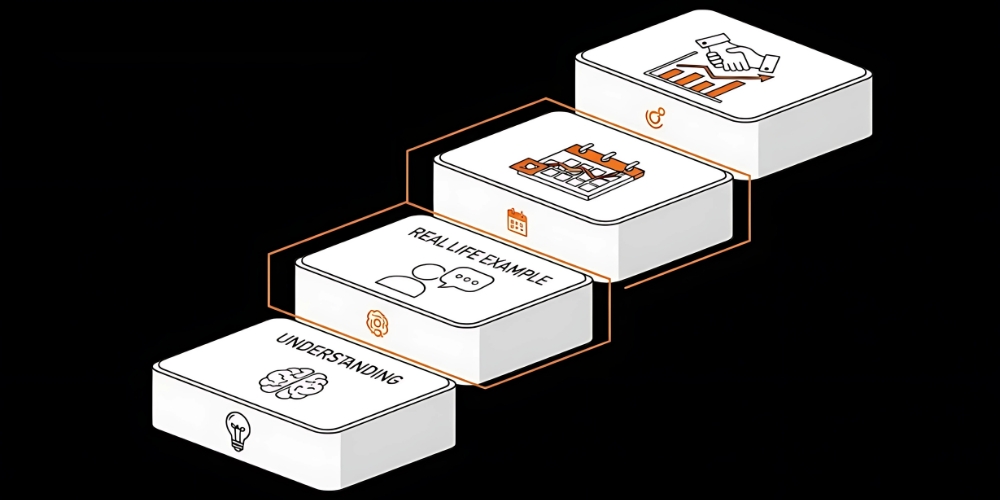
Three-step structure that works for almost every DEI question.
Start with your perspective
One or two sentences defining what the concept means to you in practical terms. "Diversity means a team has a real range of backgrounds and experiences shaping decisions — not a representational tick-box, but actual variety in how problems get approached."
Add a real example
Behavioural specificity is what makes the answer credible. "In my last role, I worked on a cross-functional team where four of us came from different industries. I led a kickoff session where we mapped how each of us approached the same hypothetical problem differently — which became our team's shared language for the next 18 months."
Close with the impact
What changed because of what you did. Measurable when possible. "The session became a recurring practice, and our average time from problem definition to first prototype dropped by about 30%."
The structure works because it forces specificity at every step. Generic statements about valuing diversity bounce; specific stories with names, places, and outcomes stick.
How to Prepare Before the Interview
Five preparation moves that consistently pay off.
Reflect on your real experiences
Surface the moments where you worked across difference, advocated for inclusion, or shifted a team norm. Even seemingly small examples often make the strongest stories.
Study the company's actual DEI practice
Beyond the careers-page rhetoric. Look at LinkedIn for current employees, recent press, public reports. Glassdoor's research on workforce diversity found that 76% of job seekers factor workforce diversity into their offer decisions — the question runs both ways.
Practise out loud
Run your strongest DEI stories aloud. The first time you say them they will be longer than they need to be. By the third pass, they will be tight and natural.
Have specific examples ready
Three or four go-to stories that map to different DEI question types. Cross-functional teamwork. Inclusive language change. Mentoring across difference. Calling out a non-inclusive moment respectfully.
Anchor in honesty
Authentic answers — including acknowledgements of past learning moments — consistently outperform polished but generic ones. Hiring managers can hear the difference.
The Bottom Line
Diversity interview questions are values questions answered through examples. The candidates who land them best treat the questions as opportunities to share something specific about how they have actually worked, learned, and contributed — not as a vocabulary test. Prepare three or four real stories, research the company's actual DEI practice, and answer with structured honesty. The signal you send is exactly what hiring managers and (just as importantly) future colleagues are checking for.
FAQs
Can I share a moment where I learned about my own bias?
Yes — and these stories often land especially well because they signal self-awareness and growth. Frame it around what you noticed, what you changed, and what the outcome was.
What if my background is not particularly diverse?
The questions are about how you work across difference, not about your demographic background. Examples can come from any context where you collaborated with people whose perspectives differed from yours.
How specific should the company-DEI research be?
Specific enough that you can reference at least one concrete initiative or value. Generic praise of the company's DEI page is obvious; one specific reference shows you actually engaged.
Are hypothetical-scenario answers expected to be perfect?
No. Interviewers are looking for thoughtful reasoning, not the "right" answer. Walk through your thinking — the steps you would take, why you would take them, who you would involve.
What is the single biggest mistake on DEI questions?
Answering with vocabulary instead of examples. "I value diversity" tells the interviewer nothing. "Here's what I did when I noticed our team was making decisions without one key voice" tells them everything.
Keep reading


