

How Early Should You Arrive for an Interview? The 10-15 Minute Rule
Arriving 10-15 minutes early is ideal — what timing signals to recruiters, what to do during the wait, and how to handle running late professionally.
Ployo Team
Ployo Editorial
TL;DR
- 10-15 minutes early is the universal sweet spot.
- Earlier than 20 minutes can disrupt the interviewer's schedule.
- 96% of hiring managers consider timeliness in first impression formation.
- 61% of hiring managers list lateness without notice as a top interview pet peeve.
- For virtual interviews, log in 10-15 minutes early to test tech.
The "how early should I arrive?" question seems simple but trips up plenty of candidates. Too early and you disrupt the interviewer's schedule; too late or just-on-time and you signal poor planning. There's a narrow optimal window that produces the right impression — and a specific strategy for arriving there reliably. This guide walks through the timing that works, what to do during the wait, what to do if you're running late, and how virtual interview timing differs from in-person.
The 10-15 Minute Rule
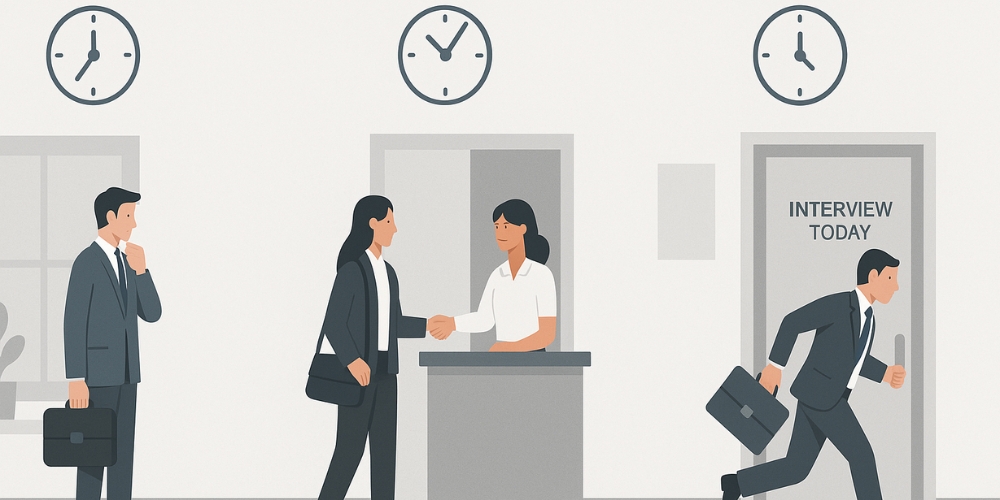
The optimal arrival window is 10-15 minutes before your scheduled time. This signals you're punctual and respectful without disrupting the interviewer's workflow.
Daily Mail's first-impression research shows 96% of hiring managers factor timeliness into their first impression. The number reflects how much arrival timing actually weighs in evaluation.
The strategic approach
Plan to arrive in the area 20-25 minutes early but check in at reception 10-15 minutes early. The buffer protects against unexpected delays (traffic, parking, security) while the staged entry respects the interviewer's schedule.
Quick timing guide
- 10-15 minutes early: Ideal
- 15-20 minutes early: Acceptable but waiting nearby is better
- 20+ minutes early: Too early — wait outside or in your car
- 5-10 minutes early: Cutting it close but acceptable
- On time or late: Risky for first impression
Industry context matters
Traditional industries (finance, law, government) expect the full 10-15 minute buffer. Startups and creative agencies are often more flexible. When in doubt, default to 10-15.
What to Do While Waiting
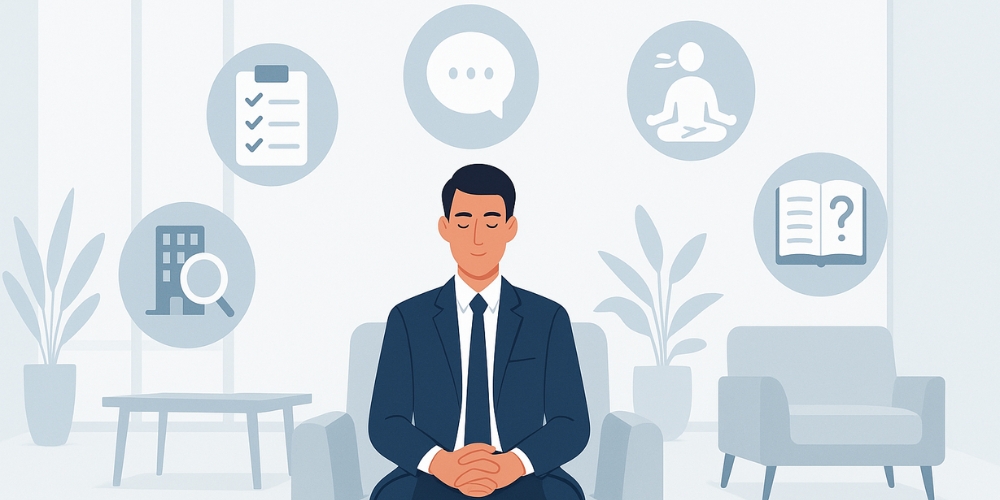
Six high-value uses of waiting time.
1. Review your top accomplishments
Pull up notes; mentally rehearse the 2-3 specific examples you want to surface.
2. Scan the company environment
Recent press releases, awards mentioned in the lobby, recent product launches. Provides authentic conversation hooks.
3. Mental rehearsal of opening
The first 60 seconds set the tone. Run through your introduction and elevator pitch quietly.
4. Breathing exercises
Deep, slow breathing reduces cortisol and steadies your voice. Three minutes makes a measurable difference.
5. Review your questions to ask
Strong candidates ask substantive questions. Have 3-5 ready.
6. Observe culture cues
If on-site, watch how people interact, what the energy feels like, what the dress code actually is. The observations help you calibrate communication style.
What not to do: doom-scroll, over-rehearse to the point of burnout, or check email and add stress.
Why Arriving Early Matters
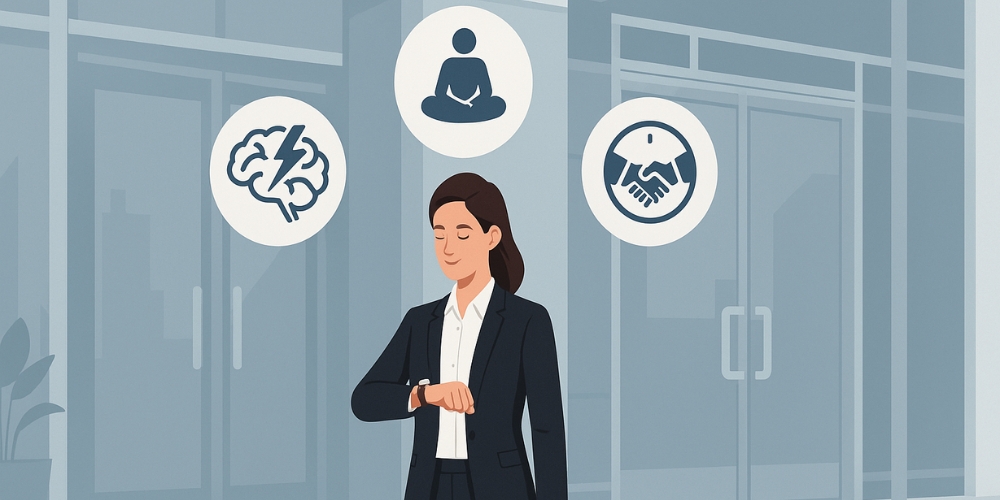
Three operational reasons the timing affects outcomes.
Signals professionalism before you speak
Arrival timing is one of the first observations interviewers make. Punctuality without disruption is a strong opening signal.
Mental transition time
The 10-15 minute window lets your nervous system shift from "getting there" mode to "interview present" mode. The difference shows in voice, body language, and clarity of thought.
Avoids the pet peeve cost
CNBC's hiring manager survey shows 61% list arriving late without notice as a top interview pet peeve. Avoiding pet peeves is worth meaningful effort.
Why not earlier?
Arriving 30+ minutes early can:
- Disrupt the interviewer's pre-meeting prep
- Force the receptionist to entertain you
- Create scheduling pressure
- Make you look anxious or poorly planned
Be punctual — not overzealous.
What to Do If You're Running Late
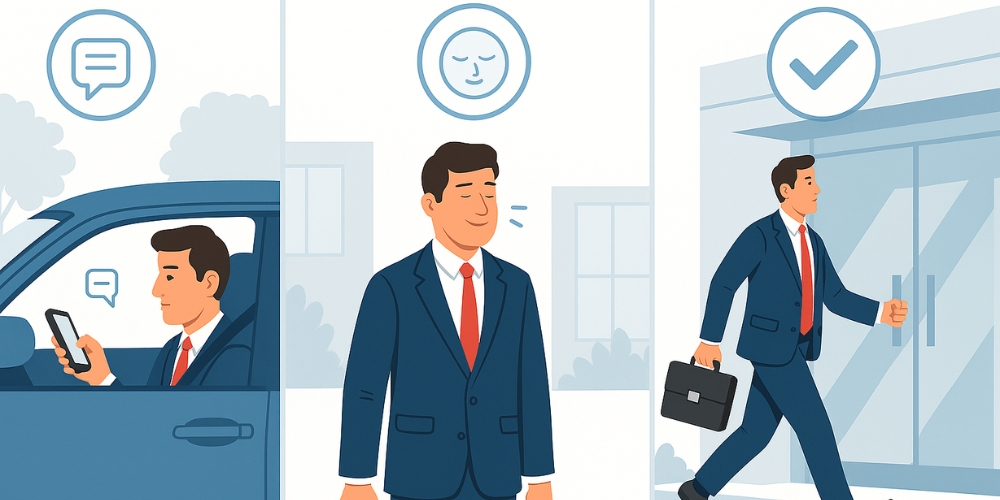
Three moves if lateness becomes unavoidable.
1. Contact immediately
Call, email, or message the recruiter as soon as you know. The earlier the notice, the more recoverable the situation.
Template:
"Hi [Interviewer's name], I'm so sorry — I'm dealing with [specific brief reason, e.g., unexpected traffic]. I should arrive by [specific new time]. Please let me know if that still works or if we should reschedule."
2. Walk in composed, not flustered
If you arrive frazzled, the conversation starts off-balance. Take 60 seconds outside to breathe and reset before entering.
3. Acknowledge once, move on
A single brief apology followed by composure. Don't spend the first 10 minutes of the interview apologising — it dilutes the rest of your answers.
The honest reality: how you recover from a late arrival can demonstrate composure under pressure. Done well, the interviewer sees grace under unexpected challenge. Done poorly, lateness compounds.
Virtual Interview Timing
The 10-15 minute rule adapts to virtual interviews with specific changes.
Log in 10-15 minutes early
Tests your camera, mic, lighting, and connection. Catches the issues that would otherwise eat your interview's first 5 minutes.
Have a backup device ready
Phone or tablet with the interview link. Tech failure shouldn't end the interview.
Camera and lighting setup
Camera at eye level, lighting in front of you (not behind), clean background. These signal preparation as much as arrival timing does in person.
Quiet environment
Roommates, family, pets all informed. Notifications off. Background noise eliminated.
Tips for Mastering Interview Timing
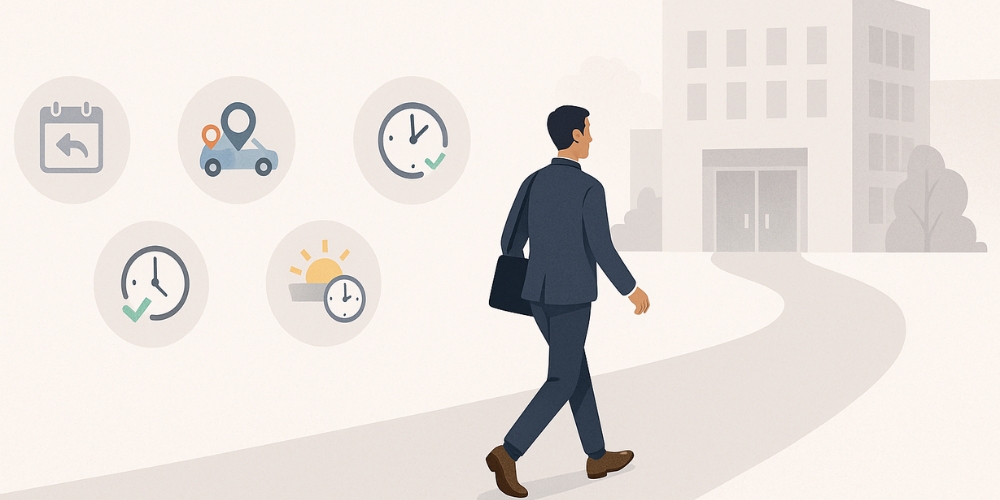
Five practices that consistently produce strong arrival timing.
1. Plan backward from interview time
Add transit + parking + security + walk-to-room + 15-minute early arrival. The full picture reveals when you actually need to leave.
2. Dry-run the route
For important interviews, drive or commute the route at the same time of day a few days before. Maps app estimates don't account for actual traffic patterns.
3. Build in real buffer
15-30 minutes of cushion beyond what you "think" you need. Recovers from the inevitable surprises.
4. Prepare the tech the night before (virtual)
Don't troubleshoot your camera at 8:45 for a 9 AM interview. Test the day before.
5. Choose strategic interview times when possible
Indeed research suggests 10-11:30 AM is often the strongest interview window — interviewers are focused, energetic, and not yet drained by the day.
The Bottom Line
Arrival timing is a small detail that influences outcome more than candidates often appreciate. The 10-15 minute rule signals professionalism without disruption. The waiting time, used well, lets you arrive mentally present rather than physically present but distracted. The strategy for unexpected lateness, handled gracefully, protects you when reality interferes with planning. Strong candidates handle arrival timing as a deliberate decision, not an afterthought — and the small detail compounds with the other signals you send to produce stronger interview impressions overall.
FAQs
What if I arrive way too early — should I just wait outside?
Yes. Wait in your car, at a nearby café, or in the building lobby until you're 10-15 minutes from your interview time. Then check in at reception.
Is 5 minutes early acceptable?
Acceptable but cutting it close. If anything unexpected delays your final approach (slow elevator, busy reception), you'll be late. 10-15 minutes is safer.
Should I arrive earlier for important interviews?
Same rule applies — 10-15 minutes early. Importance doesn't change optimal timing; it just raises the cost of getting it wrong.
What's the rule for video interviews?
Log in 10-15 minutes early to test your tech, but turn on camera at most 1-2 minutes before the scheduled time. Earlier camera-on can feel awkward for the interviewer.
Do interviewers really care about exact timing?
Yes — 96% of hiring managers note timeliness in first impressions. The detail matters less in absolute terms but more relatively — your timing compared to other candidates' timing affects your relative position.
Keep reading


