

How to Handle Stress Interview Questions Without Losing Composure
Stress interview questions test how you respond under pressure — what they really probe, how to prepare, and the techniques that keep you composed.
Ployo Team
Ployo Editorial

TL;DR
- Stress interview questions are designed to test composure, clear thinking, and communication under pressure — not to attack you.
- Roughly 71% of employers value emotional intelligence over IQ when hiring, which makes these questions central to many evaluations.
- Use the STAR framework to structure answers; pause before responding to stay calm.
- Treat tough questions as opportunities to demonstrate coping skills, not personal attacks.
- Honesty beats fake-it bravado — "I haven't encountered that exactly, but here's how I'd approach it" lands well.
The questions designed to throw you off — the abrupt challenges, the loaded "why should we hire you over the others?" — are not personal. They are a deliberate test of how you respond under pressure. The good news: stress interview questions are predictable, the techniques to handle them are learnable, and candidates who prepare specifically for this format consistently outperform candidates who do not. This guide breaks down what stress interview questions actually probe, the framework to answer them well, and the small techniques that keep composure intact in the moment.
What Stress Interview Questions Are Really Doing
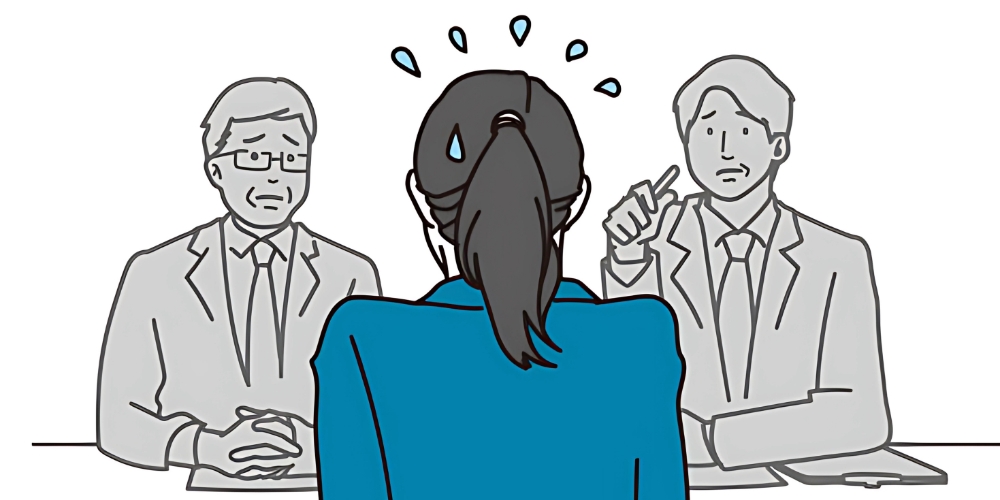
What stress interview questions look like
Stress questions are deliberately uncomfortable or provocative. Examples:
- "Why were you fired from your last job?"
- "What makes you think you're better than the other candidates?"
- "How do you handle failure?"
- "Are you sure you're qualified for this role?"
- "Walk me through what went wrong on your last big project."
The interviewer may also interrupt your answer, challenge your reasoning, or push back deliberately. The provocation is the point.
Why employers use them
The questions are not personal — they are diagnostic. Employers use stress interviews to evaluate:
- How you respond to unexpected challenges
- Your emotional resilience under pressure
- Whether you continue thinking clearly when the conversation gets uncomfortable
- How you communicate when you are not on script
CareerBuilder's research on emotional intelligence in hiring found that around 71% of employers weight emotional intelligence more heavily than IQ when making hiring decisions. For roles with deadlines, high-stakes decisions, or customer pressure, the stress interview is one of the most direct ways to test for it.
How to Handle Stress Interview Questions With Composure

Five moves that consistently work.
1. Prepare for the unexpected
You cannot predict every stress question, but you can prepare for the common patterns — challenges to your past performance, questions about failures, prompts that imply you might not be qualified. Familiarity with the format itself dramatically reduces in-the-moment panic.
2. Use STAR to structure your response
The STAR framework keeps answers focused even when the topic is uncomfortable:
- Situation — set the scene briefly
- Task — define your specific responsibility
- Action — describe what you did, focusing on your decisions
- Result — name the outcome, including what you learned
The structure becomes a safety rail when emotions are high.
3. Pause before answering
A two-second pause before responding signals composure rather than panic. Take a slow breath, organise the answer in your head, then speak. Quick reactive answers consistently sound less confident than considered ones.
4. Reframe the question as an opportunity
Stress questions are not attacks — they are openings to demonstrate exactly the resilience the role requires. "How do you handle failure?" is a chance to show real self-awareness and growth. "Why should we hire you over the others?" is a chance to articulate specific strengths concretely.
5. Practise out loud
Confidence comes from repetition. Run through likely stress questions aloud — to a mirror, to yourself, ideally with a friend in a mock interview. The first time you answer a tough question out loud, the answer wanders; by the third time, it lands cleanly.
Tips That Make the Difference

Six habits that consistently land stress interview answers well.
Watch your body language
Posture, eye contact, and voice tone all signal composure. Sitting upright with a steady voice projects confidence even when the conversation is uncomfortable.
Do not take it personally
The provocation is structural, not personal. Holding this in mind keeps you emotionally detached enough to think clearly while responding.
Be honest when you do not know
"I haven't encountered that exact situation, but here's how I'd approach it..." lands far better than fabrication. Interviewers value the honest answer because it signals self-awareness and openness to learning.
Practise mindfulness in the days before
Stress builds before the interview, not just inside it. Deep breathing, a short walk before the interview, and basic mindfulness practice in the days leading up all measurably improve composure on the day.
Use real examples
Whenever a stress question allows, ground your answer in a specific real situation. Real examples are dramatically more memorable than abstract claims and signal that you are not improvising.
Show that work-life balance matters
A clean answer about how you manage stress outside work signals that you handle pressure sustainably rather than burning out. Exercise, hobbies, family, deliberate downtime — any of these reads as real resilience.
The Bottom Line
Stress interview questions are predictable, manageable, and (counterintuitively) one of the best opportunities to differentiate yourself in an interview. The candidates who prepare specifically for this format land them with composure and use them to demonstrate exactly the resilience employers are checking for. STAR for structure, brief pauses for composure, honesty when you do not know, and real examples when you do. The technique is straightforward; the practice is what makes it land in the moment.
FAQs
What is a stress interview question, exactly?
A deliberately provocative or uncomfortable prompt designed to test how a candidate responds under pressure. The substance of the answer matters less than how composed and structured the candidate stays.
How is a stress interview different from a behavioural one?
Behavioural questions probe past actions to predict future behaviour. Stress questions probe present composure to predict performance under pressure. Strong interviews often include both.
Should I take a stress question personally?
No. The provocation is structural. Treating it personally is the failure mode the interviewer is testing for.
Is it OK to admit I do not know an answer?
Yes, and it usually lands well. "I haven't faced exactly that situation, but here's how I'd approach it..." signals self-awareness and is dramatically better than fabrication.
How long should a stress-question answer be?
60-90 seconds. Long enough to deliver a structured response; short enough to demonstrate that composure does not turn into rambling.
Keep reading


