

Hiring Insight and Oversight: Building Trust in AI-Era Recruiting
Balanced AI hiring requires data-driven insight plus human oversight — what each contributes, the risks of skipping either, and how to deploy both.
Ployo Team
Ployo Editorial
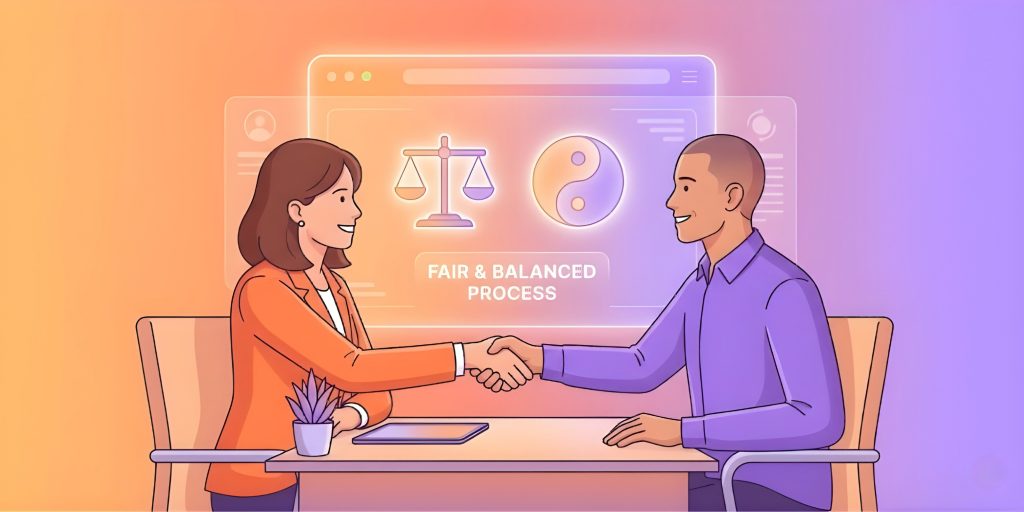
TL;DR
- 66% of US adults wouldn't apply if AI made the final hiring decision (Pew Research).
- 92% of companies plan to increase AI investment over the next three years (McKinsey).
- NYC Local Law 144, Colorado SB205, EEOC guidance all now require oversight discipline.
- Insight = data-backed understanding of candidates and market.
- Oversight = human checks ensuring fairness and legal compliance.
AI in recruiting has moved from experimental to mainstream — and the trust gap has widened with it. Candidates fear opaque algorithmic decisions; regulators are tightening rules; companies struggle to balance speed with fairness. The answer is structural: combine data-driven insight (what AI does well) with human oversight (what humans must keep doing). This guide walks through why both matter, the risks of skipping either, and how to build a trust-first hiring system that scales without losing the human element candidates expect.
Why Trust Matters in Modern Hiring
Two data points frame the stakes.
Pew Research's AI hiring sentiment survey shows ~66% of US adults wouldn't apply for a job if they knew AI made the final hiring decision without human review. The trust deficit is real and measurable.
McKinsey's AI workplace research shows ~92% of companies plan to increase AI investment over three years. Adoption is accelerating regardless of the trust gap.
The combination produces a strategic moment: companies that solve the trust problem while leveraging AI will dramatically outhire competitors that don't. The differentiator is structured insight + oversight, not the technology itself.
What Insight and Oversight Actually Mean
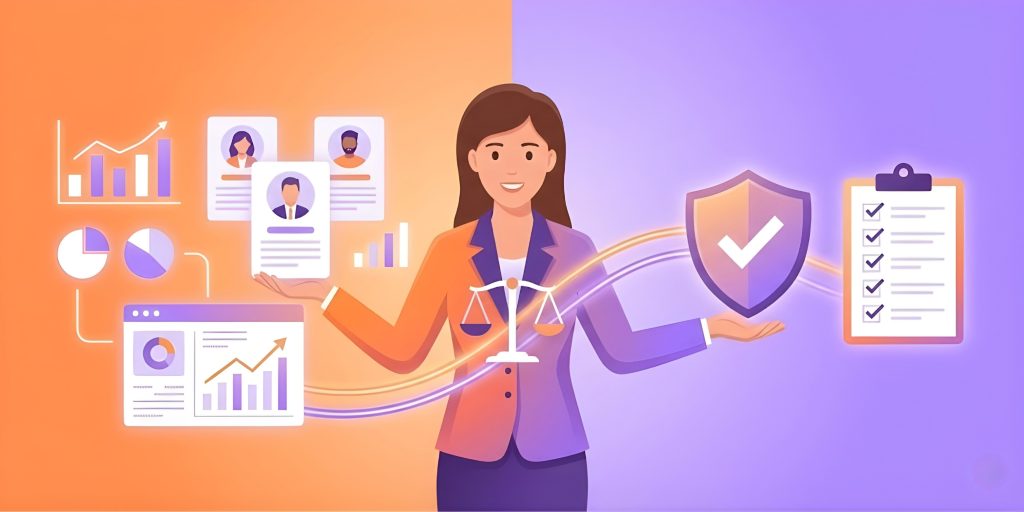
Insight
Data-backed understanding of candidates, market dynamics, and workforce trends. Goes beyond keyword matching to evaluate skill depth, growth potential, and role fit. Connects to broader workforce planning and analytics.
Oversight
Human-led governance that ensures automated decisions align with company values, legal requirements, and ethical standards. Reviews automated choices, audits patterns, and intervenes when AI suggestions don't make sense.
The combination produces hiring that's both fast (insight) and fair (oversight). Either alone produces predictable failures.
Risks of AI Hiring Without Oversight
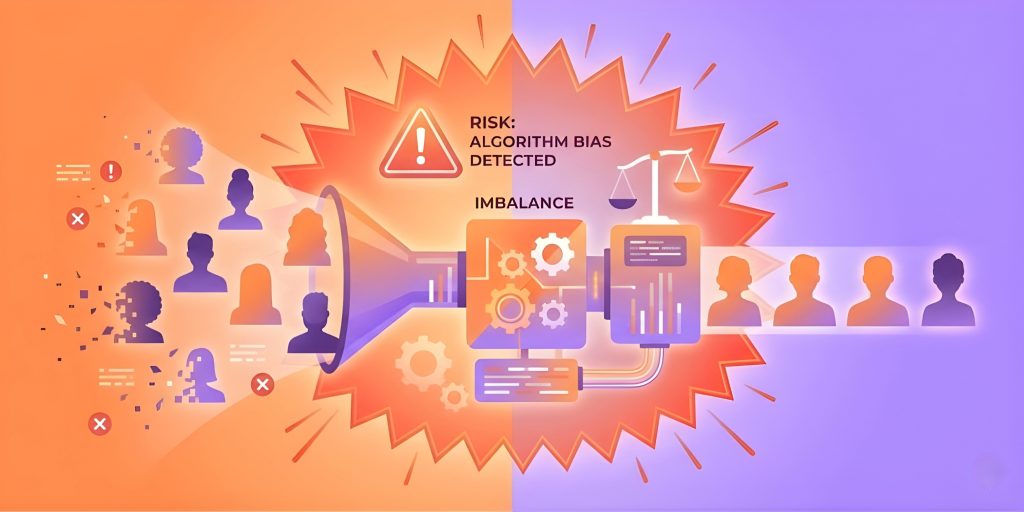
Three categories of exposure when oversight is missing.
Legal exposure
The EEOC filed its first AI-related discrimination lawsuit against iTutorGroup, resulting in a $365,000 settlement for an algorithm that filtered candidates by age. Federal and state regulators are actively pursuing similar cases.
Quality regression
AI models trained on biased historical data reproduce the bias at scale. Without oversight catching the patterns, hiring quality degrades while feeling efficient.
Workforce homogenization
"Dark" AI hiring — decisions made without human review — produces workforces with reduced diversity of thought. The innovation cost is real even when the discrimination cost is hidden.
How Insight Improves Hiring Decisions
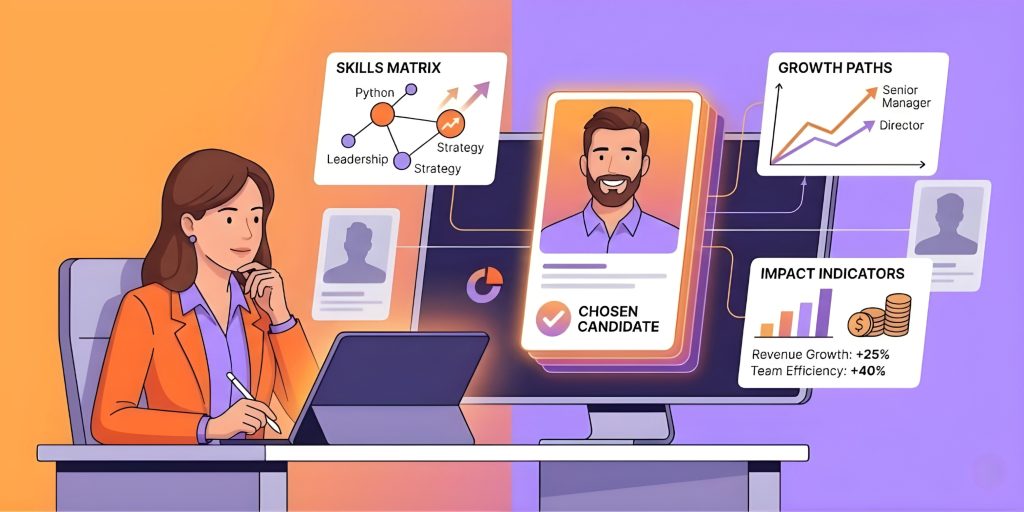
True insight goes beyond resume scanning to evaluate candidates on multiple dimensions.
- Skill depth from work samples and contributions — what someone has actually built or done
- Cultural alignment from behavioural signals — communication patterns, working style indicators
- Growth trajectory from career progression — not just years of experience but trajectory of capability
- Adjacent skill detection — surfacing candidates whose backgrounds don't match obvious keywords but align with role needs
For specialised fields (cybersecurity, ML engineering, quantum computing), advanced AI recruiting tools can identify candidates from open-source contributions, niche conference participation, or specialised community engagement — signals manual review at volume would miss.
How Oversight Protects Organizations
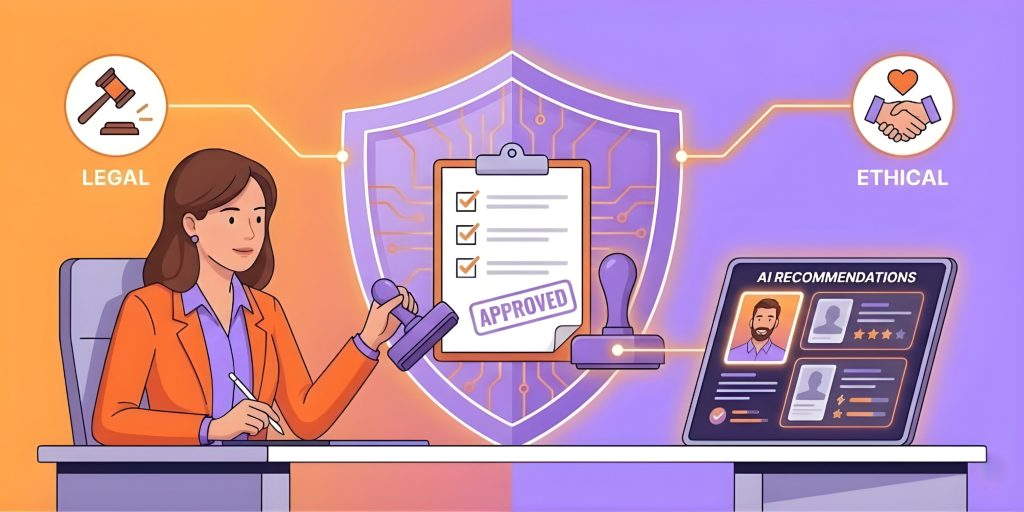
Oversight operates at multiple layers.
Decision-level oversight
Every consequential automated decision (advance/reject) reviewed by a human with override authority. The human can see context the model can't.
Pattern-level oversight
Periodic review of selection rates across demographic groups. When patterns suggest adverse impact, the model gets recalibrated.
Vendor-level oversight
Vendor audits, bias reports, and methodology documentation reviewed regularly. EEOC guidance makes companies responsible for vendor tool outcomes — vendor relationships need oversight.
Strategic-level oversight
Executive review of how AI is being used across the funnel. The strategic decisions about where AI fits and where it doesn't stay with leadership.
Compliance Requirements AI Hiring Must Meet
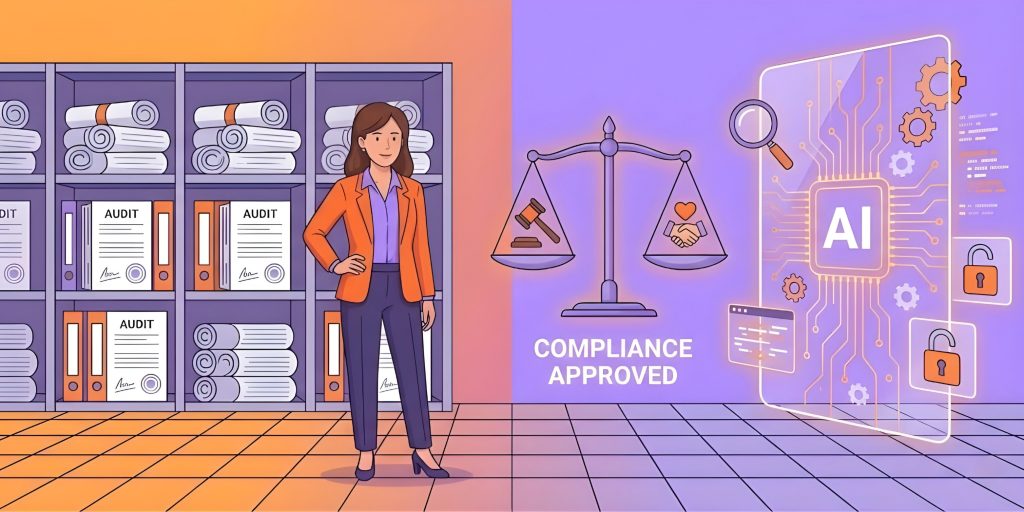
Three frameworks shape current US compliance.
NYC Local Law 144
Annual third-party bias audits mandatory for automated employment decision tools. Audit results must be publicly disclosed. Candidates must be notified about AI use.
Colorado SB205 (2025)
Impact assessments required; human review must be available when AI decisions produce adverse outcomes. Broader scope than NYC's narrower mandate.
EEOC guidance
Companies remain liable for discriminatory hiring outcomes regardless of whether vendors built the tool. The "the vendor's algorithm did it" defence does not exist.
Broader AI recruitment compliance frameworks (EU AI Act, additional state laws) continue to expand. The compliance direction is one-way.
Building a Trust-First Hiring System
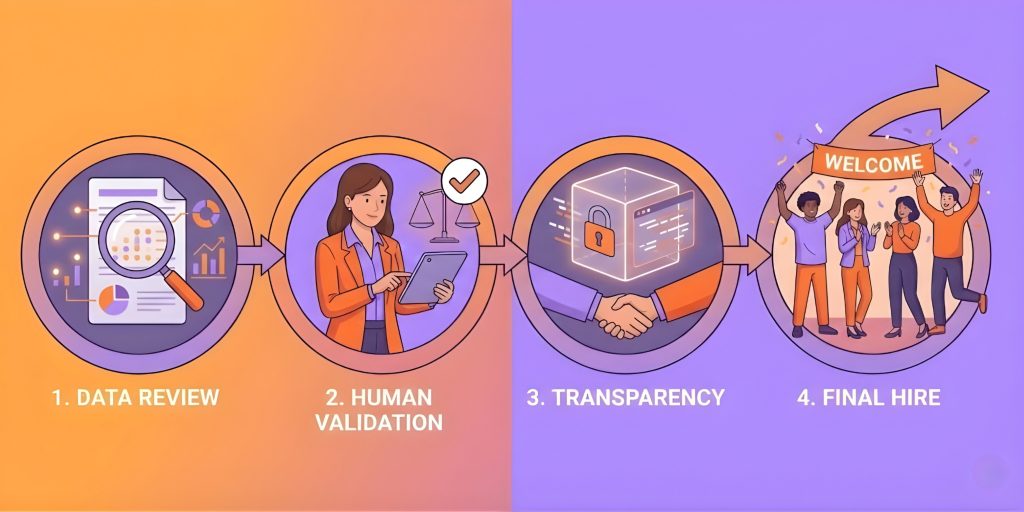
Five steps that consistently produce defensible AI hiring.
1. Audit your tech stack
Inventory every AI tool in your hiring workflow. Request current bias audit reports from each vendor. Identify gaps before regulators do.
2. Establish human-in-the-loop
Configure systems so AI surfaces candidates but humans decide on consequential outcomes. Critical for advance/reject decisions.
3. Prioritise transparency
Tell candidates how AI is used in your process. Honest disclosure consistently builds trust; concealment damages it when discovered.
4. Integrate data sources
Unified platform across ATS, assessment, and analytics tools. Fragmented data produces fragmented oversight.
5. Train your team
Recruiters and hiring managers should understand AI tool capabilities, limitations, and how to interpret outputs critically. Without training, teams either over-rely on or under-utilise the tools.
What Should Stay Human (Even With Strong AI)
Four categories where AI augments but doesn't decide.
Final hiring decisions
Consequential calls require human judgement, context, and accountability that AI cannot supply.
Executive search
Senior leadership hiring depends on judgement, network, and chemistry that algorithmic scoring can't capture.
Culture and team-fit evaluation
How someone will work with specific colleagues requires real understanding of the team. AI can surface signal; humans evaluate fit.
Edge cases
Career switchers, unusual backgrounds, candidates with unique profiles all need human judgement that pure-algorithmic screening would mishandle.
The Bottom Line
Hiring insight and oversight isn't a tension between AI and humans — it's the structural design that lets both contribute their strengths. Insight makes hiring fast, consistent, and pattern-aware. Oversight keeps it fair, defensible, and aligned with company values. The companies that combine both well will dominate hiring across the next decade because they capture AI's efficiency without paying the trust and compliance cost that pure-automation creates. Regulatory direction makes the structured approach increasingly mandatory; competitive direction makes it increasingly advantageous. Start with audit, build human-in-the-loop, prioritise transparency, integrate data, and train teams continuously — the discipline pays back across every hire.
FAQs
Why is oversight important in AI hiring?
Because AI tools can encode bias from training data, produce decisions that aren't defensible, and create regulatory exposure. Oversight catches these issues before they become public incidents or legal problems.
Can AI hiring be genuinely compliant?
Yes, with discipline. Regular bias audits, transparent disclosure to candidates, human-in-the-loop for consequential decisions, and ongoing monitoring all support compliance. Without these, AI hiring carries significant exposure.
How do companies audit AI hiring decisions?
By reviewing selection rates across demographic groups (age, gender, race, etc.) for statistically significant differences. When patterns emerge without role-justified reasons, the model needs recalibration.
What does Colorado SB205 require?
Impact assessments for high-risk AI systems including hiring tools, plus mandatory human review when AI decisions produce adverse outcomes for candidates. The standard exceeds federal baseline meaningfully.
What's the highest-leverage hiring oversight investment?
Pattern-level audit discipline. Catching adverse-impact patterns quarterly prevents them from compounding into public incidents — and produces stronger hiring outcomes through ongoing model recalibration.
Keep reading


