

Best Job Description Resources for Better Hiring in 2026
The right job description resources speed up posting and attract better candidates — templates, AI tools, and proven patterns that work.
Ployo Team
Ployo Editorial

Most job descriptions are too long, too vague, too jargon-stuffed, or all three. The cost: capable candidates skip applying; the ones who do apply are often the wrong fit; recruiters waste interview hours on mismatches that better job descriptions would have prevented. This guide walks through what makes a strong job description, the templates and AI tools that speed up the writing, and the mistakes that consistently weaken otherwise-fine job posts. The broader job description toolkit covers related patterns in depth.
What Makes a Great Job Description
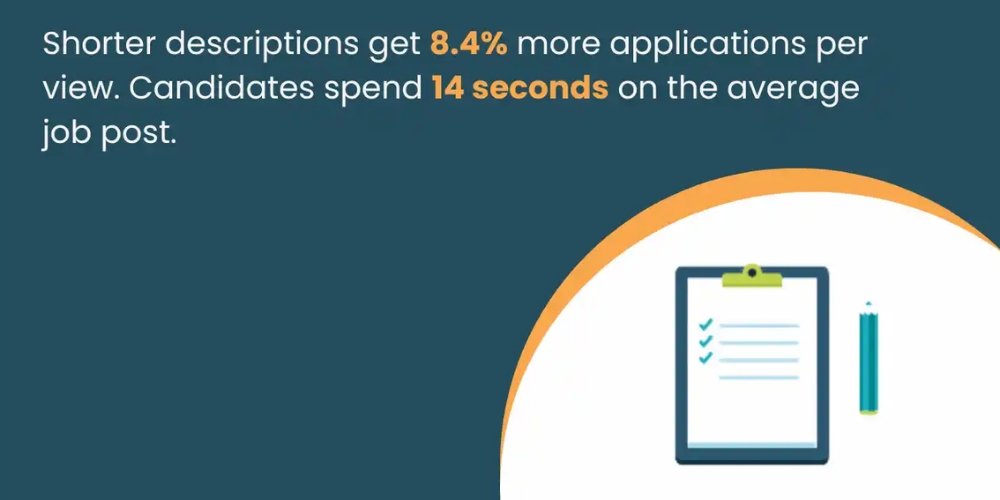
A strong job description is a strategic document — it sets expectations, attracts the right talent, and filters the wrong fit before the application even arrives. Indeed's job-posting research shows 52% of job seekers say job description quality directly affects whether they apply.
Five characteristics distinguish strong job descriptions:
- Clear, specific responsibilities — what the person actually does, not a wishlist
- Required vs nice-to-have qualifications explicitly separated
- Inclusive, neutral language that doesn't filter out qualified candidates unintentionally
- Honest details about work environment — remote, hybrid, in-office expectations
- Legal compliance with EEOC, ADA, and applicable state requirements
The shortest strong job description outperforms the longest weak one. Substance and clarity matter more than length.
Job Description Templates That Work
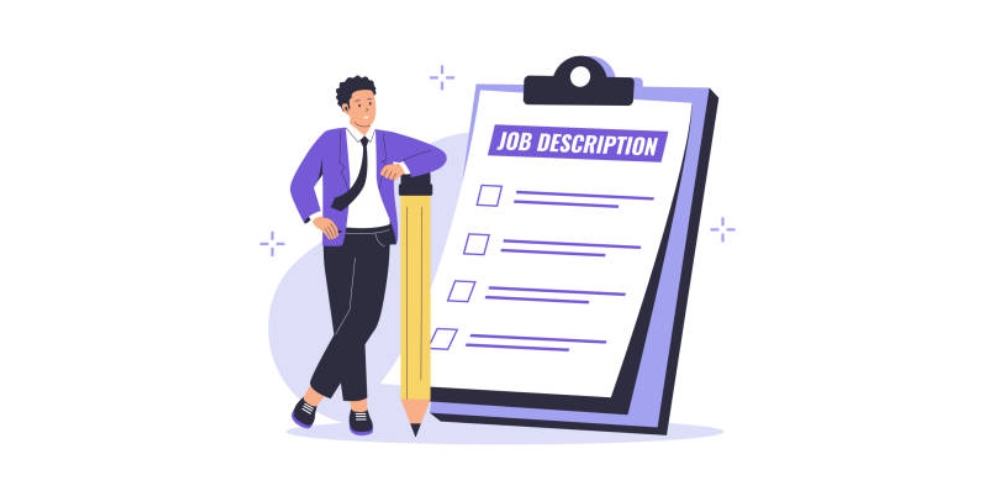
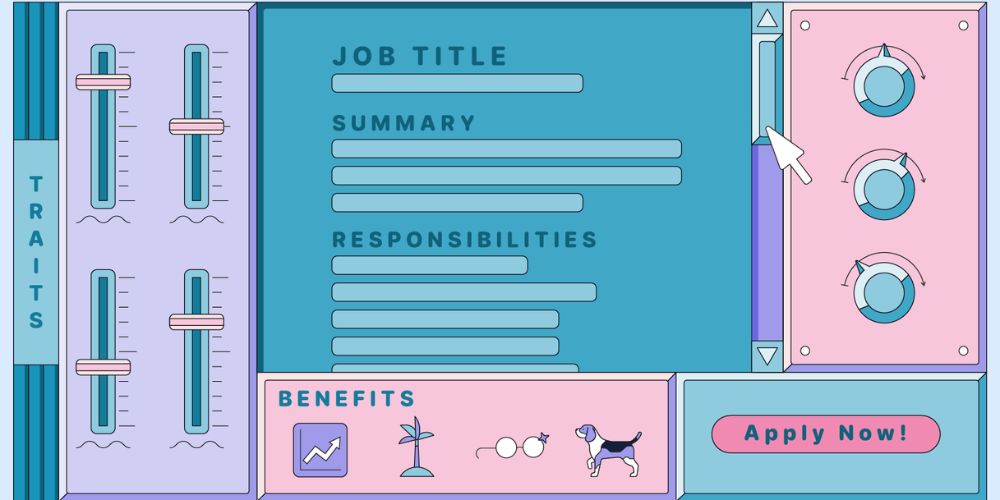
A solid template provides structure so writing doesn't start from scratch each time. The standard structure most strong job descriptions follow:
Core sections
- Role title — clear and search-optimised, no "Ninja" or "Rockstar"
- Company introduction — 2-3 sentences on what your company does
- Role summary — 1-2 sentences on what this role specifically does
- Responsibilities — bulleted, specific, action-oriented
- Required qualifications — non-negotiable must-haves
- Preferred qualifications — nice-to-haves clearly separated
- Compensation range — increasingly mandatory under transparency laws
- Work model and location — remote/hybrid/in-office expectations
- Application process — what to submit and what comes next
- EEO statement — legal compliance and brand positioning
Templates accelerate the work; customisation distinguishes great posts from generic ones. Always edit for company voice and role-specific reality.
AI Tools for Job Description Writing
Six tools that consistently reduce job description writing time without sacrificing quality.
ChatGPT (and similar LLMs)
Drafts complete job descriptions from a few prompt details. Adjusts tone, optimises for inclusion, generates ADA-compliant language, and rewrites sections on request. Strong starting point that requires human refinement.
Gemini
Particularly strong for industry-specific tailoring. Generates posts calibrated to seniority level, department, and company tone. Flags biased phrasing and unnecessary credential requirements.
Canva
Visual job posts for social media, internal portals, hiring campaigns. Drag-and-drop interface makes branded layouts accessible without design background.
DALL-E
Custom imagery for job posts — office scenes, team-representative visuals, role-specific illustrations. Replaces generic stock photos with brand-aligned visuals.
Lumen5
Converts written job descriptions into short videos for LinkedIn, Instagram, and career pages. "Day in the life" content compressed to under 60 seconds.
Visme
Job cards, infographics, branded templates that break down roles in scannable layouts. Useful for referral programs and internal hiring communications.
These tools accelerate writing dramatically. They don't replace the editorial discipline that turns drafts into polished posts.
Common Mistakes to Avoid

Seven patterns that consistently weaken job descriptions.
1. Pure AI output without human review
LLMs produce good drafts but often default to generic language, miss company-specific nuance, or include claims that don't match reality. Always edit before publishing.
2. Buzzword overload
"Rockstar," "ninja," "fast-paced environment," "wear many hats." These phrases mean nothing and signal lazy writing. Specific terms beat trendy ones.
3. Ignoring compliance
AI tools don't guarantee legal compliance. ADA-compliant essential functions, EEOC-neutral language, jurisdiction-specific pay disclosure all need explicit review.
4. Visual flourish without substance
Beautifully designed posts with weak content underperform plain-text posts with strong content. Visuals enhance; they don't substitute.
5. Generic video content
Lumen5-generated videos without clear messaging produce noise rather than signal. Plan the script before generating the video.
6. Weak AI prompting
"Write a job description for a marketing manager" produces generic output. "Write a job description for a senior B2B SaaS marketing manager focused on demand generation at a Series B startup, including specific responsibilities around lead generation and conversion optimization" produces useful output.
7. Template fatigue
Using the same template across every role makes posts feel interchangeable. Customise for team dynamics, company goals, and what makes each role specific.
What Strong Job Descriptions Communicate
Beyond the basics, strong job descriptions consistently communicate:
- Outcomes the role drives — not just activities
- Career progression — where this role leads
- Team dynamics — who the person works with
- Genuine culture indicators — not platitudes
- Compensation honestly — ranges, benefits, equity
- Process expectations — interview structure, timeline, decision criteria
Each element reduces friction for the right candidate and creates appropriate self-selection by the wrong fit.
The Bottom Line
Better job description resources produce better job descriptions, which produce better candidate pools, which produce better hires. The combination of strong templates, AI-assisted drafting, intentional visual presentation, and disciplined editorial review compresses writing time while improving output quality. The companies investing in this systematically end up with stronger applications and faster hiring cycles than companies still writing job descriptions from scratch in stale Word documents. Start with a template, draft with AI assistance, edit with human judgement, and audit for compliance — the discipline pays back across every hire.
FAQs
What's the most important section of a job description?
The responsibilities section. Candidates self-select based on whether they can actually do the work. Vague or aspirational responsibilities produce poor candidate matching downstream.
Should AI write my job descriptions entirely?
No — AI drafts, humans refine. AI handles structure, completeness, and inclusive language defaults; humans handle voice, specificity, and accuracy. Pure AI output usually reads generic and misses company nuance.
How long should a job description be?
500-800 words for most roles. Shorter than 300 feels thin; longer than 1000 loses attention. Quality matters more than length.
Are visual job posts worth the effort?
For brand-conscious roles and high-volume hiring, yes. For specialist or senior roles, well-written text often outperforms visual flourish. Match the format to the audience.
What's the highest-leverage job description improvement?
Replacing generic responsibilities with specific outcomes. "Manage social media" is weak. "Grow LinkedIn engagement 40% through structured content calendar and community engagement" is strong. Specificity beats abstraction every time.
Keep reading

Writing Job Descriptions for Startups: Templates and Common Mistakes

