

AI Assessment Compliance Gaps: Where They Hide and How to Close Them
AI hiring tools carry hidden compliance risk across data, bias, and vendor oversight — where the gaps live and how to close them before they bite.
Ployo Team
Ployo Editorial
TL;DR
- GDPR violations can cost up to €20M or 4% of global revenue.
- Only ~36% of companies using AI for compliance have meaningfully embedded AI governance.
- 51% of data breaches now involve third-party vendor systems (IBM).
- Common gaps: candidate data privacy, model bias, vendor oversight, shadow AI.
- Closing the gap requires a compliance gap analysis, ethical AI governance, and continuous monitoring.
Most companies using AI in hiring assume their assessment tools are compliant. The dashboards say "all green," the vendor promised regulatory alignment, and nobody has flagged an issue. Beneath that surface confidence usually sits a meaningful compliance gap — candidate data flows that aren't fully governed, models that can't explain their own decisions, vendors that haven't proven their compliance, and shadow AI tools deployed without oversight. This guide walks through where the gaps live, what the regulatory exposure looks like, and the practical steps that close them.
Where Compliance Gaps Typically Live
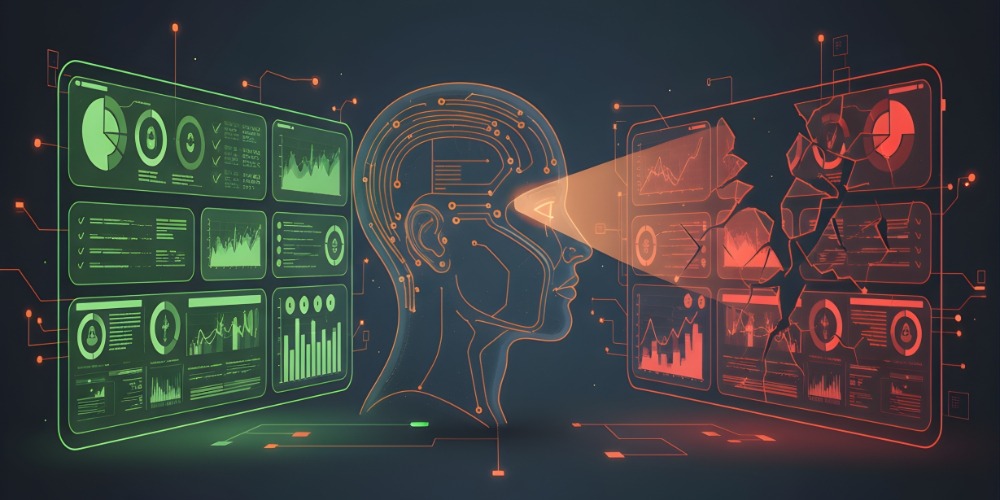
Five categories cover most hidden compliance risk in AI hiring.
1. Candidate data and privacy
AI tools collect personal data, behavioural signals, and sometimes biometric or video data. Under GDPR, candidates are "data subjects" and the organisation acts as data controller. Common gaps: weak consent mechanisms, undefined retention periods, vendor data handling not contractually constrained.
2. Algorithmic transparency and bias
Models that score candidates often lack auditability. They can't explain why specific decisions were made, and they haven't been tested for adverse impact across demographic groups. Ascend GSL's research describes this as "a governance crisis hiding in plain sight."
3. Infrastructure security
The tech stack behind assessments — databases, APIs, file storage, vendor integrations — is often less hardened than core company systems. Without secure infrastructure, candidate data exposure becomes a question of when rather than if.
4. Vendor and shadow AI oversight
Third-party tools, AI features turned on by individual teams without formal approval, and integrations adopted outside IT's view. The compliance gap here often stays invisible until something goes wrong.
5. Regulatory framework alignment
The EU AI Act, NYC Local Law 144, Colorado AI Act, Illinois AI Video Interview Act, and others impose specific obligations. Companies that treated AI as "just software" rather than regulated systems carry compounding exposure.
What's at Risk If You Ignore the Gap

Six categories of risk worth quantifying.
Regulatory fines
Tribepad's GDPR research notes GDPR fines can reach €20M or 4% of global annual turnover. The EU AI Act adds similar penalty structures. Multi-jurisdictional companies face cumulative exposure across regimes.
Reputational damage
When candidates discover their data was misused or leaked, the brand cost is large and persistent. Reputation damage is harder to repair than financial penalties.
Discriminatory hiring outcomes
Biased models produce systematic harm to underrepresented groups. Class-action exposure follows; so does the underlying ethical cost.
Security breaches
IBM's 2025 data breach research shows 51% of breaches now involve third-party software or vendor integrations. Hiring tools — often third-party — sit squarely in this exposure zone.
Operational failure at scale
White & Case's compliance research shows only ~36% of companies using AI for compliance have meaningfully embedded it into operational governance. Most are flying blind on the systems they deploy.
Shadow AI exposure
Tools and features deployed without formal approval create unmonitored data flows. The exposure exists; the company just doesn't know about it until something forces visibility.
How to Close the Compliance Gap

Five concrete steps that consistently close gaps.
1. Run a structured compliance gap analysis
Map data flows from candidate application through algorithmic scoring to hiring decision. Identify what data is sensitive, where it lives, who can access it, and which laws apply. Document gaps explicitly — what isn't yet aligned with regulation.
2. Embed ethical AI governance
Every model should have a "model card" documenting purpose, training data, evaluation methodology, and adverse impact testing. Benchmark against established frameworks: Microsoft Responsible AI Standard, NIST AI Risk Management Framework, ISO/IEC 42001.
3. Secure the infrastructure
Encryption at rest and in transit, role-based access controls, audit logs, vendor data segregation. Modern platforms expose all of this; mature governance requires verifying it's actually configured correctly.
4. Automate monitoring and reporting
Tools that flag unusual data access, detect model drift, and generate explainability reports for decisions. Continuous monitoring beats annual audit for catching issues before they compound.
5. Vet vendor compliance
Require vendors to provide SOC 2 reports, bias audit certificates, GDPR / CCPA / EU AI Act alignment documentation, and incident response procedures. Vendor risk is your risk legally.
Building a Practical Governance Operating Model
The companies that handle this well typically establish:
- A named accountable owner for AI hiring governance (often CHRO + CISO + Legal)
- Quarterly bias audit cycles with documented results
- Annual compliance gap analysis updated as regulation evolves
- Vendor onboarding gate that requires compliance documentation
- Employee training on AI-tool data handling
- Incident response playbook for AI-related compliance issues
- Candidate-facing transparency on AI use and rights
These are operational practices, not theoretical frameworks. The companies that just publish a policy without operationalising it carry roughly the same risk as if they had no policy at all.
What Doesn't Work
Four anti-patterns worth naming.
Vendor compliance claims without verification
Vendor self-attestations are not the same as independent audit. Treat unverified claims as risk to address, not assurance to rely on.
Annual audit-only governance
Models drift; data flows change; new tools get adopted. Annual review catches issues months after they've started causing harm.
Compliance theatre
Publishing a policy without changing operational practice produces the same risk profile as no policy. Regulators and litigants test for actual implementation.
Treating bias testing as one-time
A model that's unbiased at launch can drift as the candidate population shifts. Continuous bias monitoring is required, not optional.
The Bottom Line
AI compliance in hiring is no longer a niche concern — it's a core operational risk that touches every consequential hiring decision in every regulated jurisdiction. The companies that treat it seriously build governance into how AI tools get adopted, monitored, and audited. The companies that rely on vendor promises and annual reviews carry hidden exposure that often only becomes visible when something forces it into the open. The regulatory direction is unambiguous: more rules, stricter enforcement, broader scope. The time to close the gap is before the audit, not after the fine.
FAQs
How can companies identify hidden AI compliance risks?
Through a structured compliance gap analysis: map data flows, audit model decisions for explainability, verify vendor controls, and check actual practice against documented policy. Hidden risks usually surface during this structured review.
Why do technical AI metrics fail to satisfy compliance requirements?
Regulators care about governance, fairness, and data protection — not just accuracy or precision. Technical metrics miss the ethical and legal accountability layers that compliance frameworks actually require.
How does shadow AI create compliance gaps?
When AI tools or features get deployed outside formal approval processes, they create unmonitored data flows and ungoverned decisions. The exposure exists silently until something forces visibility.
Which laws do AI assessments most often violate?
GDPR (data handling without proper consent or retention controls), EEO laws (bias producing adverse impact), state-level AI hiring laws (NYC Local Law 144, Illinois, Colorado), and emerging EU AI Act requirements.
What's the consequence of failing to address compliance gaps?
Fines up to 4% of global revenue under GDPR, civil litigation exposure under EEO laws, reputational damage with candidates and the broader market, and operational restrictions that limit hiring capacity. The cumulative cost typically exceeds the cost of closing the gaps by a wide margin.
Keep reading


