

Automated Employee Onboarding: Practical Playbook for HR Teams
Automated onboarding shortens time-to-productivity and improves retention — what to automate, what to keep human, and the sequence that consistently works.
Ployo Team
Ployo Editorial

TL;DR
- Onboarding automation removes the manual admin that consistently slows new-hire productivity.
- Digital onboarding can cut time-to-productivity by up to 80% versus manual approaches.
- Strong onboarding correlates with up to 69% better 3-year retention.
- Automate the repeatable mechanics; keep the relational moments human.
- Common failure mode: automating broken processes instead of fixing them first.
A new hire's first day sets the tone for their entire tenure. Done well, they finish day one with working access, a clear plan, an introduction to the team, and the unmistakable feeling that they've joined somewhere competent. Done poorly, they finish day one waiting for IT, signing paperwork that should have been pre-completed, and quietly recalibrating their expectations downward. Automated onboarding closes the gap between these two outcomes — without removing the human moments that actually drive belonging. This guide walks through what to automate, what to keep human, and the sequence that produces measurable retention and productivity gains.
What Onboarding Automation Actually Means
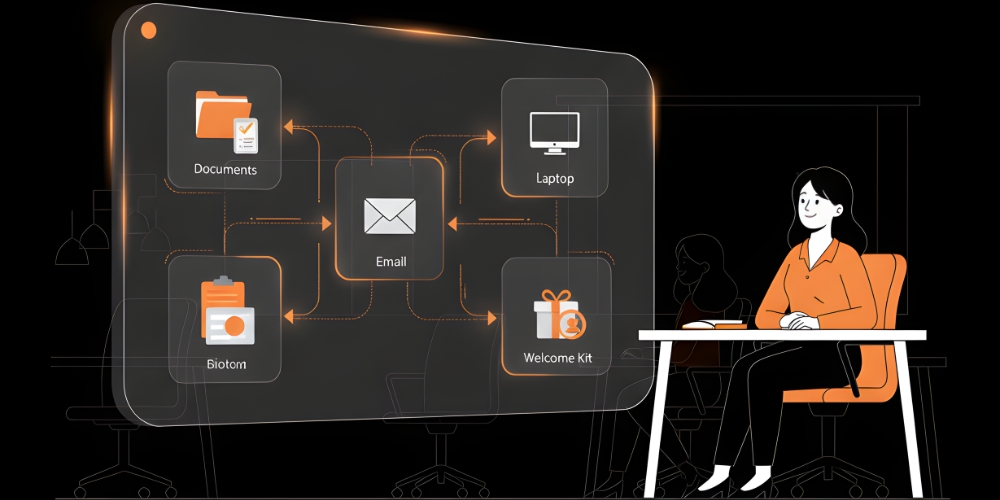
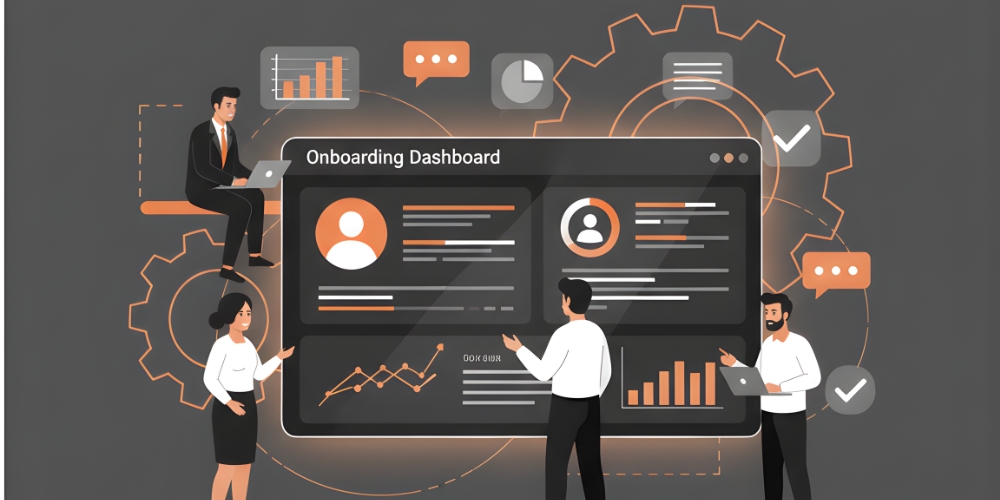
Onboarding automation uses software and workflow tooling to remove manual steps from the new-hire journey. Instead of HR chasing signatures, IT manually provisioning accounts, and managers improvising introductions, the work runs through repeatable workflows that trigger at the right time.
What gets automated:
- E-signature on offer letters and compliance forms
- IT account creation and access provisioning
- Equipment ordering with shipping triggered to start date
- Training module assignment and progress tracking
- Welcome email sequences before day one
- Calendar holds for orientations, intros, and check-ins
- Reminders and nudges for pending tasks
What stays human:
- Manager 1:1 in the first week
- Team introductions and culture conversations
- Mentor assignment and check-ins
- Feedback collection (real, not just survey checkbox)
- Role-specific coaching from senior teammates
The pattern is consistent: automate the mechanics, preserve the moments that build belonging.
Why Automate Employee Onboarding?
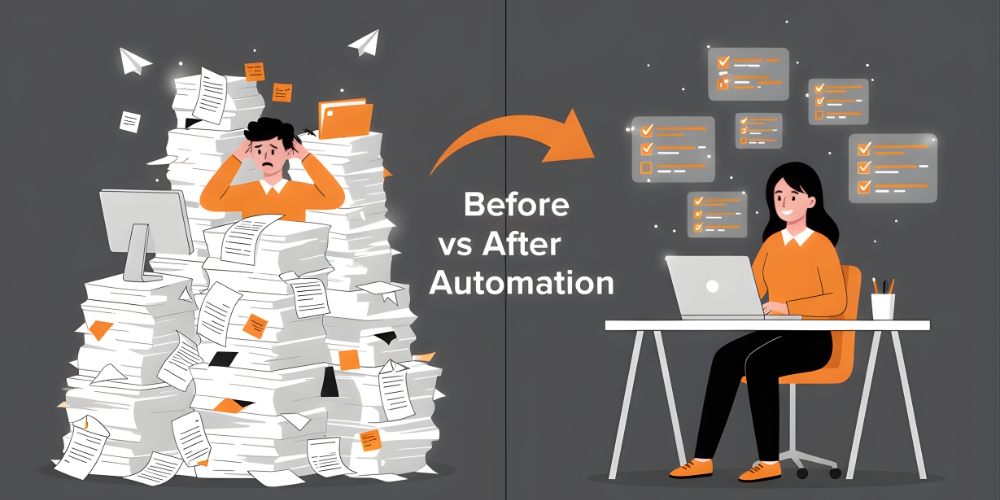
Four operational gains drive the case.
Faster time-to-productivity
Deel's HR automation research shows digital-first onboarding can reduce time-to-productivity by up to 80% versus manual processes. The compression matters most for roles where ramp-up is expensive and competitive pressure is high.
Stronger retention
Devlin Peck's onboarding research shows employees with strong onboarding experiences are around 2.6x more likely to feel highly satisfied, and ~69% are more likely to stay 3+ years. The financial value of avoiding even one preventable departure typically exceeds the onboarding tool budget for the year.
Lower error rate
Manual data entry produces duplicates, typos, missed deadlines, and compliance gaps. Automation removes the largest source of avoidable error in HR ops.
Consistency at scale
Every new hire gets the same welcome experience, same training, same access timing. Consistency builds the trust that distinguishes companies that scale gracefully from companies that scale chaotically.
The Automation Sequence That Works
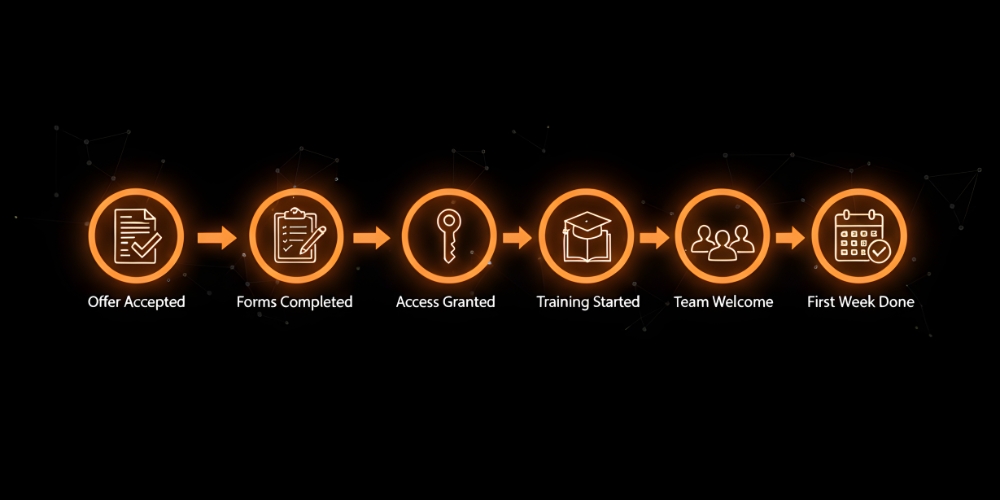
A practical implementation order.
Step 1: Map the current process end-to-end
Before automating anything, document every touchpoint a new hire encounters from offer acceptance through day 90. Identify which steps are manual, which are duplicated, and which are missing. The map is the diagnostic for what to automate first.
Step 2: Identify automation candidates
Repeatable, well-defined steps are the right starting point: e-forms, signatures, account provisioning, equipment ordering, training assignments. High-judgement steps (manager 1:1s, mentor matching, performance feedback) stay human.
Step 3: Select the right tooling
The market is large and growing — global onboarding software is projected to reach $4.36B by 2029. The right tool depends on:
- Integration depth with existing HRIS, ATS, payroll, IT systems
- Workflow flexibility for your specific process
- Analytics and reporting maturity
- Mobile-first new-hire experience
- Scaling capacity for projected growth
Step 4: Configure the workflows
Build the trigger sequences. Offer accepted → e-forms sent → IT notified → equipment ordered → first-week schedule populated → mentor assigned → welcome email queued. Each handoff should be auditable.
Step 5: Train HR, IT, and managers
The tool is half the equation; adoption is the other half. Without role-specific training, the automation runs but the human elements (1:1s, intros, coaching) don't show up. Managers in particular need clarity on their non-automatable responsibilities.
Step 6: Roll out in phases
Start with one department or one role type. Prove the model, fix the issues, then scale. Big-bang rollouts almost always produce process gaps that hurt early cohorts.
Step 7: Measure and iterate
Track time-to-productivity, 30/60/90 retention, satisfaction scores, completion rates per stage. Use the data to improve, not just to report.
Common Mistakes to Avoid
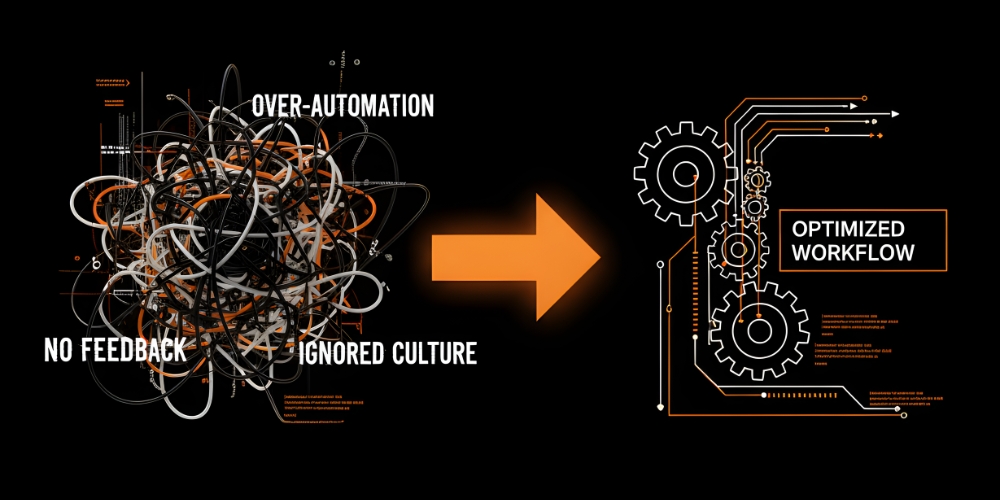
Five failure modes worth naming.
Automating chaos instead of fixing it
If the current process is broken, automation makes the breakage faster and more visible. Always rationalise the process first, then automate.
Removing the human moments
Automation should free HR and managers to spend more time on relationships, not less. New hires who feel "processed" rather than welcomed leave quickly regardless of how efficient the paperwork was.
Over-engineering the toolchain
Five integrated tools is usually worse than one platform that does 80% of the job. Start simple, expand only when the simple version is genuinely insufficient.
Skipping the feedback loop
Without structured feedback from new hires at 30/60/90 days, the process never improves. The feedback loop is part of the automation, not an afterthought.
Forgetting culture
Compliance forms and IT access are necessary but not sufficient. The culture induction — values, expectations, how decisions get made — needs the same intentional design as the operational onboarding.
Best Practices for Automated Onboarding That Actually Works
Keep the new hire's experience central
Every automation choice should improve the new hire's day, not just HR's metrics. If a process step makes the new hire's experience worse to save HR time, the trade-off is usually wrong.
Integrate across systems
HRIS, payroll, email, IT provisioning, and learning systems should talk to each other. Each manual handoff between systems is a place where things drop.
Personalise where it matters
Templates handle the routine; personalised manager messages handle the moments that actually build belonging. The combination of automated mechanics and human warmth outperforms either alone.
Measure outcomes, not activity
Completion rates on training modules are nice. Time-to-productivity, 90-day retention, manager-reported readiness, and new-hire satisfaction are the metrics that actually matter.
Connect onboarding to long-term development
The best onboarding doesn't end at day 90 — it transitions into ongoing development. Tools that link onboarding data to performance management and learning paths build a coherent employee journey.
How Modern Platforms Strengthen Onboarding
Modern HR platforms increasingly integrate onboarding with downstream analytics. Instead of waiting six months to evaluate whether a hire is working out, organisations can read early signal from engagement patterns, training progress, manager feedback, and skill development. Combining automation with these analytics lets HR catch friction points within the first few weeks and intervene before a struggling new hire becomes a departure.
This integration also feeds back into hiring. Patterns in successful onboardings inform which candidate profiles thrive in your environment — strengthening selection over time. Done well, the data flywheel becomes a hiring advantage.
The Bottom Line
Automated onboarding is one of the highest-leverage HR investments available because it touches every new hire and compounds across the year. The teams that win don't try to automate everything — they automate the mechanics that bog down HR, IT, and managers, and use the freed time to deepen the relational moments that actually drive retention. Start by mapping the current process, fix what's broken before automating it, and roll out in phases with real measurement. The companies that get this right turn day-one experience into a durable competitive advantage; the companies that don't keep losing hires they should have kept.
FAQs
What tasks can be automated in onboarding?
E-signatures, document collection, IT account provisioning, equipment ordering, training assignments, welcome email sequences, scheduling holds, payroll setup, and progress reminders. These are repeatable steps where automation reliably outperforms manual handling.
How does automation improve retention?
By removing the friction that signals "this place is disorganised" to new hires. Strong, consistent onboarding correlates with substantially better 90-day and 3-year retention because new hires form their long-term opinion of the company in the first two weeks.
Is automated onboarding right for small businesses?
Yes — often more so than for large companies, because small teams can't absorb the manual cost of even occasional hiring. Many affordable onboarding tools are built specifically for small businesses.
What's the single biggest mistake teams make?
Automating a broken process. Automation amplifies whatever it's built on; without rationalising the workflow first, the automation makes the dysfunction faster, not better.
How do I measure if automation is working?
Track time-to-productivity, 90-day retention, satisfaction scores at 30/60/90 days, manager-reported readiness, and stage-completion rates. These metrics together show whether the process is genuinely improving the new hire's outcome.
Keep reading


How AI Tools Reduce Candidate Stress in Hiring (and Improve Outcomes)
