

Are Job Fairs Worth It in 2026? Honest Verdict for Both Sides
Job fairs still drive real hiring outcomes when used deliberately — who benefits, when they work, and how to prepare so the day pays off.
Ployo Team
Ployo Editorial
TL;DR
- Job fairs still work — when both sides prepare and follow up promptly.
- ~57% of US students attend a career fair in any 12-month window; nearly 1 in 4 receive an offer afterward.
- About 94% of higher-ed institutions plan in-person career fairs; one third also run virtual.
- Fairs work best for early-career, high-volume, industry-themed events.
- Senior or niche-specialist roles rarely justify the booth cost — digital sourcing wins there.
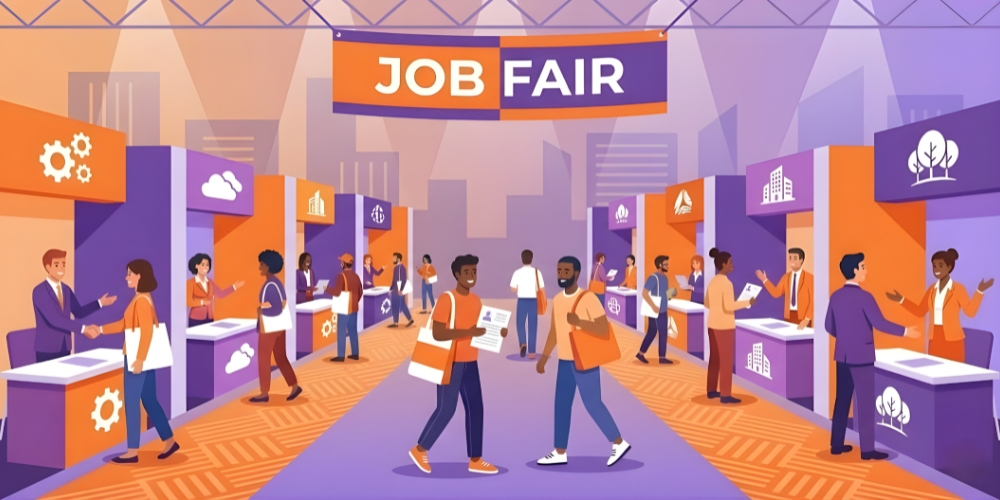
In a world of LinkedIn, online assessments, and AI-powered sourcing, the question "are job fairs worth it?" keeps coming back. The short answer is yes — but only for the right roles, the right candidates, and the right preparation. Walking the floor without a plan still produces the same wasted afternoon it did 20 years ago. This guide walks through when job fairs deliver real hiring outcomes for both sides, when they don't, and how to prepare so the day actually pays off.
What a Job Fair Actually Is
A job fair brings employers and job seekers together in one venue — physical or virtual — to discuss open roles, exchange resumes, and form first impressions that go beyond what a digital application can convey. The format ranges from broad open-industry events to highly focused tech, healthcare, or industry-specific gatherings, plus university career fairs targeting students and recent graduates.
Two formats now run in parallel:
- In-person fairs — booths, face-to-face conversations, immediate rapport-building
- Virtual fairs — video booths, chat rooms, async resume drops, remote-friendly accessibility
Most universities and professional bodies have adopted a hybrid model — physical events for primary engagement, virtual options for remote-first candidates and travel-restricted attendees.
Are Job Fairs Worth It for Job Seekers?
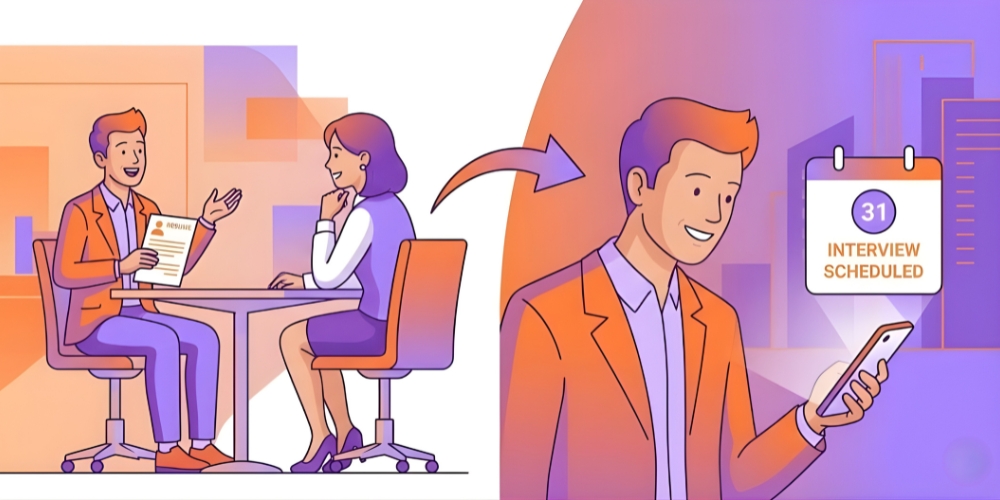
For students and early-career professionals, yes — with caveats.
NACE survey data shows more than half of US students attended a career fair in the past 12 months, with nearly one in four receiving a job offer following the event. That's a substantially better conversion rate than most online application channels deliver for early-career roles.
Job fairs deliver real value for job seekers when:
- The goal is to build a network of recruiter contacts quickly
- Practising in-person introductions matters (especially for first jobs)
- Specific employers you want to target are confirmed attendees
- The event is industry-themed and your background matches
- You can commit to fast follow-up within 24-48 hours
They produce frustrating waste when:
- You attend without specific employer research
- The event is broad-industry with no thematic focus
- You're a senior specialist (the format doesn't fit deeper evaluation)
- You bring a generic resume with no role-specific adaptation
- You don't follow up afterward
The pattern is clear: preparation beats turnout. A focused 30-minute visit with three targeted conversations beats four hours of generic resume drops.
Are Job Fairs Worth It for Employers?
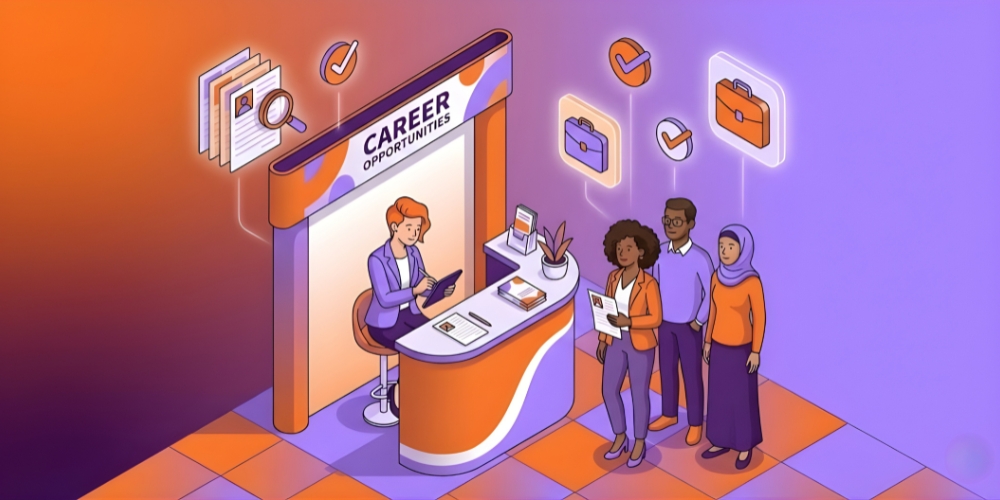
For employers, the answer depends entirely on the role profile and the follow-up discipline.
NACE employer data shows around 94% of institutions plan in-person career fairs annually, with about one third also running virtual options. The persistence reflects measurable returns when employers approach fairs as the first step of a pipeline, not as a one-day hiring solution.
Job fairs deliver value for employers when:
- Hiring high-volume, early-career, or intern roles
- Building local or university talent pipelines
- The brand is less well-known and visibility is a real goal
- The booth team is trained in structured screening, not just resume collection
- Post-event follow-up is scheduled within 24-48 hours
They burn budget when:
- Filling senior or highly specialised roles
- No clear pre-event hiring plan
- The booth runs as a brochure-distribution station with no real screening
- Post-event follow-up takes weeks (or never happens)
The honest commercial test: count cost-per-hire across the year. For early-career and high-volume programs, well-run fairs consistently beat job-board cost-per-hire. For senior specialist roles, they rarely come close.
When Job Fairs Work Best
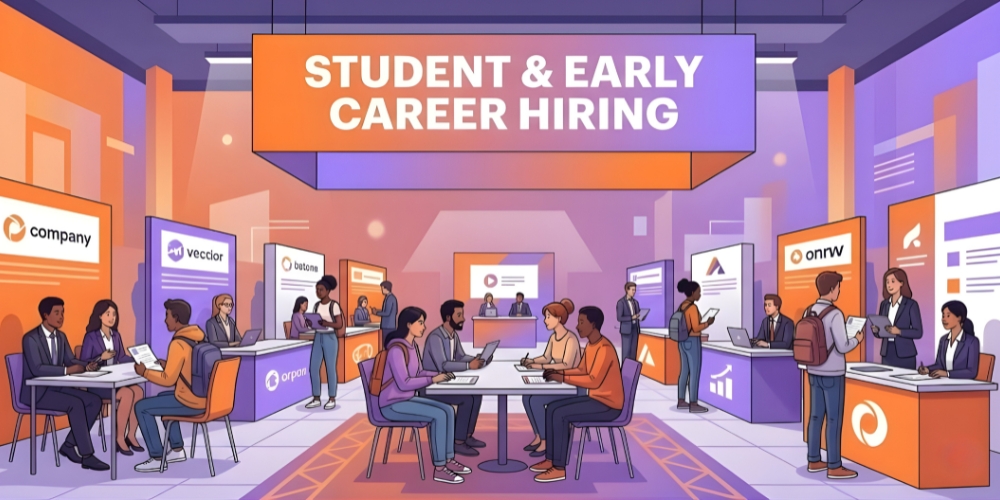
Three conditions consistently predict good outcomes:
1. The audience is focused
Industry-themed or university-specific events outperform broad general fairs. When both sides know what to expect, conversations are sharper, candidates are better-matched, and time is spent on substance.
2. Roles match the format
Entry-level, high-volume, customer-facing, and early-career roles benefit most from face-to-face conversations. The format compresses an introduction that would take three weeks of online back-and-forth into a 10-minute encounter.
3. Both sides prepare
Candidates with researched employer lists and adapted resumes consistently outperform walk-ins. Employers with trained booth teams, structured screening questions, and same-day follow-up consistently outperform brochure-dispensing booths.
When Job Fairs Fall Short
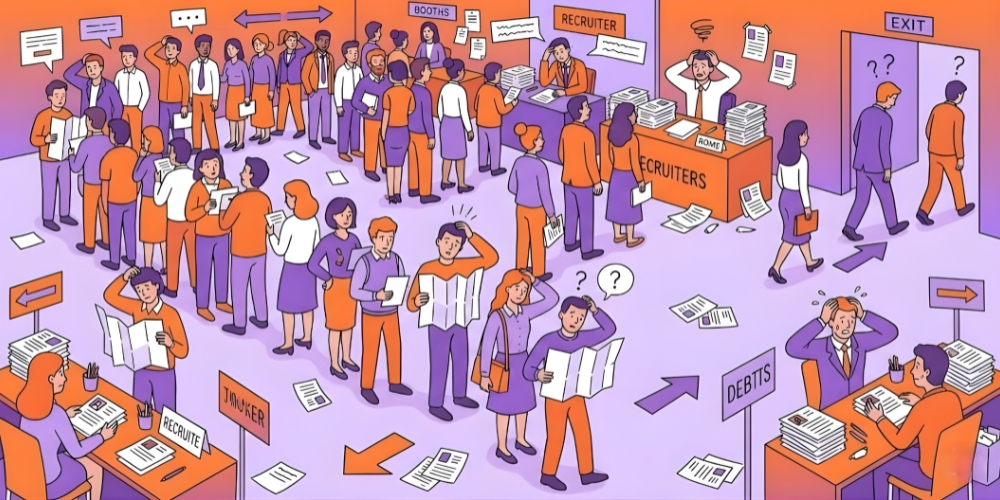
Honest limitations worth respecting:
- Senior roles: a 10-minute booth conversation cannot replace structured interviewing for a director-level hire
- Niche specialists: the talent pool is too small and scattered for fair attendance to capture
- Broad open events: hundreds of employers with no theme overwhelm everyone
- No follow-up plan: collected resumes that sit in a folder for weeks waste both sides' time
- Cost-sensitive small employers: booth fees + travel + staff time often exceed what direct sourcing would cost
If any of these match your situation, redirect budget to digital sourcing, executive recruiters, or targeted referrals instead.
Job Fairs vs Digital Recruiting
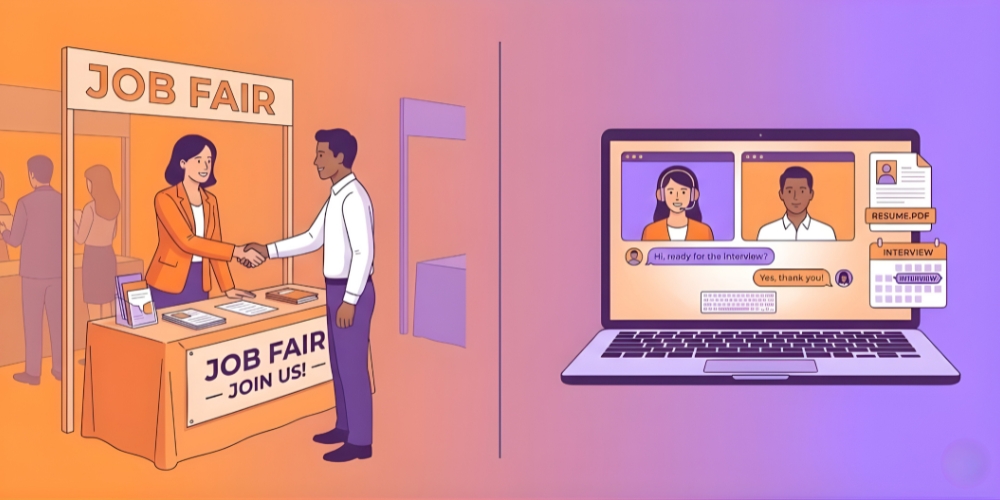
A clear-eyed comparison.
| Dimension | Job fair | Digital recruiting |
|---|---|---|
| Reach | Local / venue-bound | Global |
| Personal connection | Strong | Limited |
| Speed of screening | Fast in-event | Variable |
| Scale | Limited by venue | Effectively unlimited |
| Cost per conversation | Higher | Lower |
| Best for | Early career, high volume, brand building | Specialist, senior, remote |
| Follow-up discipline | Critical | Built into ATS |
The strongest hiring programs use both. Fairs make initial contact and build pipeline; digital channels handle the bulk of scheduling, assessment, and ongoing nurture between events.
How Employers Maximise Job Fair ROI
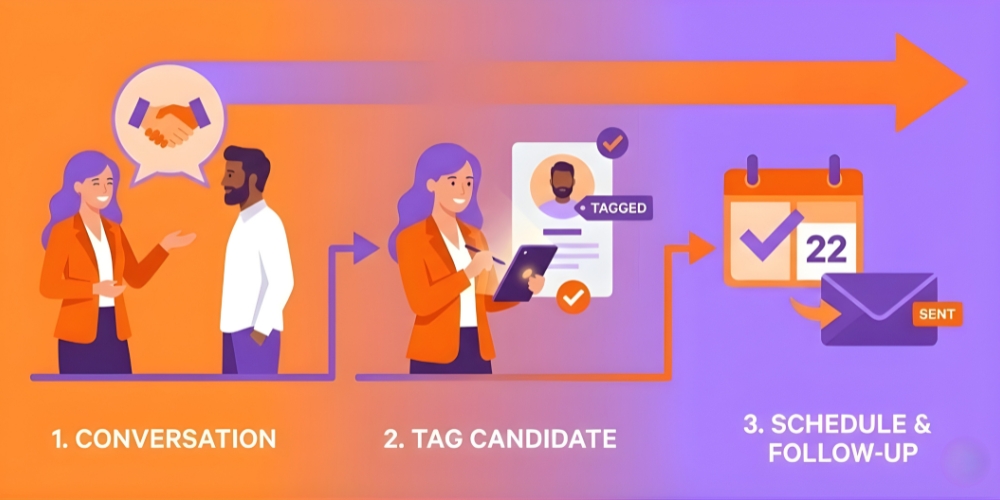
Before the event
- Define concrete goals: candidates met, resumes collected, interviews scheduled
- Train booth staff on structured screening questions
- Pre-publish your attendance — let candidates research you before they arrive
- Plan capacity: realistic interview slots available the week after
- Confirm your follow-up workflow before the booth opens
During the event
- Prioritise conversations over giveaways
- Use a structured screening rubric — same questions, scored on the same scale
- Tag strong candidates immediately for accelerated follow-up
- Be honest about timelines and next steps
- Capture contact data digitally (no lost paper resumes)
After the event
- Follow up within 24-48 hours — strongest indicator of conversion
- Personalise the outreach — reference what was actually discussed
- Schedule next-stage interviews fast — momentum decays quickly
- Update the ATS and tag the fair as the source for analytics
- Debrief the team — what worked, what didn't, what to change next time
How Job Seekers Should Prepare
Before the event
- Research attending employers (most fairs publish the list)
- Identify 3-5 priority booths to hit first
- Adapt your resume to relevant role profiles
- Practise a 20-second introduction that lands your strongest signal
- Prepare 2-3 sharp questions per priority employer
- Dress as you would for an interview at that employer
At the event
- Hit priority booths early before staff get fatigued
- Listen as much as you speak
- Ask for next steps explicitly before leaving each booth
- Take notes immediately — who you spoke with, what they said, what's next
- Collect contact information; offer your own
After the event
- Send personalised follow-up within 24 hours
- Reference specifics from the conversation
- Apply formally through their ATS where appropriate
- Connect on LinkedIn with a personalised note
- Track responses; nudge politely if no reply within a week
The Bottom Line
Job fairs still deliver real hiring outcomes when both sides treat them as the first step of a structured process rather than a magic one-day solution. For early-career candidates and high-volume employer hiring, the conversion economics consistently work. For senior specialists, the format rarely justifies the cost on either side. Preparation, focused targeting, and disciplined follow-up are what separate the candidates and employers who get value from the ones who walk away tired and empty-handed. The format is not dying — it's just finally requiring the discipline it always deserved.
FAQs
Do employers actually hire from job fairs?
Yes, particularly for early-career and high-volume roles. NACE data shows nearly one in four students who attend a career fair receive a job offer, with conversion rates strongest at industry-themed and university-specific events.
Are virtual job fairs as effective as in-person ones?
For remote roles and distributed teams, often yes. Virtual fairs reduce travel friction and expand reach. For relationship-building and brand impression with local hires, in-person still wins.
How do recruiters follow up efficiently after job fairs?
Within 24-48 hours, with personalised messages that reference specific conversations and concrete next steps. Generic mass-emails after fairs produce negligible response rates.
Are job fairs worth attending for senior professionals?
Rarely. The format doesn't suit deeper evaluation that senior roles require. Senior candidates are better served by targeted networking, executive recruiters, or direct outreach.
What's the single biggest mistake at job fairs?
For candidates: showing up without researching the attendees. For employers: no post-event follow-up plan. Both mistakes waste the day for everyone involved.
Keep reading


