

AI Matching in Recruitment: How Algorithms Pair Candidates to Jobs
AI matching reads beyond keywords to surface real fit. See how the algorithms work, where they beat traditional ATS filters, and the data they use safely.
Ployo Team
Ployo Editorial
TL;DR
- AI matching reads context — projects, outcomes, progression — not just keywords on a page.
- It compresses screening from days to minutes, so recruiters spend their time on conversations, not filtering.
- It scores fit on objective, role-relevant signals and ignores protected characteristics by design.
- Match quality improves as the model sees more roles and outcomes, so the system gets sharper with use.
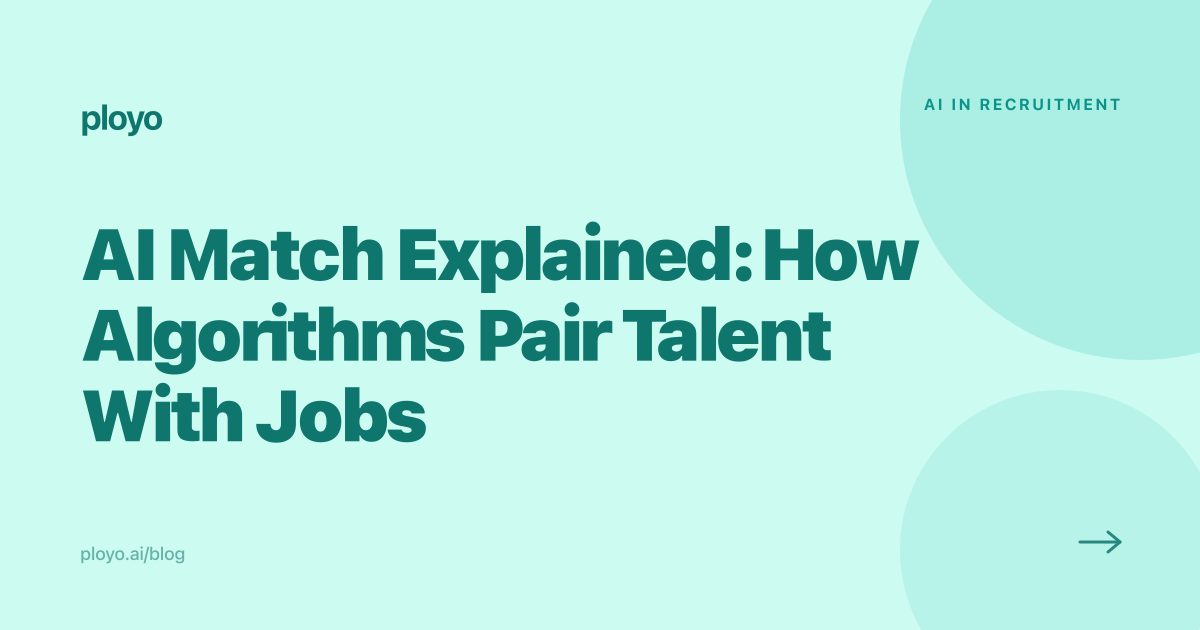
Sorting hundreds of resumes against shifting role requirements is a slow, error-prone job for a human and an embarrassingly easy one for a model trained on hiring data. AI matching is the practical answer: software that reads a candidate profile the way an experienced recruiter would, then surfaces the strongest fits in seconds. This guide breaks down what AI matching actually does, how the algorithms work under the hood, and where it leaves traditional ATS keyword filters behind.
What AI Matching Means in Recruitment
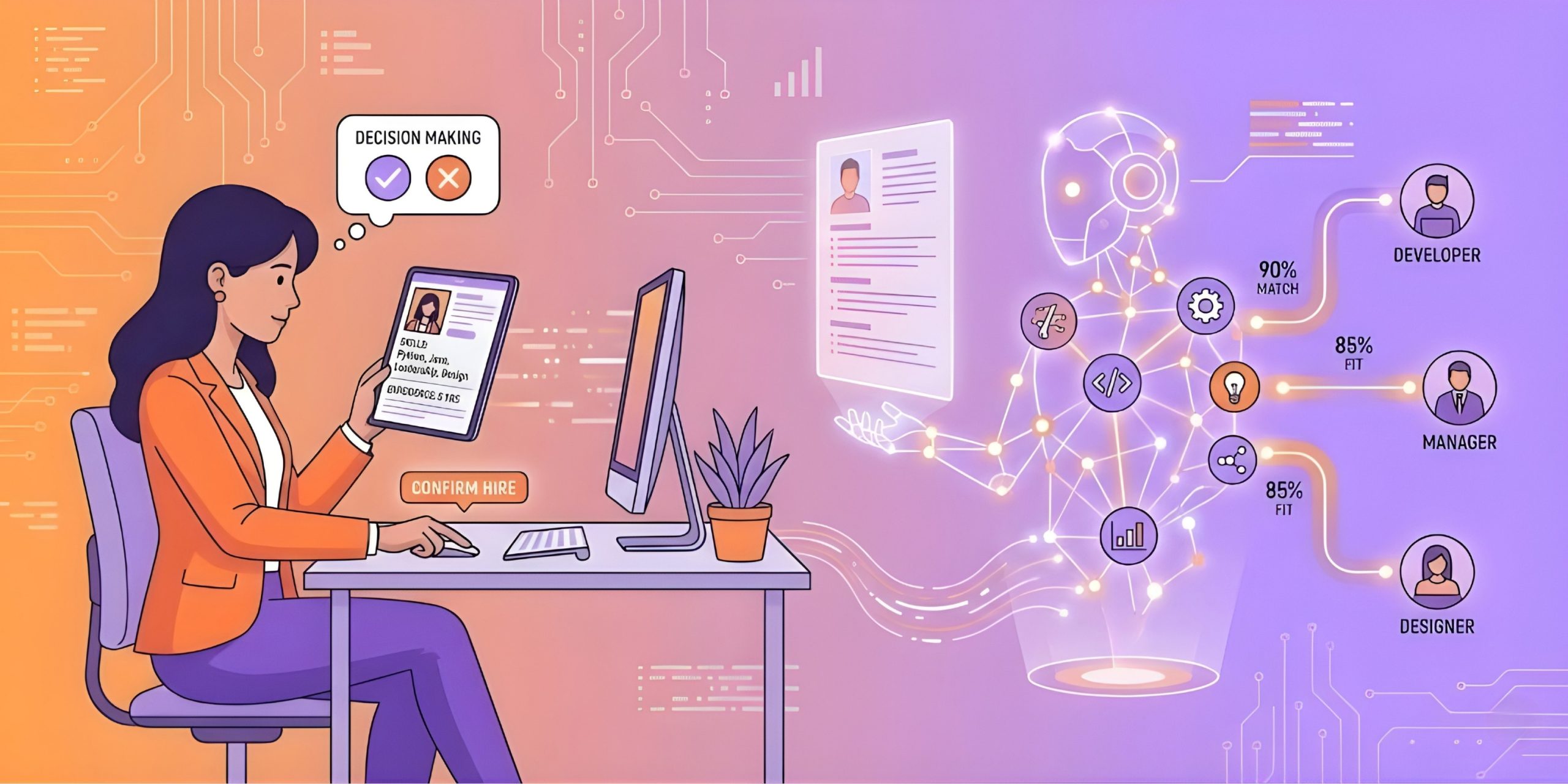
AI matching is the use of machine-learning models to compare a job's requirements against a candidate's full profile and produce a fit score. Unlike a Boolean keyword search, the model understands relationships: it knows that a "Product Growth Manager" and a "User Acquisition Lead" share most of the same skill set, that "led a team of ten" and "ten direct reports" mean the same thing, and that a strong project bullet outweighs a stuffed keyword list.
Practically, that means the system can shortlist someone whose resume never literally says "growth marketing" — because the work they describe is exactly that. Recruiters get a ranked list grounded in evidence, not an alphabetical pile filtered by exact-string match.
Why Keyword Matching Stopped Working
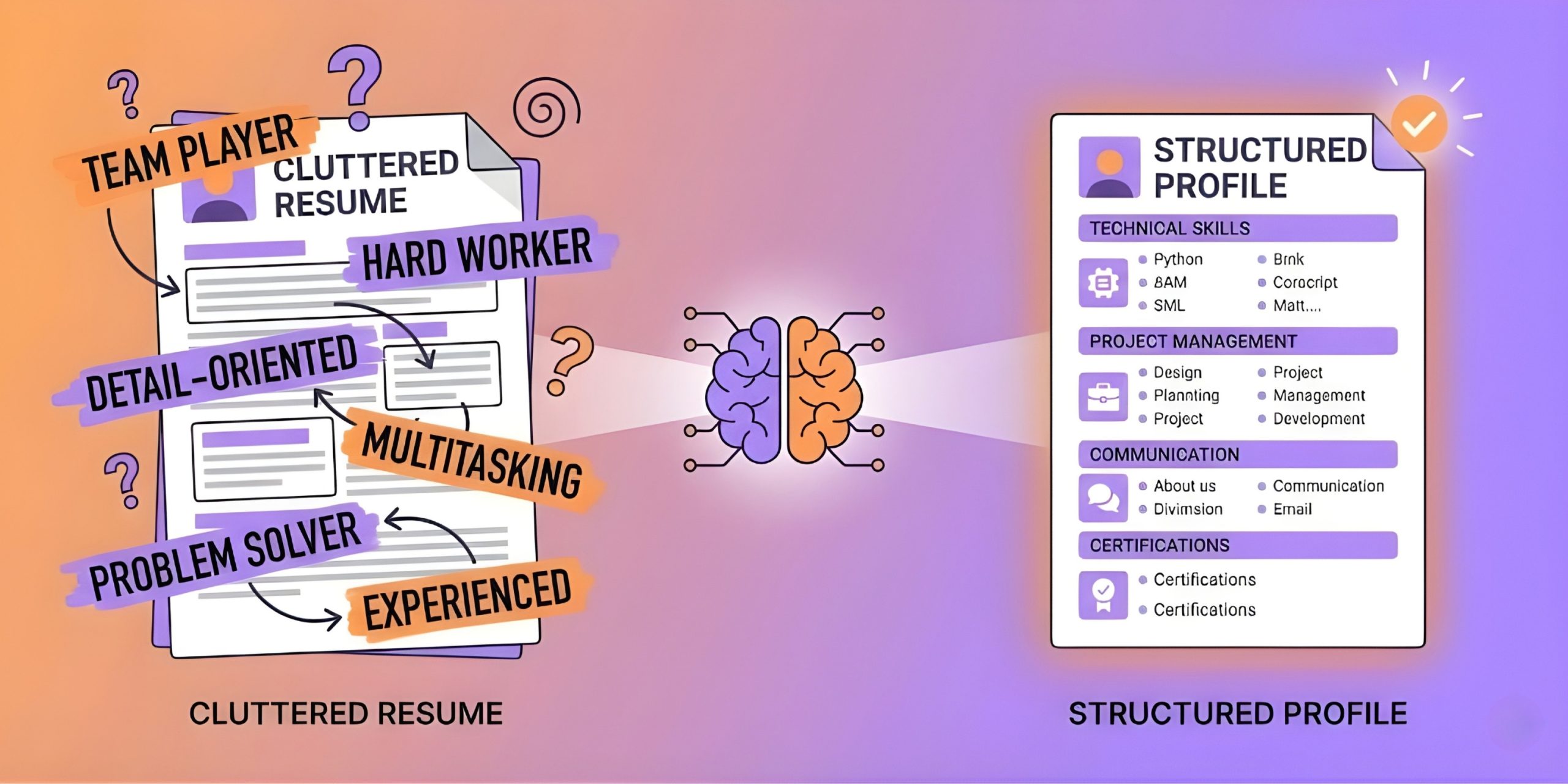
Legacy applicant tracking systems treat resumes as bags of words. If the posting asked for "Python" and the resume said "Pythonic" or "Django," the system shrugged. The result: strong candidates got filtered out, while keyword-stuffers slid through.
Keyword search is binary — the word is there or it is not. It cannot tell whether a skill is recent, whether a project was three weeks or three years, or whether the candidate actually led the work or just sat next to it. That is why around one in five business leaders still report struggling to source quality talent despite sitting on enormous databases. The signal is in the database; the filter is too dumb to find it.
AI matching changes the filter, not the data. By scoring semantic fit instead of exact-string fit, modern matching engines surface the candidates a keyword filter would have buried.
How the Algorithms Actually Work
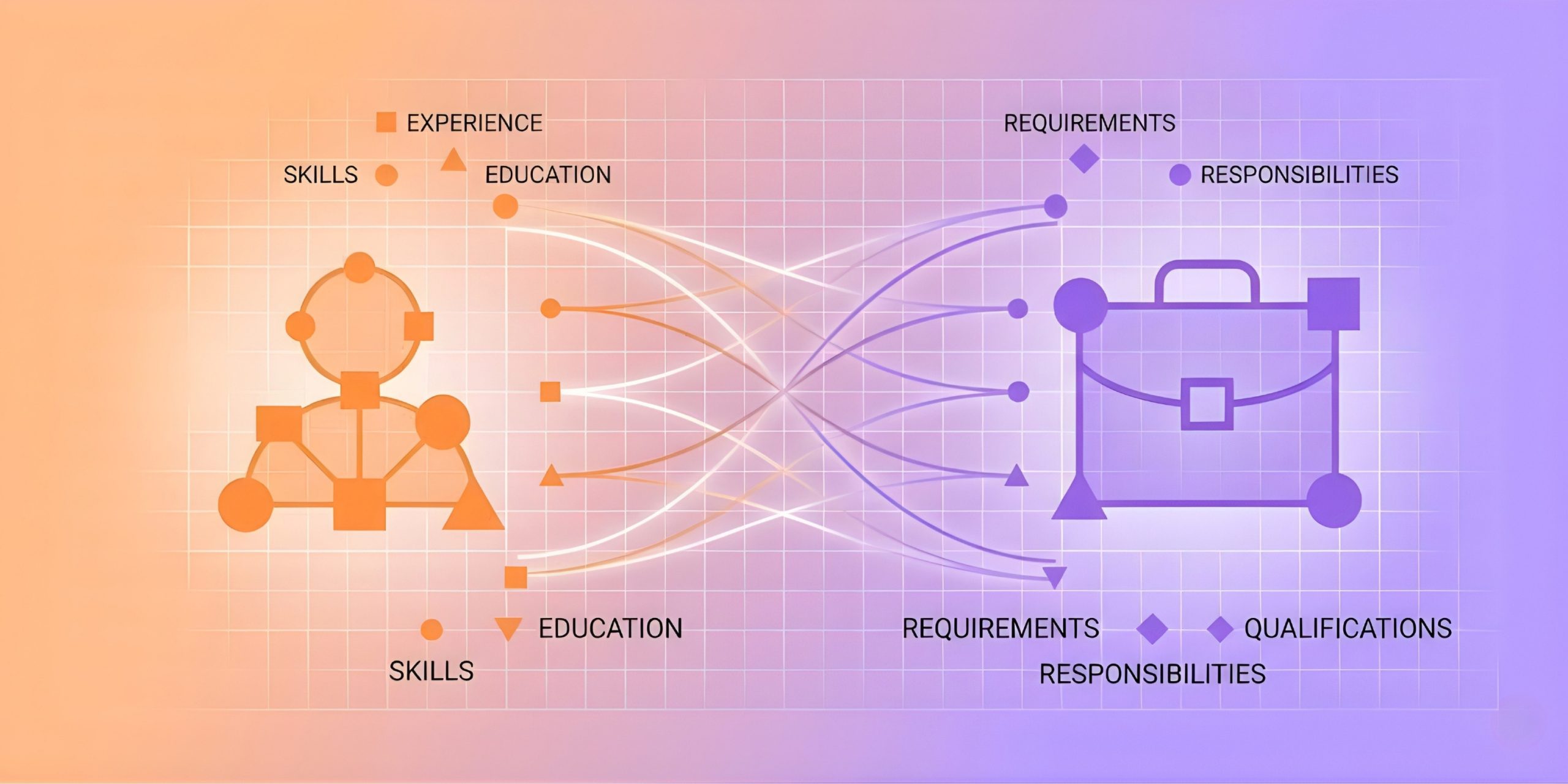
Inside a modern matching engine, four steps run for every candidate against every open role:
- Parsing and enrichment. The system reads the resume and turns free-form prose into structured fields — roles, dates, skills, scope, outcomes. "Managed marketing" becomes "led a team of 10 in a SaaS environment for 3 years."
- Vectorisation. Each structured attribute is converted to a high-dimensional vector. In that vector space, semantically similar concepts sit close together, regardless of how they were phrased.
- Scoring. The model measures the distance between the role's requirement vectors and the candidate's profile vectors. Closer distances mean stronger fit on that dimension.
- Ranking. Dimensions are weighted (skills, depth, industry, trajectory) and combined into a single match score. Recruiters get a list sorted by actual fit, not by submission timestamp.
The model is not guessing — it is calculating distances in a space where similar work histories already cluster. That is why the same engine can rank candidates for a backend role one minute and a brand designer the next without re-training.
AI Matching vs Traditional ATS Filters
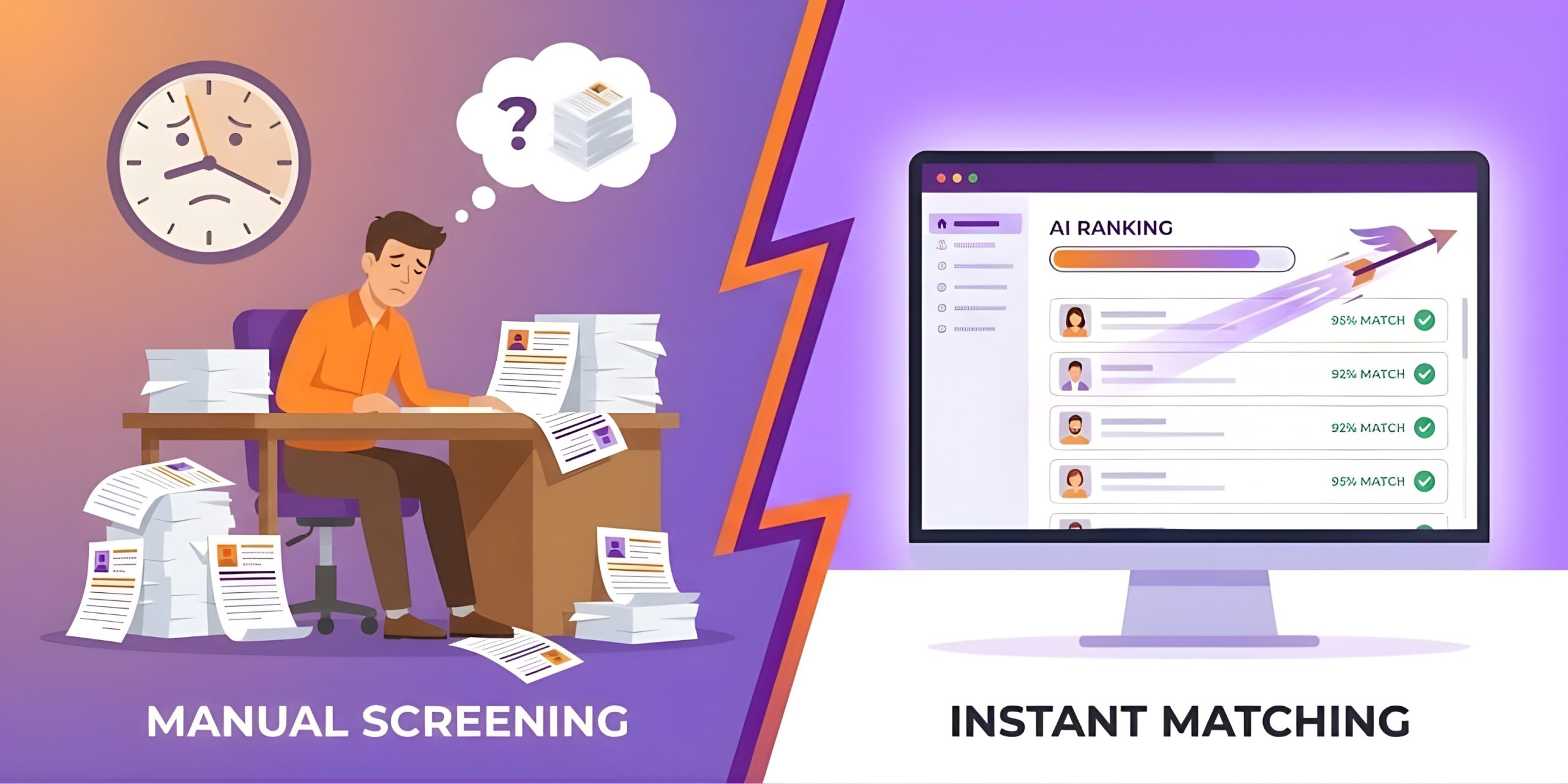
| Feature | Traditional ATS Filter | AI Matching |
|---|---|---|
| Logic | Boolean (yes / no) | Probabilistic and contextual |
| Skill mapping | Rejects when the exact word is missing | Infers skills from project descriptions and outcomes |
| Consistency | Subject to recruiter fatigue and bias | Same rubric applied to every candidate |
| Speed | Manual review required | Ranked output in seconds |
| Learnability | Static rules until a human edits them | Improves as it sees more hires and outcomes |
A keyword ATS is a digital filing cabinet. AI matching is a recruiter's research assistant — one that reads every file and tells you who is worth a closer look and why.
What Data AI Matching Uses (and What It Ignores)
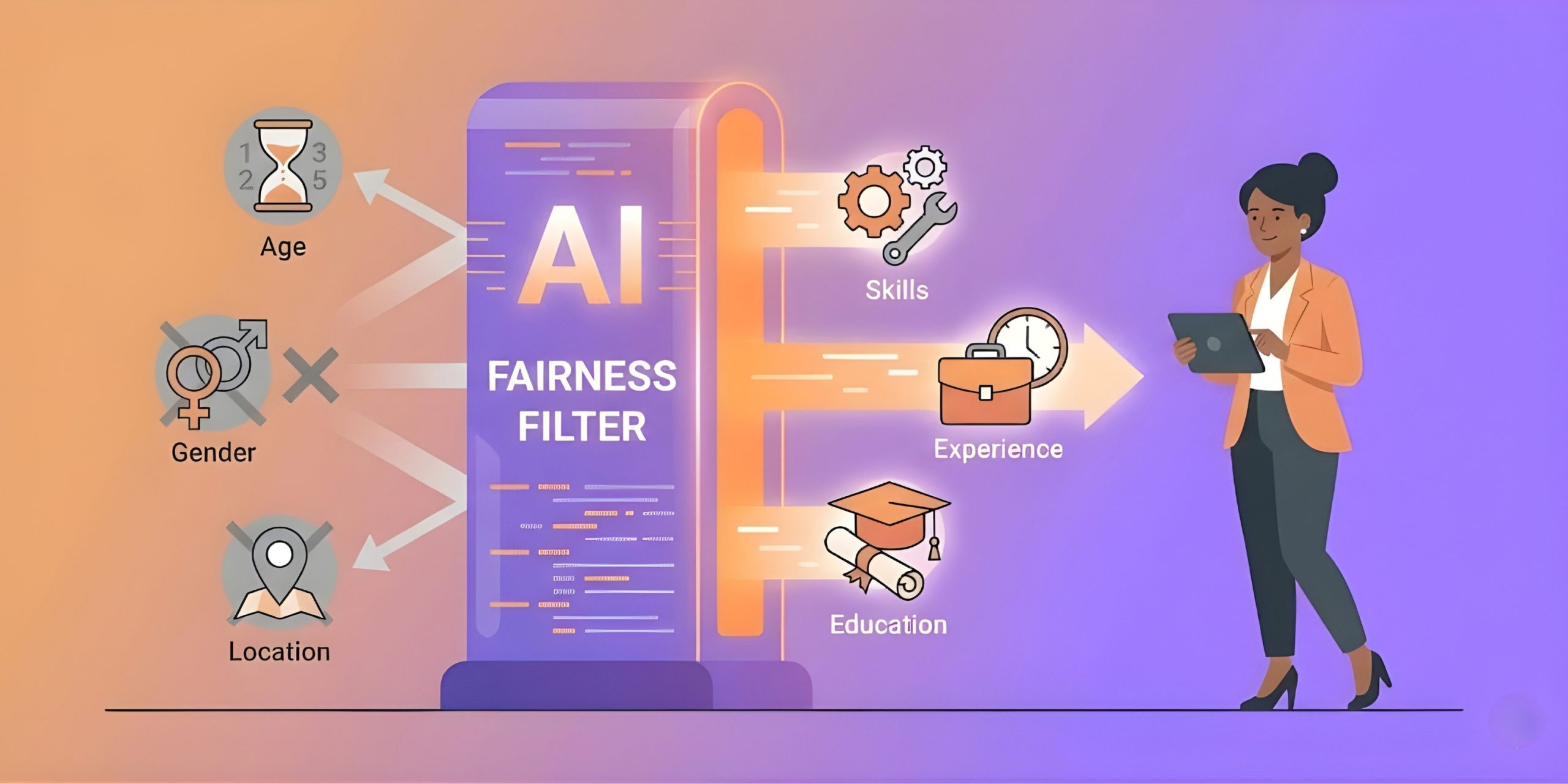
A well-built matching engine focuses on signals that correlate with on-the-job performance:
- Work history, including scope, duration, and progression
- Skills inferred from project descriptions and tooling mentioned
- Education and certifications relevant to the role
- Outcomes — metrics, scale, team size — when present in the resume
- Optional AI-assisted cognitive testing results, when the workflow includes them
Ethical matching engines deliberately ignore signals tied to protected characteristics — name, age, gender, postcode, profile photo. The goal is to surface evidence of capability, not demographic proxies. Research from HR analytics groups suggests that matching engines designed this way can improve workforce diversity by roughly a third compared with conventional screening, because they level the inputs the model is allowed to consider.
Common Myths About AI Matching
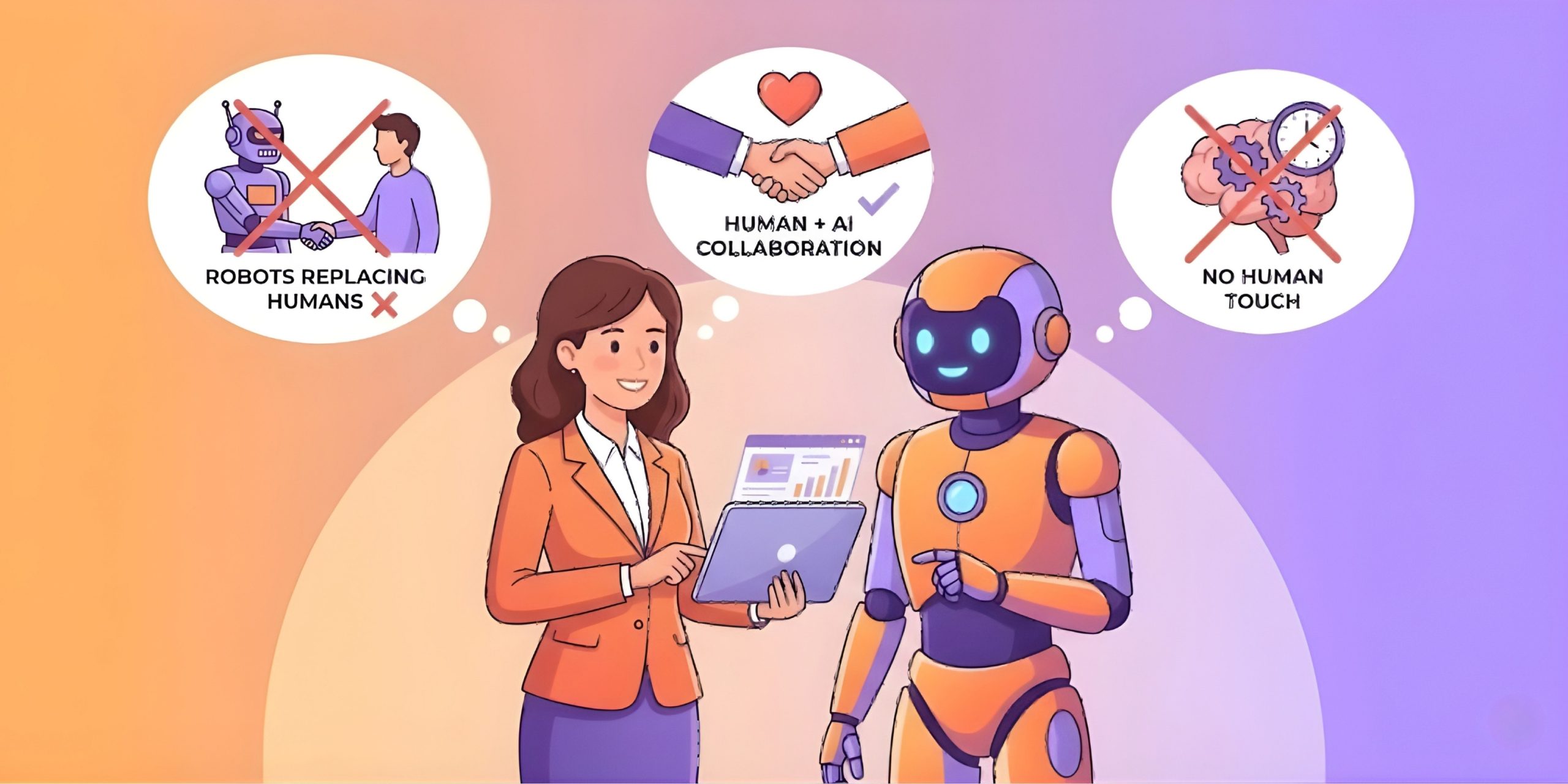
- "AI will replace the recruiter." It will not. The model handles sifting; the recruiter handles judgement, persuasion, and the parts of hiring that depend on a human conversation. Studies have shown AI tools can reclaim around 45% of a recruiter's screening time — which is the part you'd want back anyway.
- "You can game the model by stuffing keywords." Older Boolean filters were gameable. Modern matching engines score context and progression, so a wall of keywords without supporting work history actually lowers the score.
- "AI matching is enterprise-only." It is the opposite. Small recruiting teams benefit most, because they cannot afford to manually screen every applicant for every role, and the model is happy to.
Where AI Matching Pays Off Hardest

The biggest wins show up in two places. The first is niche roles — a quantum computing researcher, a particular flavour of compliance lead, a senior engineer with a rare framework. Manual search across a 100,000-resume database for someone like that is essentially impossible. AI matching surfaces the handful of plausible profiles in seconds.
The second is at the top of the funnel. When conversational AI recruiting tools are paired with a matching engine, the moment a strong candidate applies, the system can engage them, answer questions, and run an initial structured screen — keeping the pipeline warm while the recruiter focuses on the hard cases.
The Bottom Line
AI matching is not a speed trick. It is a different question. Instead of "does this resume contain the word we asked for?" it asks "does the work on this resume look like the work the role requires?" Teams that answer the second question consistently hire better and miss fewer strong candidates — regardless of headcount or budget. The keyword era is over; structured, context-aware matching is what replaces it.
FAQs
How is AI matching different from a keyword ATS?
A keyword ATS checks whether specific words appear on a resume. AI matching compares the meaning and context of a candidate's experience against the role's actual requirements, so it can surface strong fits even when the wording differs.
Is AI matching accurate enough to trust for shortlisting?
When the input data is clean and the engine is configured against the role's real success criteria, AI matching consistently ranks shortlist quality higher than manual filtering. It is best used as a ranked recommendation, with the recruiter making the final call.
Does AI matching introduce bias?
It can if it is trained badly. Responsibly built engines exclude protected characteristics from the scoring model and audit outcomes for adverse impact. Used that way, AI matching tends to reduce — not increase — bias compared with manual review.
How long does it take to set up AI matching for a new role?
For a well-written job description, the engine produces a ranked candidate list almost immediately. The tuning that matters is on the job side: clear must-haves, realistic nice-to-haves, and an honest definition of seniority. Get the role right and the engine does the rest.
Will candidates know AI is screening them?
Best practice is to disclose it. Beyond being good ethics, candidates increasingly expect transparency about automated hiring decisions, and several jurisdictions now require notice. Disclosure does not hurt conversion when the process is also fast and respectful.
Keep reading

Legal and Ethical Risks of AI in Hiring: A Practical Risk Map

Workforce Management Automation: The Real Challenges and Fixes
