

AI in Recruitment: Rewriting CV Screening in the Gulf Region
AI-generated resumes have changed recruiting in the Gulf — how regional teams spot real candidates, respect localisation quotas, and avoid template hires.
Ployo Team
Ployo Editorial

TL;DR
- AI-generated resumes have flooded the Gulf job market, making manual screening increasingly unreliable.
- Traditional keyword matching cannot handle template-optimised CVs while missing real candidate fit.
- Saudisation, Emiratisation, and Kuwaitisation quotas add a regional layer that generic AI tools often miss.
- AI built for the Gulf detects fraud, evaluates real skills, and respects local compliance frameworks.
- The pattern that works: AI for pattern recognition, humans for the final judgement.
The Gulf recruitment market faces a specific challenge: high-volume AI-generated resumes meeting strict regional localisation quotas. Generic global recruiting tools handle neither well. Manual screening cannot keep pace; pure keyword matching misses both real fit signals and template fraud. This guide walks through how AI has changed Gulf recruiting, why traditional screening fails, and the regional approach that actually works.
The Rise of AI-Generated CVs in the Gulf

Resume creation is no longer purely human work. Candidates across the Gulf use AI tools to produce keyword-optimised, polished CVs in minutes. Accessibility improves; verifiability declines. For recruiters processing high volumes, the influx of template-perfect resumes makes substance harder to identify than ever.
The Gulf-Specific Challenge
The volume of "perfect" resumes has exploded, but volume often masks authenticity — particularly when candidates use AI to smooth over career gaps or amplify skills. For Gulf recruiters, three regional dynamics make this harder than in other markets.
Localisation quotas add a compliance layer
Saudisation, Emiratisation, and Kuwaitisation programs require recruiters to confirm nationality, local experience, and language ability. AI-generated CVs do not naturally reflect these compliance requirements — recruiters have to actively verify.
Cultural fit signals matter more than templates show
Gulf workplaces blend international and local norms in specific ways. Template-optimised resumes rarely capture cultural fit, which is often decisive for long-term success.
Bilingual fluency requirements vary by role
Arabic-English bilingualism is required for many roles. CV polish does not reliably indicate genuine language fluency, especially in the customer-facing or government-adjacent roles that dominate parts of the Gulf labour market.
The combined effect: template-optimised hiring quietly misses both compliance requirements and real fit signals.
Why Traditional Screening Fails in This Environment

Manual review of hundreds of CVs is no longer realistic, and the simple alternatives fail in predictable ways.
- Manual screening is slow and inconsistent. Same recruiter, different mood, different shortlist.
- Keyword matching rewards templates. AI-generated CVs are optimised for exactly this — quantity beats quality.
- Unconscious bias persists. Manual screening cannot reliably escape pattern-matching against past hires.
- Template fraud is hard to detect. Templates that mask AI generation slip past most resume scanners.
The Gulf recruiter's reality: sift hundreds of CVs against quotas, language requirements, and cultural fit signals — with manual tools that no longer match the candidate volume.
How AI Can Actually Help When Done Right

Modern AI in recruitment, used thoughtfully, becomes a recruiter's strongest ally — but only if the tools are built for the regional context.
Capabilities that change the game when implemented well:
- Inconsistency detection. AI can flag mismatches between resume claims, timeline gaps, and LinkedIn profiles.
- Soft-skill scoring. Pre-screening behavioural questions can be analysed for genuine fit signals.
- Compliance cross-checking. Local-quota verification (Saudisation, Emiratisation), language-fluency confirmation, and right-to-work verification — automated and reliable.
- Fraud signal flagging. Suspicious formatting, duplicate content patterns, or LinkedIn-resume mismatches all surface automatically.
The key is combining AI's pattern recognition with human judgement. AI surfaces signals; the recruiter makes the call. Generic global tools struggle here because they lack regional context — strong AI resume screening tools work because they bring real fit signal rather than just keyword scoring.
What Gulf-Specific AI Recruiting Should Look Like
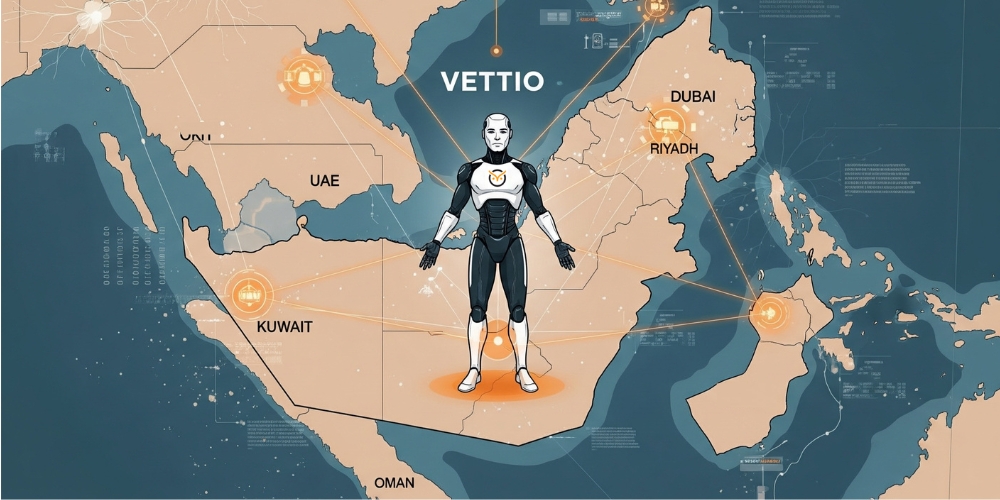
Most global recruiting platforms were not built with Gulf-specific hiring dynamics in mind. The platforms that work for regional recruiters tend to share specific features.
Built-in compliance filters
Detection of candidates who meet Saudisation, Emiratisation, or Kuwaitisation criteria — automatically, without manual cross-checking. This is foundational, not optional.
Gulf-trained matching engines
Generic models miss regional nuances. Matching engines trained on actual GCC hiring outcomes understand bilingual roles, regional cultural norms, and how job titles vary across industries and emirates.
Beyond-keyword skill evaluation
Real role-specific skills, authenticity verification on stated achievements, cultural-fit signals, and Arabic-English fluency assessment (where applicable) all matter more than polished resume language.
Local language and context support
AI tools that handle Arabic content cleanly, understand region-specific phrasings, and respect local credential frameworks deliver dramatically better matches than English-only systems with bolted-on translation.
What Gulf Recruiters Should Do Now

Three practical moves every Gulf recruiting team should consider.
1. Use AI to dissect CVs, not just scan them
Resumes still matter — but stop playing keyword bingo. Use AI tools to identify copy-paste patterns, formatting anomalies, and overly uniform writing that signals template-generated content. These are the breadcrumbs of AI-generated applications.
2. Treat AI as a spotlight, not a decision-maker
The model surfaces signal; the recruiter still makes the hire. This balance preserves the human judgement that compliance, cultural fit, and team chemistry actually require — while removing the manual volume problem.
3. Train the team to spot AI-generated patterns
Recruiters who understand how tools like ChatGPT, Resume.io, and similar produce output can spot template patterns faster than software alone. Combine this skill with structured mobile and digital recruitment strategies for stronger end-to-end hiring.
The Bottom Line
AI has changed Gulf recruiting in ways that generic global tools were not designed for. Template-optimised CVs flood inboxes; manual review cannot keep pace; localisation quotas demand verification global platforms do not handle. The solution is region-specific AI tooling paired with disciplined human judgement — fraud detection, compliance verification, cultural-fit signal scoring, and the recruiter's final call. The teams that build this capability hire faster and more accurately than competitors still operating on manual screening. The Gulf market rewards the recruiters who adapt fastest, and the adaptation is already well underway.
FAQs
How significantly have AI-generated CVs changed Gulf recruiting?
Substantially. The volume of template-optimised resumes has made manual screening progressively less reliable, and traditional keyword filters reward exactly the kind of polish that AI generates. Regional recruiters now need AI tools to handle AI-generated applications.
Do localisation quotas like Saudisation require specific AI capabilities?
Yes. Generic global platforms typically lack the ability to verify nationality, local experience requirements, or language criteria automatically. Region-specific tools handle this natively, which materially reduces compliance risk.
Can AI detect AI-generated CVs reliably?
Partially. Detection accuracy is improving but not perfect, and AI writing keeps getting better. The most defensible approach combines AI signal-detection with structured interview verification of the underlying claims.
What is the highest-leverage AI capability for Gulf recruiters?
Compliance verification combined with skill-substance evaluation. The compliance piece handles regulatory risk; the substance piece handles the template-fraud risk. Doing both well requires regionally-trained models.
Will AI eventually replace human recruiters in Gulf hiring?
No. AI changes the recruiter's job — removing the manual screening load and surfacing better signal — but the judgement, relationship-building, and cultural-fit evaluation that close offers remain firmly human.
Keep reading


How AI Tools Reduce Candidate Stress in Hiring (and Improve Outcomes)
