

ML Recruitment: Why Top Talent Ignores Your Posts and How to Fix It
Top ML engineers ghost generic recruiter outreach — why it happens, the messaging and process fixes that work, and where to source ML talent actually.
Ployo Team
Ployo Editorial

TL;DR
- 50%+ of IT leaders report significant AI talent shortages — up from 28% the prior year (Nash Squared 2024).
- 75% of companies adopting AI; only ~33% have career-ready teams (Randstad).
- ML candidates value problem depth, autonomy, and culture over salary alone.
- Generic recruiter outreach is the biggest single ghost-driver.
- Personal, technical-substance messaging produces meaningfully higher response rates.
ML recruitment fails most often not because the role is bad — but because the messaging is generic, the role description is vague, and the candidate experience signals a company that doesn't know what it wants. The fix isn't more recruiter outreach; it's better outreach. This guide walks through why top ML talent ghosts, how to fix each cause, and where to actually find them.
Why ML Talent Is So Hard to Hire

Five structural challenges.
Skill gap not closing fast
Nash Squared 2024 data shows over 50% of IT leaders report significant AI talent shortage — up from 28% the prior year. Randstad's findings reinforce this: 75% of companies adopting AI, only ~33% with teams career-ready in AI.
Global competition
ML candidates field offers from tech giants, startups, and labs simultaneously. Most are approached by every recruiter, often with indistinguishable messages.
Different motivators than traditional engineers
Top ML talent chases meaningful problems and cutting-edge models more than salary headline numbers. Messaging focused only on compensation misses what motivates them.
Engineering culture expectations
ML talent expects fast iteration cycles, peer-reviewed research, model ownership, and intellectually rigorous teams. Companies without these signals don't make the shortlist.
Resume scanning misses signals
GitHub stars, published research, hackathon wins, and Kaggle results all matter — and traditional ATS systems often miss them entirely.
Why ML Candidates Ghost
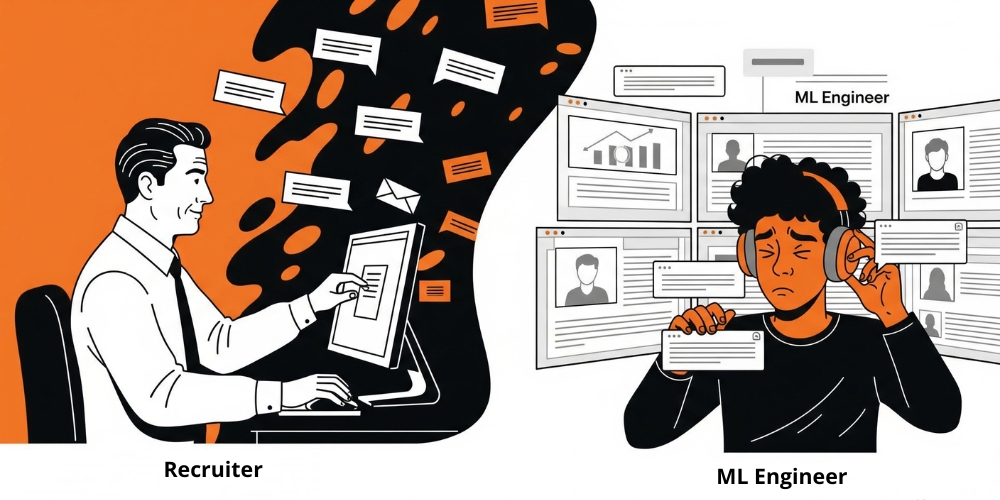
Four causes that consistently produce ghosting.
Generic messaging
"I came across your profile and thought you'd be a great fit" gets ignored. ML candidates are flooded with similar messages weekly.
Unclear role expectations
"Lead our AI transformation" tells the candidate nothing. What models? What tools? What metrics? Without specifics, the role reads as either confused or chaotic.
No visible engineering culture
Job posts without mentions of MLOps maturity, peer review, published work, or model ownership signal "we're not serious about ML."
Silence after first contact
Companies that initiate then disappear teach candidates to deprioritise their roles. The asymmetry in attention is noticed.
How to Fix the Strategy
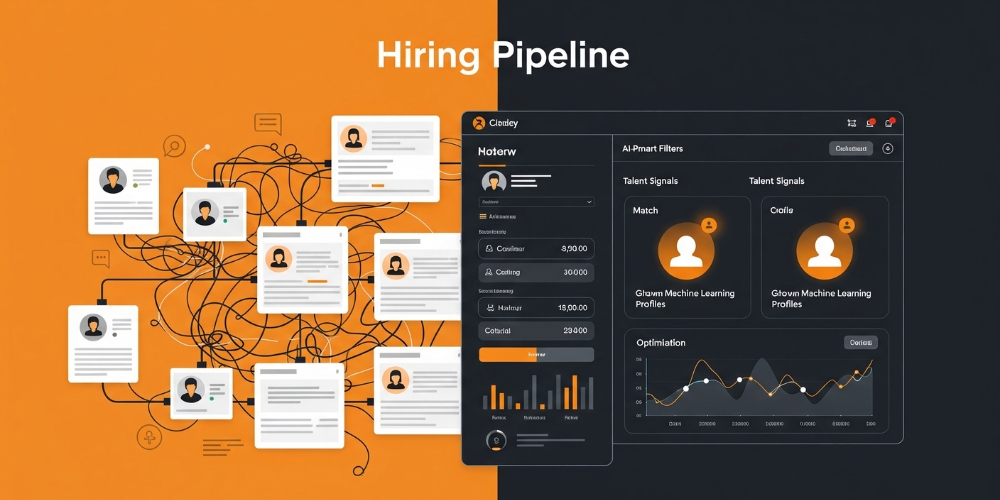
Six moves that consistently improve ML recruiting outcomes.
Ditch one-size-fits-all JDs
Strong JDs for ML roles mention the specific models, tech stack (PyTorch, Hugging Face, AWS SageMaker), past projects, and the business problems being solved. No marketing fluff.
Personalise every outreach
Reference Kaggle projects, GitHub work, published papers. Mention what stood out. Make outreach feel like relationship-building, not spam.
Streamline the funnel
Tight, deliberate funnels beat 8-loop interview gauntlets. One tech screen, one project challenge if needed, final decision. Communicate timelines upfront and meet them.
Sell the mission
Why is your company investing in ML? Who supports it internally? What impact will the work have? Spotlight ML case studies and team interviews publicly.
Don't ignore emerging talent
PhD researchers, side-project builders, and structured-training graduates often outperform "obvious" hires. Companies like DeepMind and Anthropic invest in homegrown talent through mentorship and apprenticeship programs.
Communicate continuously
Silence between stages drives drop-off faster than any other factor. Even "no decision yet" updates keep candidates engaged.
Tools and Platforms
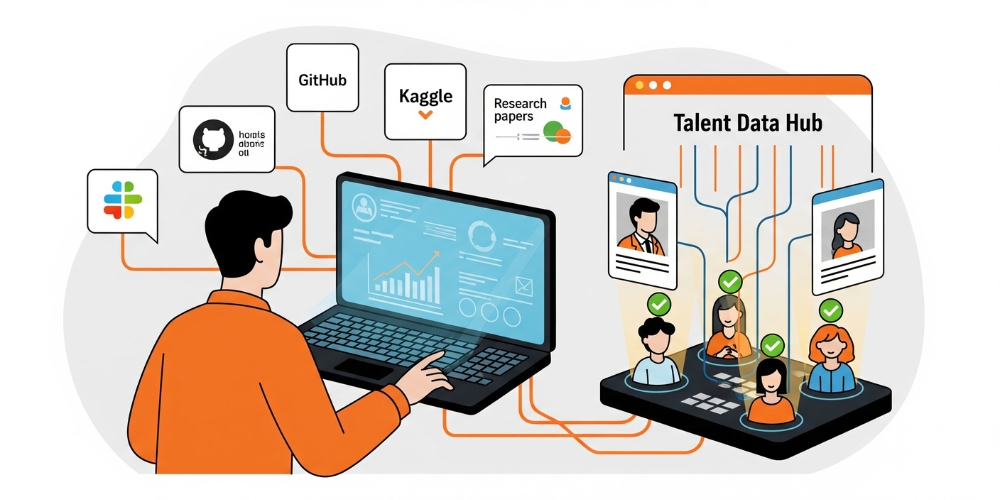
Five sourcing surfaces worth using.
GitHub and Kaggle
Many top ML engineers live here, not LinkedIn. Source based on open-source contributions, repository stars, and Kaggle competition performance.
Specialist job boards
Papers with Code Jobs (research-heavy), ML Jobs (niche AI), WeWorkRemotely AI/ML (remote-first). Generic boards underperform for ML roles.
Slack and Discord communities
ML Collective, DataTalksClub, Artificial Intelligence Discord (100K+ members). Active participation beats passive job posting.
Talent intelligence platforms
SeekOut, HireEZ, AmazingHiring combine talent data with behavioural signals from coding platforms, research, and patents.
AI-powered screening
Metaview, CodeSignal, CoderPad evaluate real coding and model-building ability rather than just credentials. Aligns with the broader AI screening trend.
Messaging Tips That Work

Five principles for outreach that gets responses.
Lead with technical substance
"We're deploying transformer-based models for predictive maintenance in logistics. Your work on time-series forecasting caught our attention — would love to explore fit."
This shows specificity and signals you understand their work.
Personalise by project
Reference Hugging Face contributions, arXiv papers, Kaggle wins. Specifics cut through noise.
Be transparent about the role
Wrong title or mismatched scope generates instant rejection. Mention data size, tooling, model development stage, deployment readiness, team dynamics.
Respect time and attention
Keep initial outreach under 150 words. Don't request resumes in the first message. Don't pre-schedule interviews before a real conversation.
Close human
"I'd love to hear what kind of work excites you, even if this isn't the right fit right now." Open doors; don't pressure.
The Bottom Line
ML recruitment is hard because the talent is scarce and the competition is global — but the candidates who do get hired aren't responding to magic. They're responding to recruiters who treated them like specific professionals doing specific work, communicated clearly about the role and process, and moved fast. The teams that adapt their playbook here win the talent everyone else is chasing. The teams that don't keep wondering why their best outreach gets ignored.
FAQs
Why do ML engineers ignore recruiters?
Generic outreach, vague role descriptions, and unclear technical scope. Most ML engineers receive dozens of messages monthly; only the personalised ones get responses.
What do ML candidates care most about?
Technical challenge and real-world impact, autonomy and culture, and clear/competitive compensation. Ethical AI practices and model ownership increasingly matter too.
How long does ML hiring take?
Typically 42–65 days, varying by seniority and region. Specialist agencies and proper automation can compress this significantly when used well.
Should we hire junior ML talent and train them?
Yes, with the right environment. Junior ML talent brings fresh perspectives and high adaptability. Companies like Hugging Face, Cohere, and DeepMind run successful apprenticeship-style tracks.
What's the single highest-leverage fix?
Personalised, technical-substance outreach. The response-rate difference between generic and specific messages is dramatic — typically 3–5× on the same candidate pool.


